• Since 2006Locally Owned & Operated
  • 47+ YearsCombined Professional Experience
  • 5-StarCustomer-Rated Service
  • 2Full-Time State Certified Operators

Locally owned and operated since 2006

Termite Control in St. Lucie County

Address the colony and the structure, not only the swarmers you see.

Serving the Treasure Coast, Palm Beach areas, and the Riverland area with soil treatment, BIT, Triple T, and Advance® Termite Bait Stations, chosen from what the inspection finds.

  • Inspection-first plan, chosen from what we find
  • No tent fumigation; liquid and wood treatments
  • Triple T: Total Termite Treatment for soil, walls and attic
  • BIT: wall injection and attic treatment
  • Comprehensive termite treatment options
  • Transferable warranties
Worker using a hose-connected rod in a soil trench beside a concrete patio.
Soil-rod application in a trench beside a patio. ProControl termite treatment.
Hand holding damaged wood that shows termite galleries.
Termite damage and galleries: hollowed galleries in a beam.

Common termite concerns

Common termite concerns and warning signs

If you notice any of these, it’s worth a closer look:

  • Swarming insects indoors or out, or discarded wings on windowsills.
  • Mud tubes along foundations, walls or slab edges.
  • Little piles of hard fecal pellets below tiny holes in wood.
  • Holes with powdery dust, which can also point to Wood-Boring Beetles.
  • Soft, hollow or blistered wood, water stains or peeling paint.

Please don’t spray or break into the area first. Leaving the evidence in place helps with identification.

Damage in the wood is a clue, not a conclusion

Clues aren’t proof. Mud tubes, old damage and fecal pellets don’t always mean termites are still active. Significantly damaged, decayed or weakened wood may need evaluation by a qualified professional. Surface clues alone don’t show the full extent of damage.


Know what’s in your wood

Identify the organism before the plan

Damaged wood can point to termites, Wood-Boring Beetles or wood-decay fungi. They leave different clues and call for different responses. ProControl works to identify the cause before recommending a plan.

Formosan Termite soldiers, photographed under magnification.
Formosan Termite soldiers.
Formosan Termite activity in an opening in a textured surface.
Formosan Termite activity.
Invasive subterranean

Formosan Termites

Clues include large swarms of amber-colored termites after sunset in spring or early summer, mud tubes and hollowed-out trees. They can build carton nests, a hardened mix of soil, chewed wood and saliva, inside walls, attics or trees, so a visible tube from the soil may be absent.

UF/IFAS describes their colonies as very large and wide-foraging, with the potential for significant structural damage. There is no fixed timeline. Asian Subterranean Termites, found mainly in South Florida, are a related species with similar carton nests.

Eastern Native (Subterranean) Termite soldier on a glove.
Eastern Native (Subterranean) Termite soldier.
Eastern Subterranean Termite swarmer on a light surface.
Eastern Subterranean Termite swarmer.
Soil-dwelling

Native Subterranean Termites

These soil-dwelling termites include the Eastern Subterranean Termite. Look for mud tubes along foundations, walls or slab edges; dark swarmers on sunny afternoons in late winter or spring; and hollow or blistered wood. Damage tends to follow the grain, leaving layered galleries often lined with soil.

Colonies feed year-round in Florida. There is no fixed damage timeline: colony size, feeding sites, moisture and the wood all matter.

Our approach to Subterranean Termites (Formosan and native): We offer liquid soil treatments and bait station systems. The recommended approach depends on the termite activity found, the property layout and the treatment plan.

Drywood Termite fecal pellets accumulated beneath attic wood, photographed during a ProControl inspection.
Drywood Termite fecal pellets beneath attic wood. ProControl inspection photo.
Live in dry wood

Drywood Termites

Drywood Termites live inside dry wood and don’t need soil. Look for hard, six-sided fecal pellets below tiny holes, discarded wings on windowsills, or blistered surface wood. Their galleries are clean and smooth, without soil or mud. They can infest framing, trim, furniture, cabinets and hardwood floors.

Colonies generally grow slowly and can go unnoticed for years. Old fecal pellets can fall from previously damaged wood and do not prove current activity.

Our approach: The plan centers on the infested wood and surrounding areas. See BIT and Triple T below.

Galleries in a wooden beam, shown as Dampwood Termite damage evidence.
Dampwood Termite galleries (damage evidence).
Closer view of galleries in a wooden beam, shown as Dampwood Termite damage evidence.
Closer view of the same galleries.
Need wet wood

Dampwood Termites

Dampwood Termites need wood that stays wet. They don’t tunnel through soil or build mud tubes. Look for termites near leaks, rain-soaked trim or soil-contact wood, with clumped or pasty droppings and galleries through wet wood, often alongside rot. They mainly occur in South Florida and coastal areas. Removing the moisture source causes a colony to gradually decline, so addressing the water source is essential.

Our approach: The moisture source is part of the fix. We’ll point out visible leaks, drainage problems or soil contact, explain treatment options, and note where repair or further evaluation may be needed.

Not every damaged board means termites

Look-alikes: beetles and wood rot

Powdery debris along attic framing and insulation, identified as Powderpost Beetle frass.
Powderpost Beetle frass.
Fine powder around a ceiling vent and framing in a Verano home, identified as Powderpost Beetle damage.
Powderpost Beetle damage in a Verano home.
Beetles, not termites

Wood-Boring Beetles

These are beetles, not termites. Their larvae tunnel inside wood. Small round holes can point to Powderpost Beetles; larger oval holes can point to Old House Borers. Fine powdery or gritty dust, blistered surfaces and faint clicking or rasping may also be clues. Damage usually develops slowly, but that doesn’t date an infestation or reveal hidden damage.

Our approach: We examine holes, dust and the wood involved to help distinguish beetle damage from termite damage and judge visible activity and spread. We then explain suitable treatment options and note where repair or further evaluation may be needed.

Fungal growth on wood under a joist, showing wood-decay fungi.
Wood-decay fungi.
Bleached, pale patch on wood, showing white rot.
White rot.
Fungi, not termites

Wood rot

Wood rot comes from wood-decay fungi, not termites. Brown rot leaves brown, cracked, cube-like wood. White rot can look bleached and feel spongy. Soft rot usually affects the surface of wood repeatedly exposed to wet and dry conditions. Water stains, peeling paint and soft wood can signal a moisture problem. Keeping wood sufficiently dry stops further fungal decay but does not restore lost strength.

Our approach: We’ll explain any decayed wood or visible moisture conditions we find and where further evaluation may be needed, so the moisture problem and damaged wood can be addressed.

How our termite treatments work

The method follows the inspection

We recommend a treatment or combined plan based on the inspection and your property. Products are applied according to their labels, and coverage depends on the wood, access and label. We explain which areas can be treated and any limits found during inspection.

Joe from ProControl working beside a lawn and paved walkway.
Joe, state-certified operator, at a soil trench beside a patio.

Subterranean Termite liquid soil treatment

Treats: Subterranean Termites, including Eastern Subterranean and Formosan

Nonrepellent soil treatment targets Subterranean Termites, including Eastern and Formosan Termites, as they move through treated soil. It creates a treated zone that termites can cross without detecting it, and exposed termites can transfer the active ingredient to others through contact and social behavior.

The extent and speed of control depend on the product, treatment placement, termite activity and site conditions.

Building a new home? ProControl also offers termite pre-treatment and pest protection for builders.

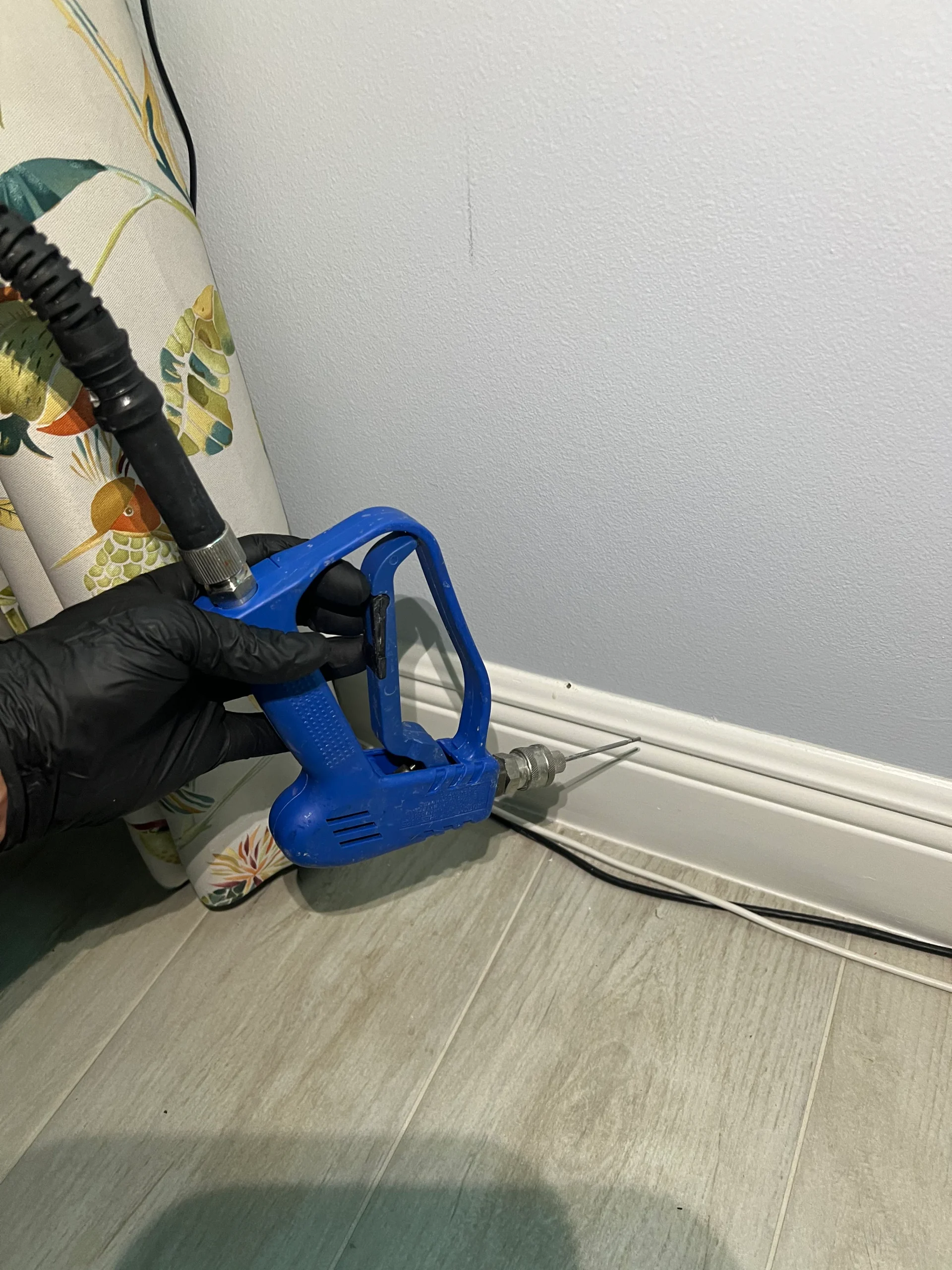
A gloved hand holds an applicator with its tip against a baseboard.
Wall-area application at a baseboard.
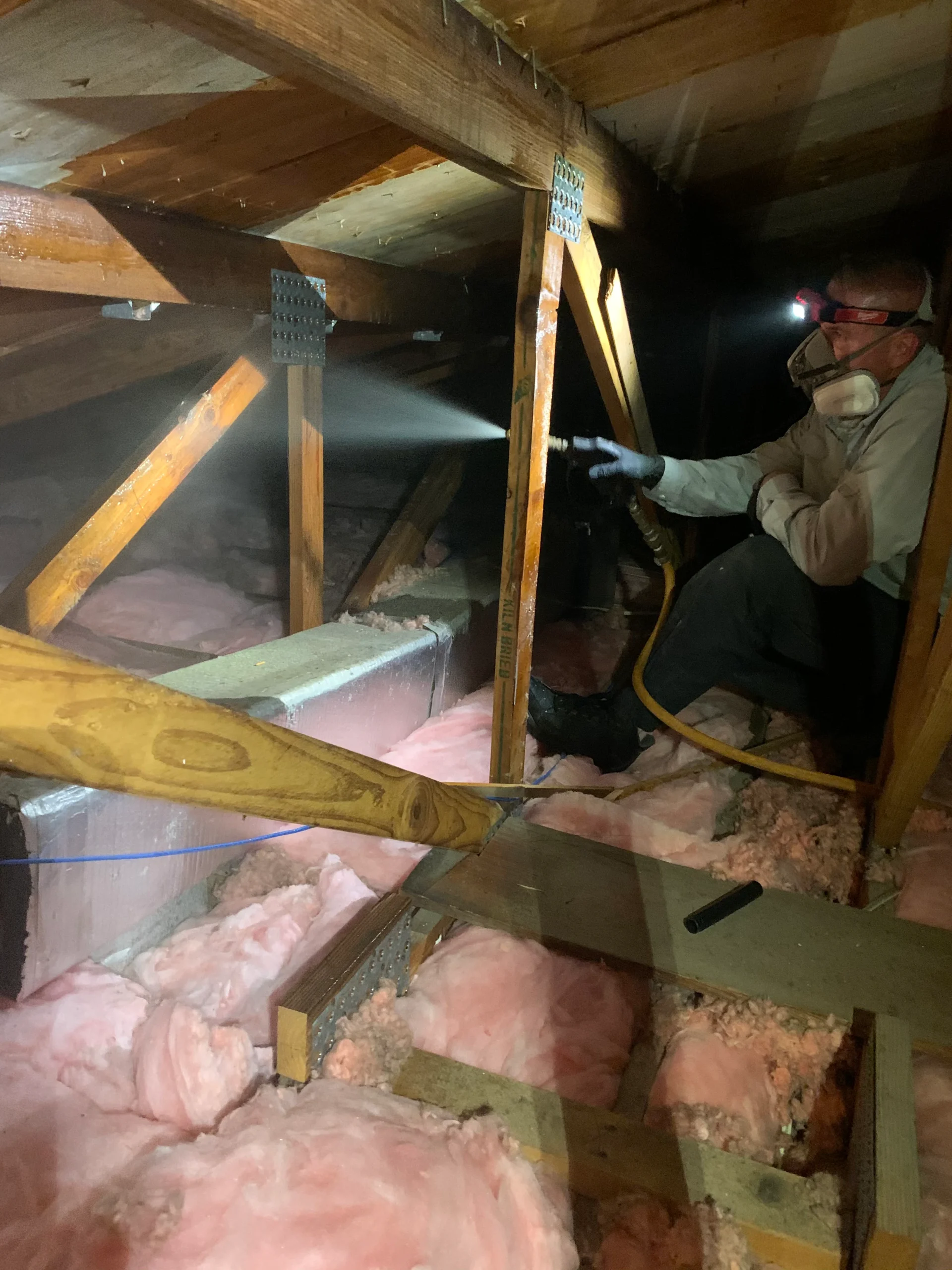
ProControl operator spraying treatment among attic framing and insulation.
Joe applying treatment in an attic, ProControl job photo.

BIT: Borate Injection Treatment

Treats: Drywood Termites, Dampwood Termites and Wood-Boring Beetles; also helps with wood-decay fungi

BIT includes treatment injection into the walls and treatment of the attic. Borate treatment targets wood in accessible wall-void and attic areas identified during inspection. The product and application method depend on the findings and label requirements.

The plan centers on the infested wood and surrounding areas rather than the soil. Insulation and limited access can affect coverage, so we tell you up front which areas can be reached.

Three-part treatment

Triple T: Total Termite Treatment

Treats: Subterranean Termites (including Eastern Subterranean and Formosan), Drywood Termites, Dampwood Termites and Wood-Boring Beetles; also helps with wood-decay fungi

It combines three treatments, each addressing a different area of the structure. Products and coverage are selected from the inspection findings and applied according to their labels. ProControl doesn’t offer tent fumigation. Our termite work uses liquid and wood treatments chosen for what the inspection finds.

  • 1. Exterior — SoilNonrepellent soil treatment for Subterranean Termites.
  • 2. Interior — WallsTargeted treatment of selected, accessible wall-void areas identified during inspection.
  • 3. AtticBorate treatment of accessible, exposed attic wood can help protect the wood it reaches against the wood-destroying organisms listed on its label. Hidden wood, coatings and moisture conditions can limit treatment.
Triple T soil treatment: rod application in a trench along a patio slab
Triple T wall treatment: injection system at the baseboard
Triple T attic treatment: spray application to attic framing
ProControl-labeled termite station installed in a landscaped bed.
Also available

Advance® Termite Bait Stations

Installed around the structure, these stations are monitored and serviced periodically, with termite bait used as appropriate. Bait stations may be used preventively or alongside liquid treatments, depending on the situation. ProControl generally prefers appropriate liquid corrective treatments when practical.

Our termite control process

The plan depends on what we find, how far it has spread, moisture and wood conditions, and which areas can be reached.

  1. Identify the organism

    Termites, Wood-Boring Beetles or wood-decay fungi. We identify the cause before recommending a plan.

  2. Inspect accessible areas and conditions

    Interior, exterior and all accessible areas, for current activity and risk factors.

  3. Select the labeled method

    We explain the findings and recommend a plan based on the inspection, the property and the product labels.

  4. Treat the colony or infested wood as the inspection supports

    Experienced crews apply the recommended termite treatment for your property.

  5. Follow up and prevention

    Leaks, poor drainage, sprinkler spray and wood touching soil can contribute to a problem; we point out what we see. Annual warranty renewal is available.

Local, experienced, accountable

State-certified operators, on the job

ProControl is locally owned and operated and has served the area since 2006. Joe and Chuck Black, our two state-certified operators, inspect accessible areas and explain which treatment options fit the findings and the product labels. If your situation calls for something we don’t offer, we’ll tell you.

  • Locally owned since 2006Serving the Treasure Coast, Palm Beach areas, and the Riverland area.
  • Two full-time State Certified Operators47 years of combined experience and over 30 years of professional pest control experience.
  • Comprehensive treatment optionsLiquid soil treatment, BIT, Triple T and Advance® Termite Bait Stations, so the plan fits the finding.
  • Straight answersNo tent fumigation, no one-size-fits-all plan. We show you what we found and explain the limits.

Common termite control questions

Do you tent houses for termites?

No. ProControl doesn’t offer tent fumigation. Our termite work uses liquid and wood treatments and bait systems chosen for what the inspection finds. No single method fits every infestation. If your situation calls for something we don’t offer, we’ll tell you.

What is Triple T Termite Treatment?

Triple T is a three-part treatment: exterior nonrepellent soil treatment for Subterranean Termites, targeted treatment of selected interior wall voids, and borate treatment of accessible, exposed attic wood. The products and coverage are selected from the inspection findings and applied according to their labels. See the Triple T section above for how each part works.

What’s the difference between soil treatment and bait stations?

Nonrepellent soil treatment targets Subterranean Termites, including Eastern and Formosan Termites, as they move through treated soil. ProControl offers Advance® Termite Bait Stations for preventive Subterranean Termite protection and monitoring. Bait stations may be used preventively or alongside liquid treatments, depending on the situation, and ProControl generally prefers appropriate liquid corrective treatments when practical.

What should I do if I see swarmers, fecal pellets or holes?

If you see swarming insects, mud tubes, little piles of fecal pellets, holes with powdery dust or soft, damaged wood, it’s worth a closer look. Please don’t spray or break into the area first. Leaving the evidence in place helps with identification. Call 772-579-0230 or request a free quote. ProControl has served the area since 2006, and 24/7 emergency service is available.

Is Wood-Boring Beetle damage the same as termite damage?

No. Wood-Boring Beetles are beetles, not termites. Their larvae tunnel inside wood. Small round holes can point to Powderpost Beetles; larger oval holes can point to Old House Borers. We examine holes, dust and the wood involved to help distinguish beetle damage from termite damage and judge visible activity and spread.

How can I tell Subterranean Termites from Drywood Termites?

Native Subterranean Termites are soil-dwelling termites, including the Eastern Subterranean Termite. Look for mud tubes along foundations, walls or slab edges, and damage that tends to follow the grain, leaving layered galleries often lined with soil. Drywood Termites live inside dry wood and don’t need soil. Look for hard, six-sided fecal pellets below tiny holes, discarded wings on windowsills, or blistered surface wood. Their galleries are clean and smooth, without soil or mud. Clues aren’t proof. Mud tubes, old damage and fecal pellets don’t always mean termites are still active. Inspection and identification help determine the cause and whether activity is current.

What’s different about Formosan Termites on the Treasure Coast?

Formosan Termites are an invasive type of Subterranean Termite. Clues include large swarms of amber-colored termites after sunset in spring or early summer, mud tubes and hollowed-out trees. They can build carton nests, a hardened mix of soil, chewed wood and saliva, inside walls, attics or trees, so a visible tube from the soil may be absent. UF/IFAS describes their colonies as very large and wide-foraging, with the potential for significant structural damage. There is no fixed timeline. Asian Subterranean Termites, found mainly in South Florida, are a related species with similar carton nests.

Can Drywood Termites be treated locally, or does the house have to be tented?

ProControl doesn’t offer tent fumigation. Our termite work uses liquid and wood treatments and bait systems chosen for what the inspection finds. For Drywood Termites, the plan centers on the infested wood and surrounding areas. BIT and Triple T both treat Drywood Termites. We’ll show you where we found activity, explain which treatment options fit its location and extent, and be upfront if it points to a method we don’t offer. No single method fits every infestation. See the BIT and Triple T sections above.

Does damaged wood mean termites are still active?

No. Clues aren’t proof. Mud tubes, old damage and fecal pellets don’t always mean termites are still active. Inspection and identification help determine the cause and whether activity is current. Inaccessible areas can limit what we can confirm. Old fecal pellets can fall from previously damaged wood and do not prove current activity. Significantly damaged, decayed or weakened wood may need evaluation by a qualified professional. Surface clues alone don’t show the full extent of damage.

Start with an inspection

772-579-0230

Call or request a free quote. ProControl has served the Treasure Coast, Palm Beach areas, and the Riverland area since 2006. Contact us when you notice a swarm; 24/7 emergency service is available.