
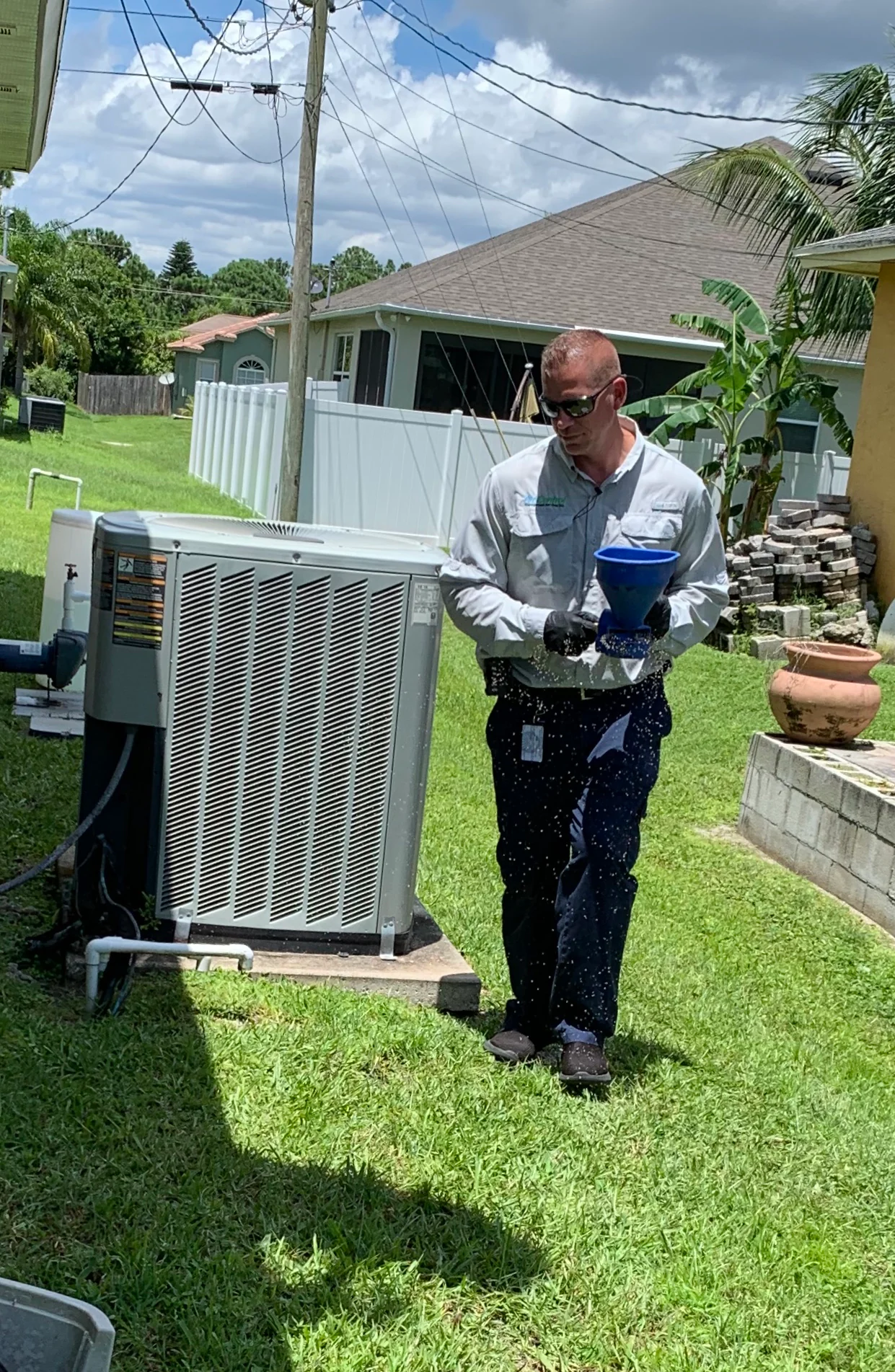
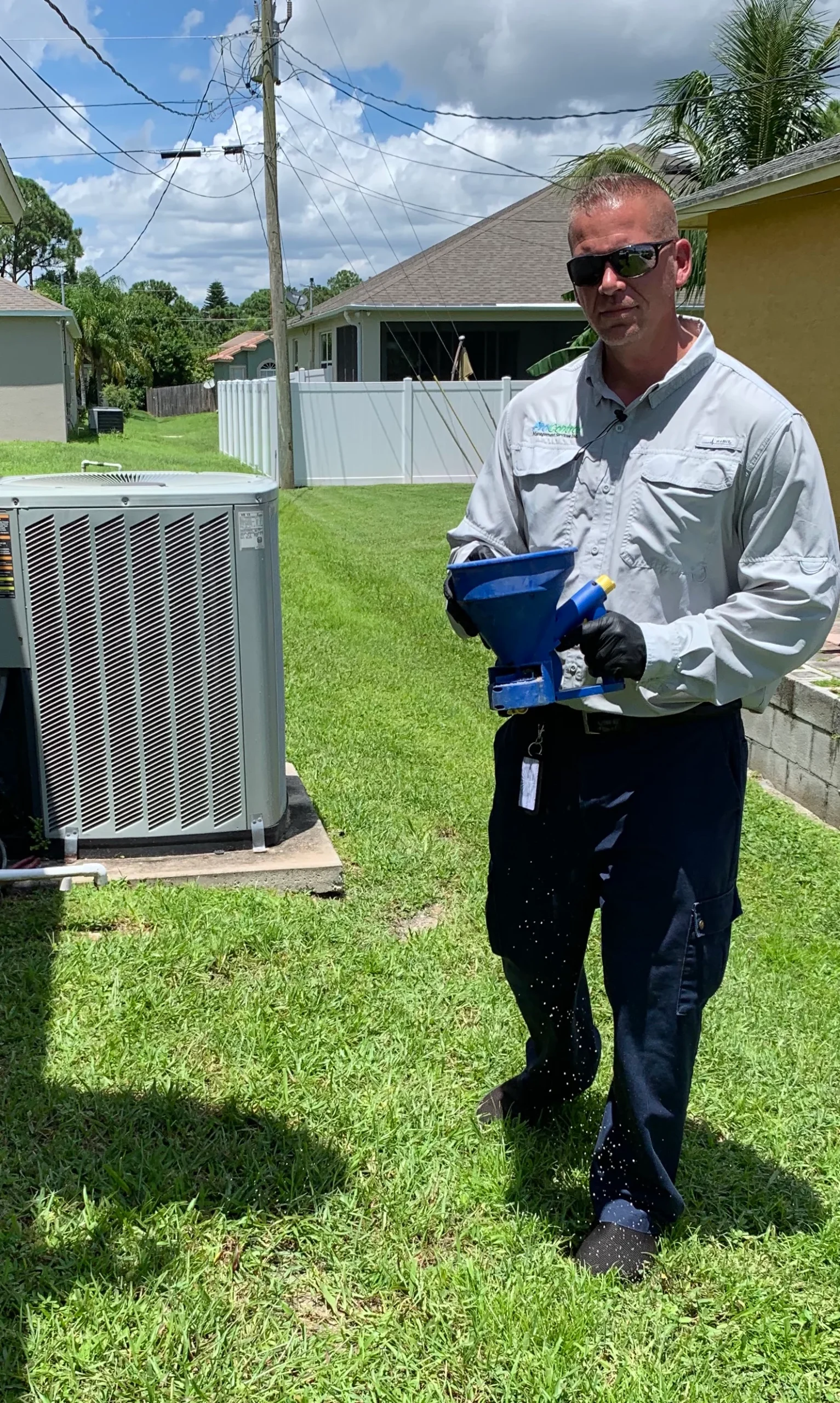
You stop second-guessing every creak in the attic. You stop finding ant trails across the kitchen counter every time it rains. You stop wondering whether that swarm you saw near the garage window was termites or just flying ants. When pest control actually works, you get your home back — and in Port St. Lucie, that matters more than most people realize before they move here.
This city doesn’t get a winter reset. The temperature rarely dips below 50°F, the canal system that runs through neighborhoods like Sandpiper Bay, Torino, and Canal Pointe stays wet year-round, and that combination keeps mosquitoes, rodents, and cockroaches active in every season. There’s no “off-season” for pest pressure here. It’s just the reality of living on the Treasure Coast, and it’s why ongoing protection is a smarter play than waiting for a problem to show up.
If you’ve moved into one of the newer developments in Tradition or along the Becker Road corridor, there’s another layer to this. Construction in western Port St. Lucie has been pushing into former agricultural and preserve land for years, and when the ground gets disturbed, established termite colonies and wildlife populations relocate — often directly into the nearest finished structure. Getting ahead of that isn’t paranoia. It’s the kind of thing a company with nearly 20 years of local service history knows to look for before it becomes a structural repair bill.
We’ve been based at 439 SE Port St. Lucie Blvd since 2006 — the same road that cuts through the heart of this city, from the older canal-side neighborhoods in the east to the newer communities pushing west toward I-95. That’s not a coincidence. This is where the work is, and this is where our team lives and operates.
Founded by Joseph J. Mami and fully licensed by the Florida Department of Agriculture and Consumer Services (license numbers JE79547 and JF265009), we are independently owned, fully insured, and built around a simple standard: show up, do the job right, and stand behind it. Customers in Port St. Lucie have named technicians Joe and Chuck specifically in their reviews — which tells you something about how we operate. You’re not getting a rotating stranger every quarter. You’re building a relationship with people who know your property.
Our service area covers St. Lucie County and beyond, but Port St. Lucie is home base. That means local knowledge that only comes from nearly two decades of service calls across every neighborhood in this city.
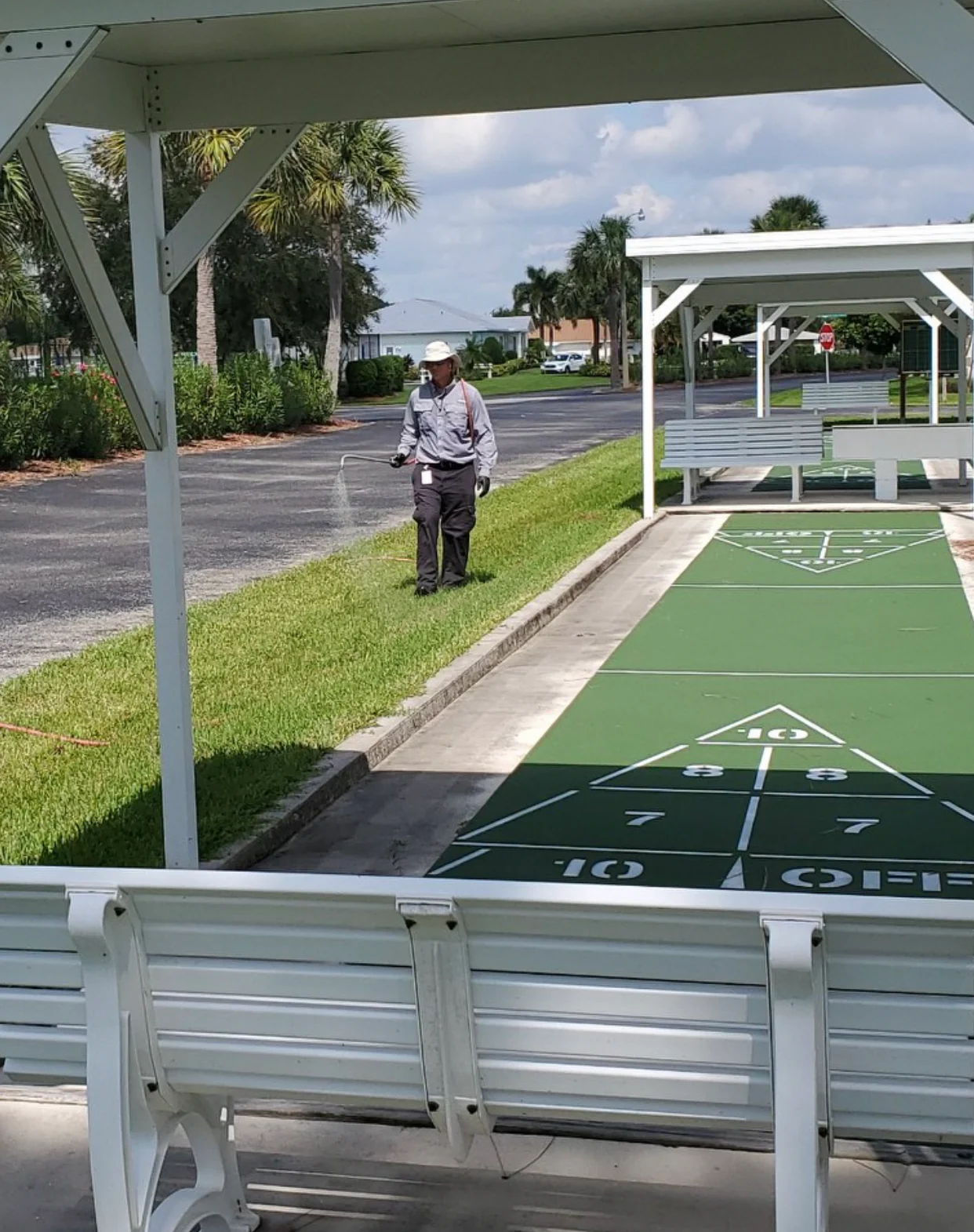
It starts with a free estimate. Before anything gets sprayed or treated, a licensed technician walks your property and takes a real look — entry points, moisture sources, structural vulnerabilities, and any active pest activity. In Port St. Lucie, that inspection means something specific: canal-adjacent properties in Southbend Lakes get assessed differently than a newer CBS home in PGA Village, and a 1980s ranch in Torino has different exposure points than a townhouse in Newport Isles. The inspection isn’t a formality. It’s how the right treatment gets matched to the right property.
From there, we build the treatment plan around what’s actually present — not a one-size approach applied to every home on the block. We use eco-friendly methods aligned with EPA Integrated Pest Management principles, which means targeted, species-specific treatments rather than broad chemical saturation. That matters for families with kids, for pet owners in communities like Riverland’s Valencia Walk, and for anyone living near the St. Lucie River watershed who cares about what gets applied around their property.
After the initial service, most Port St. Lucie homeowners move into a recurring treatment schedule — typically quarterly — because the pest pressure here doesn’t pause between visits. If something comes back before your next scheduled service, we do too. That’s our satisfaction guarantee, and it’s not conditional on anything except calling.
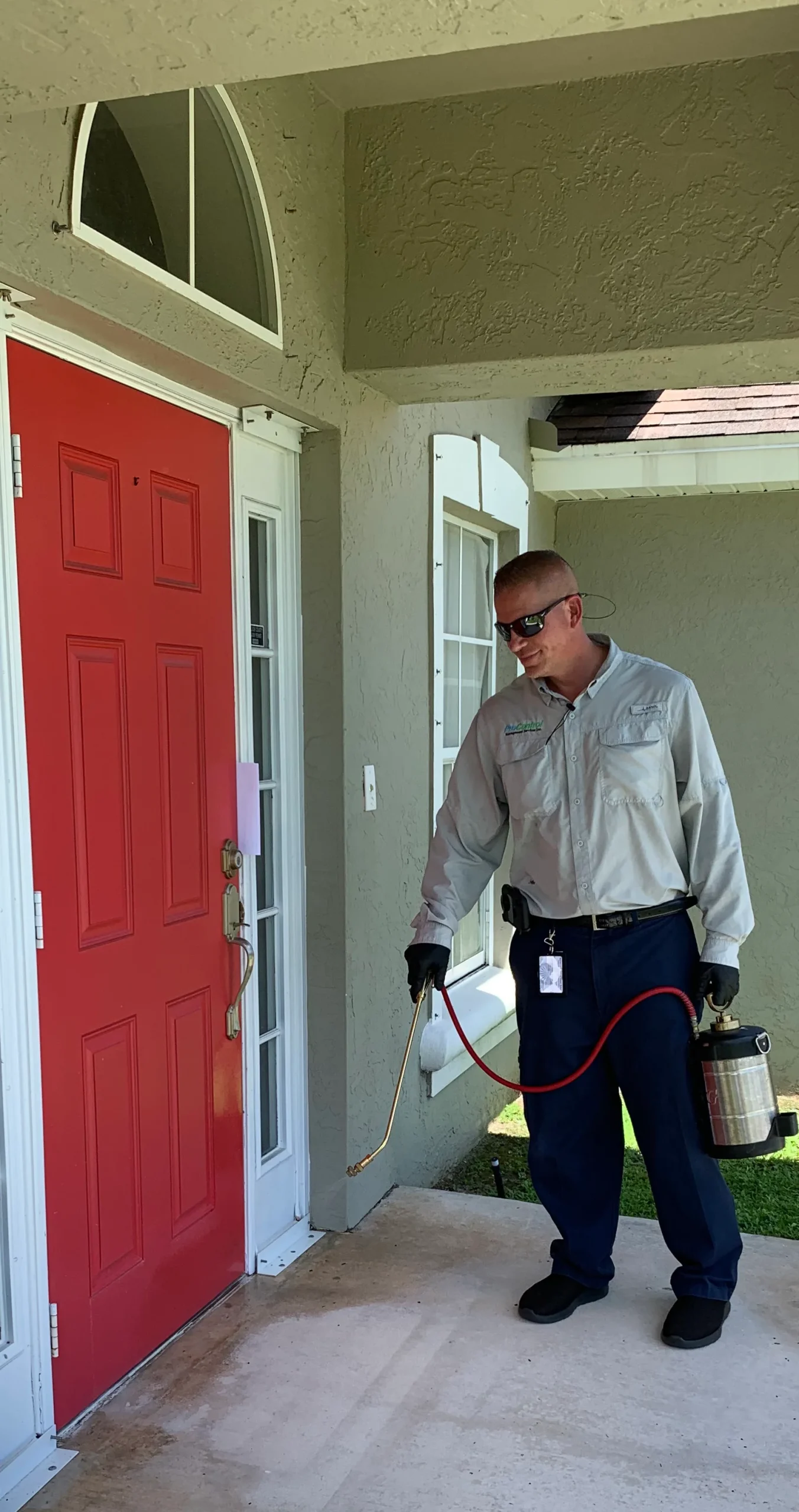
Port St. Lucie’s pest list is longer than most people expect when they first move here. Subterranean termites thrive in the warm, damp conditions created by the city’s canal infrastructure and frequent summer rains. Palmetto bugs — what locals call the large American cockroaches that breed in storm drains and sewer systems — invade homes during the rainy season when their underground habitat floods. Ghost ants appear in kitchens and bathrooms seemingly out of nowhere. Fire ants build mounds in yards overnight. Mosquitoes breed in standing water along every canal corridor in the city. And wildlife — raccoons, armadillos, opossums — use those same waterways as travel routes directly into attics and crawl spaces.
We handle all of it under one roof. Our services include termite control, rodent control, wildlife removal, mosquito control, ant and cockroach treatment, lawn and shrub pest treatment, and gutter guard installation. For homeowners in the 55-plus communities like Cresswind at PGA Village Verano or Valencia Walk, the eco-friendly approach isn’t a bonus feature — it’s the reason they call. Pet-safe, targeted treatments that don’t saturate the yard with broad-spectrum chemicals are our standard here, not an upgrade.
For commercial clients — restaurants, property managers, retail operators along US 1 or Port St. Lucie Blvd — we provide documented service records and treatments that hold up to health department inspection standards. Every service, residential or commercial, is backed by the same satisfaction guarantee: if the problem returns before your next visit, so does our team.
For most homes in Port St. Lucie, quarterly service is the practical standard — and the climate is the main reason. With temperatures staying between 65°F and 91°F year-round and no meaningful winter freeze, pest populations never go dormant. Ants, cockroaches, termites, and mosquitoes stay active in every season, which means a single annual treatment leaves long gaps where infestations can establish and grow unchecked.
Quarterly service creates a consistent barrier that gets refreshed before it breaks down. For homes near the canal system — in neighborhoods like Sandpiper Bay, Southbend Lakes, or Canal Pointe — the standing water access nearby makes that regular schedule even more important, since mosquito and rodent pressure from the waterways doesn’t let up between seasons. Some homeowners in higher-exposure areas or with active termite history opt for more frequent visits, and that’s a conversation worth having during the initial inspection.
The most common calls we handle in Port St. Lucie involve palmetto bugs, ghost ants, subterranean termites, rodents, and mosquitoes. Palmetto bugs — the large cockroaches that breed in sewer systems and storm drains — become a visible problem during the rainy season when heavy afternoon thunderstorms flood their underground habitat and push them into homes looking for dry ground. Ghost ants are a year-round kitchen and bathroom nuisance that most residents try to handle themselves before realizing the colony is much larger than what’s visible.
Subterranean termites are the concern that carries the most financial weight. They’re active in Port St. Lucie’s warm, damp conditions year-round, and they can cause serious structural damage before there’s any visible sign of an infestation. Termite swarmers appearing inside the home — especially in spring after warm rains — are often the first indication of an established colony. Rodents, particularly roof rats, are common in older neighborhoods with mature tree canopy and canal access, and they’re skilled at finding entry points that aren’t obvious from the outside.
This is one of the most common questions we get, and the short answer is that eco-friendly doesn’t mean less effective — it means more precise. Our approach follows EPA Integrated Pest Management principles, which focus on targeted, species-specific treatments rather than applying broad-spectrum chemicals across every surface and hoping for coverage. That precision is actually more effective for eliminating specific pest problems because it addresses the source, not just what’s visible.
For Port St. Lucie homeowners with pets, young children, or properties near the St. Lucie River watershed, the eco-friendly methodology matters beyond just effectiveness. Treatments that are targeted and low-impact don’t leave chemical residue in areas where dogs and cats spend time, and they don’t contribute to runoff into the canal system that connects to the North Fork and surrounding preserve areas. In communities like Riverland or PGA Village Verano, where many residents specifically ask about pet-safe options, this is our standard approach — not a special request.
The most obvious sign is swarmers — winged reproductive termites that emerge in large numbers, typically in spring after warm rains. If you see what looks like a mass of flying ants appearing inside your home near windows, door frames, or light fixtures, that’s a strong indicator of an established subterranean termite colony nearby. Discarded wings along windowsills are another common finding after a swarm.
Beyond swarmers, signs to look for include mud tubes running along the foundation, baseboards, or garage walls — subterranean termites build these to travel between the soil and their food source. Hollow-sounding wood when you tap on baseboards or door frames, tight-fitting doors or windows that weren’t tight before, and small piles of what looks like sawdust near wood structures are all worth investigating. In Port St. Lucie, the combination of year-round warmth, frequent summer moisture, and the soil conditions created by the canal infrastructure makes termite activity a realistic concern for virtually every property in the city — not just older homes. New construction in Tradition and western Port St. Lucie is not immune, particularly when built on land that previously supported active colonies.
A legitimate estimate starts with a physical inspection — not a price quote over the phone based on square footage. A technician should walk the property, check entry points, look for signs of active pest activity, assess moisture sources and structural vulnerabilities, and then explain what they found before recommending any treatment. That inspection is how the right service gets matched to the actual problem rather than a generic package.
We provide free estimates for every residential and commercial property in Port St. Lucie. There’s no charge to have someone come out, no pressure to commit on the spot, and no hidden fees added after the fact. For homeowners comparing multiple companies, that transparency is worth paying attention to — some competitors in the Port St. Lucie market charge for inspections or use the inspection as an entry point for high-pressure sales. A free, no-obligation estimate lets you evaluate the recommendation on its merits before making any decision.
We handle wildlife removal directly — raccoons, opossums, armadillos, snakes, and other species commonly encountered in Port St. Lucie’s canal-adjacent and preserve-adjacent neighborhoods. You don’t need to find a separate company for that. Having one team handle both pest control and wildlife removal matters because the two problems often overlap: rodents and wildlife use the same entry points, the same moisture sources, and the same travel corridors along the canal system that runs through neighborhoods like Torino, Sandpiper Bay, and Southbend Lakes.
Wildlife removal in Florida is regulated by the Florida Fish and Wildlife Conservation Commission, which sets rules around trapping, holding periods, and relocation. We operate within those requirements, which is worth confirming with any company you hire for this service — not every operator in the Port St. Lucie market follows FWC protocols consistently. If you’ve heard activity in your attic, found burrowing damage in the yard, or spotted a raccoon using your canal-side fence line as a regular route, that’s worth a call. Catching it early is significantly less disruptive than dealing with an established den or an entry point that’s been open long enough to let multiple animals through.