From palmetto bugs to German cockroaches, St. Lucie County homeowners face year-round pest pressure. Here's what actually works — and who to call.
Share:
Summary:
You spotted one in the kitchen. Maybe two. And if you know anything about cockroaches in South Florida, you already know that what you see is almost never the whole picture. In St. Lucie County, the combination of year-round heat, coastal humidity, and rapid new construction creates ideal conditions for cockroaches to thrive — in walls, under appliances, inside utility conduits — long before a homeowner ever notices a problem.
We’ve been solving exactly this kind of situation since 2006. This page breaks down what professional cockroach extermination involves, what it costs, and what separates a treatment that actually works from one that just pushes the problem deeper into your walls.
Cost is usually the first question, and it’s a fair one. Nationally, cockroach extermination runs between $100 and $600 for standard treatments. In St. Lucie County, an initial visit — which typically includes an inspection, interior and exterior exterminator treatment, and prevention recommendations — usually falls between $150 and $400. More severe infestations, or situations requiring fumigation, can reach $1,000 or more.
What drives the price up isn’t just the size of your home. It’s the species, the severity, and how long the infestation has had to establish itself. A German cockroach problem that’s been building for months behind your refrigerator is a fundamentally different job than a few palmetto bugs wandering in through a gap in your garage door. We offer free estimates for every client — residential, commercial, and industrial — so you know exactly what you’re looking at before any work begins.
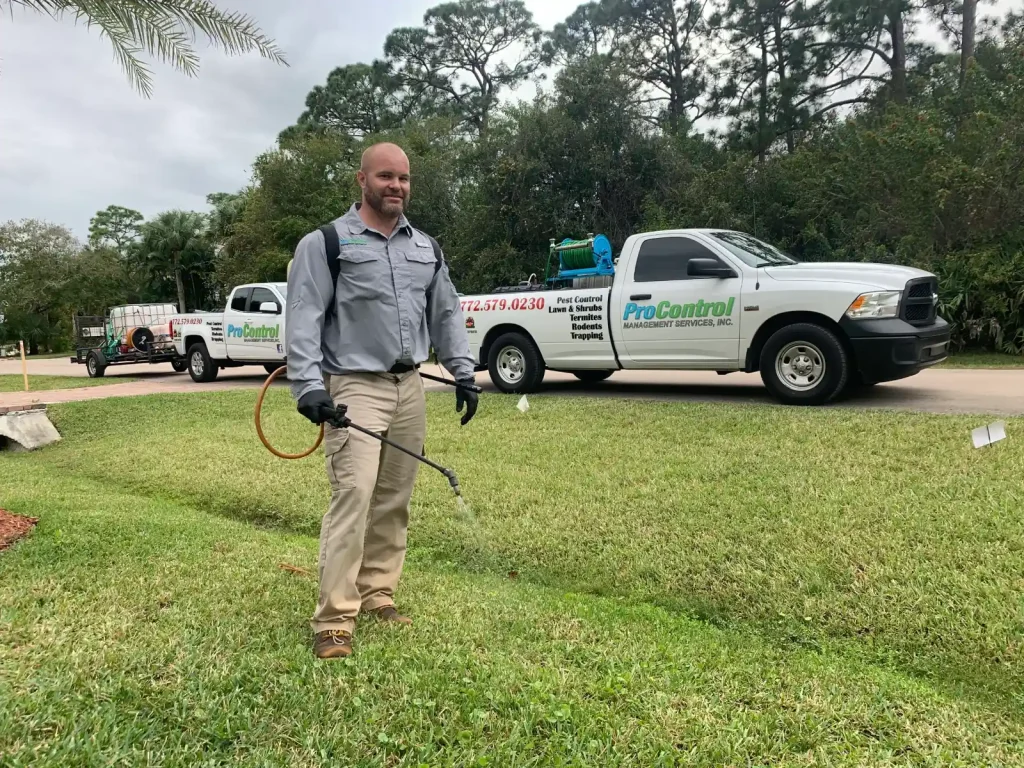
Most people in Port St. Lucie call them palmetto bugs. Technically, they’re American cockroaches — large, reddish-brown, and up to two inches long. They live primarily outdoors, in mulch beds, under leaf litter, near the St. Lucie River’s moisture-rich banks, and along utility conduits. When they wander inside, it’s usually because they’re seeking cooler air or water, not because they’ve set up a colony in your kitchen. A good perimeter treatment and sealing of entry points is usually enough to keep them out.
German cockroaches are an entirely different situation. They’re smaller — about half an inch — light brown with two dark stripes running down their back. And unlike palmetto bugs, they live entirely indoors. They breed in kitchens and bathrooms, inside cabinet hinges, behind stoves, under sinks, anywhere warm and humid. A single female German cockroach can produce hundreds of offspring in just a few months. By the time you’re seeing them during the day, the population is already large enough that they’re being pushed out of hiding by overcrowding.
This distinction matters because our treatment approach is completely different. German cockroaches require targeted bait placements, insect growth regulators to interrupt the breeding cycle, and crack-and-crevice treatments to reach harborage areas that sprays never touch. Over-the-counter products scatter the population without eliminating it — often making the infestation harder to treat because the roaches move deeper into the structure. If you’ve already tried a store-bought solution and the problem persists, that’s not a failure on your part. It’s just the nature of what you’re dealing with, and it’s exactly the kind of situation we handle every day.
Pest professionals generally use a simple threshold: if you’re seeing two or more cockroaches, there are likely hundreds more hiding. Cockroaches are nocturnal. They avoid light and stay out of sight during the day. Spotting one in the middle of the afternoon — especially in a kitchen or bathroom — is a reliable indicator that the population has grown large enough to push individuals out of the usual hiding spots.
Other signs worth taking seriously include finding small, dark droppings that look like ground pepper near appliances or under sinks, noticing a faint musty odor in your kitchen or bathroom that wasn’t there before, or finding oval-shaped egg casings tucked into corners or inside cabinet hinges. If you’re in an older neighborhood in Fort Pierce or an established Port St. Lucie subdivision, aging plumbing and utility conduits can provide direct entry points that most homeowners never think to check.
One thing we hear often: “I keep a clean house — how is this happening?” Cockroaches in St. Lucie County don’t require a dirty environment. They come in through gaps around pipes, cracks in the foundation, utility penetrations, and even through shared walls in multi-unit buildings. Cleanliness reduces the food sources available to them, but it doesn’t seal the entry points. That’s what a professional inspection is for — identifying exactly where they’re getting in and what’s sustaining the population, not just treating the ones you can see.
Cockroaches get the most attention, but they’re rarely the only pest pressure a St. Lucie County homeowner is managing. Florida doesn’t have a pest-control off-season. The same subtropical climate that makes the Treasure Coast a great place to live — warm winters, proximity to water, lush landscaping — creates ideal conditions for ants, spiders, fleas, and seasonal pests to stay active twelve months a year.
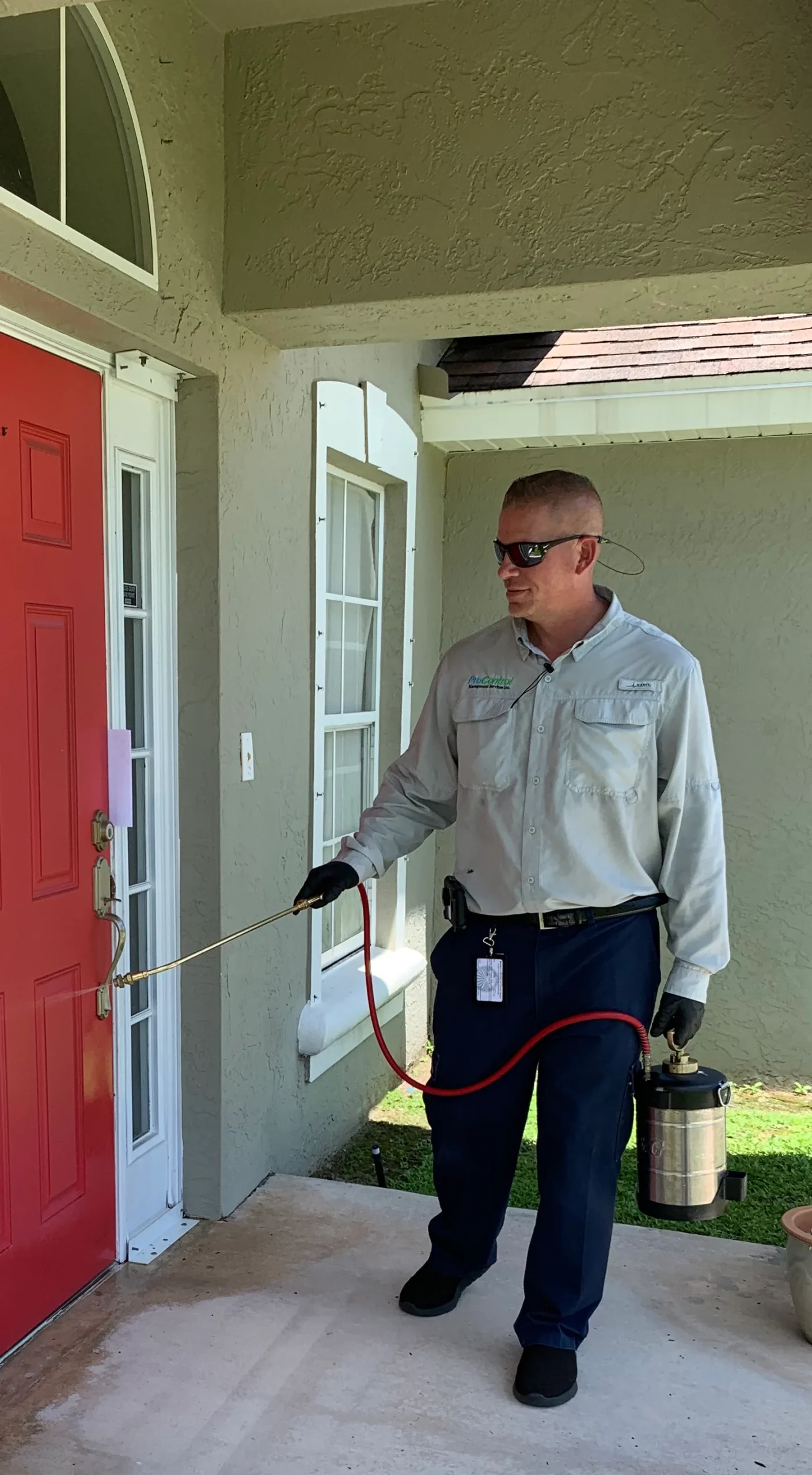
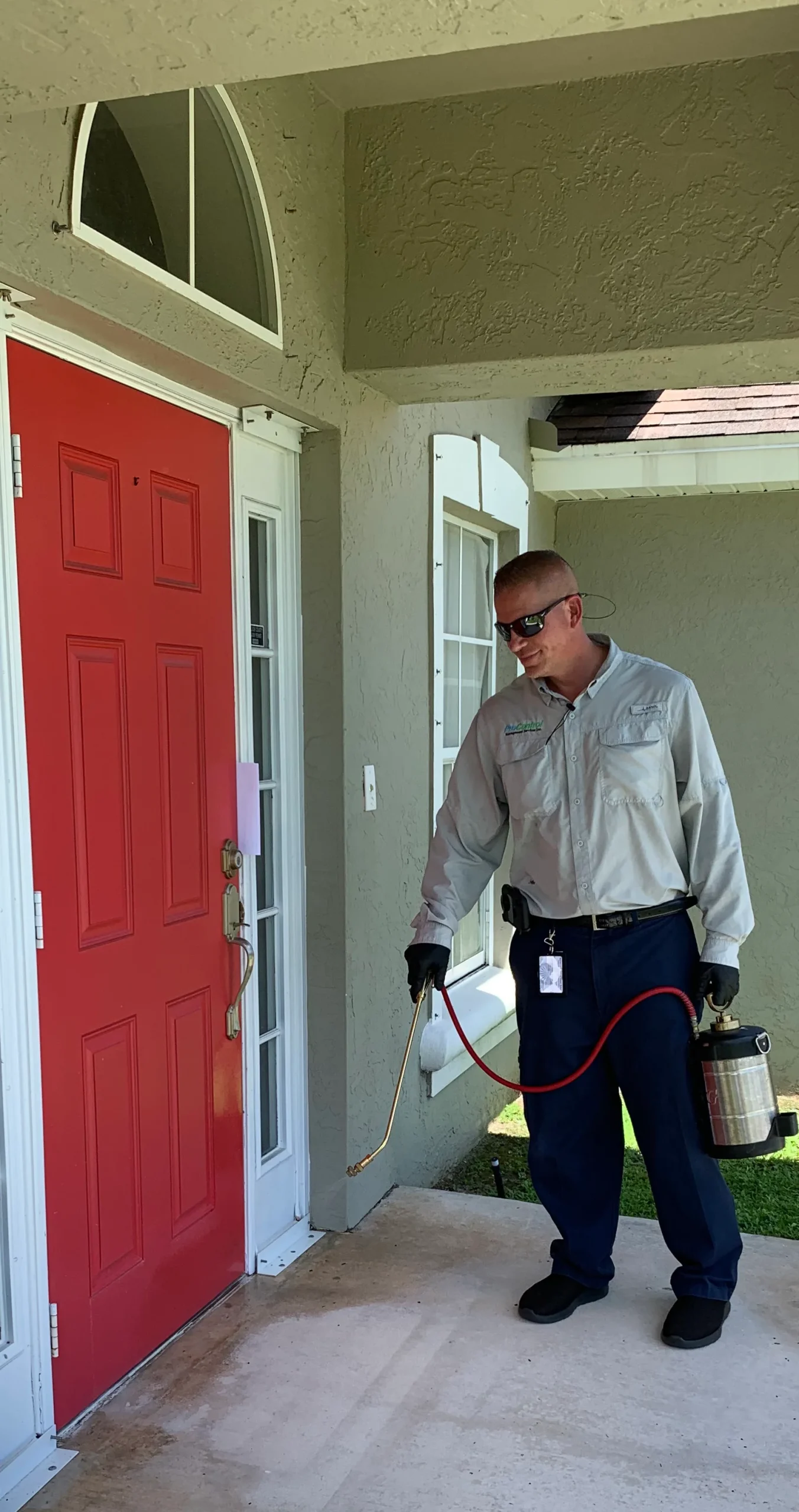
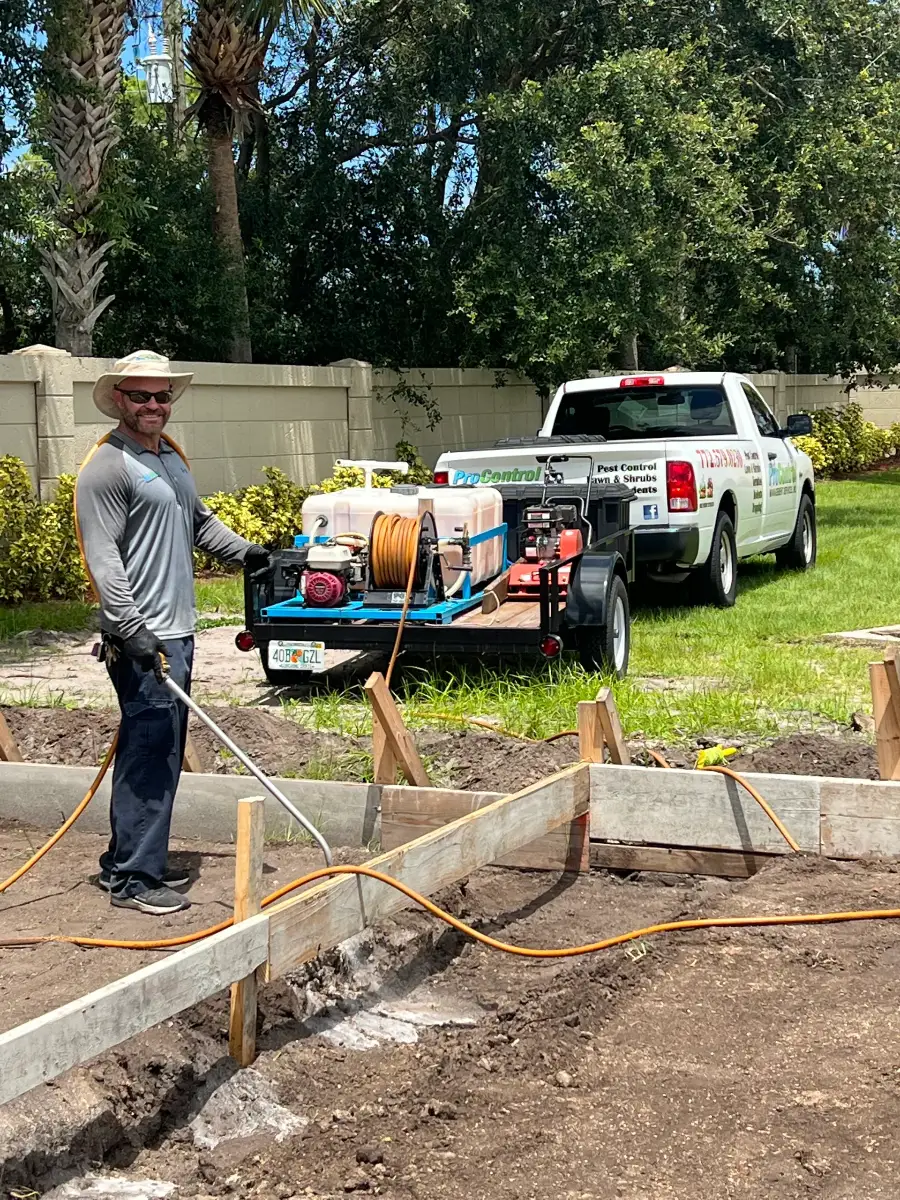
We approach general bug control the same way we approach cockroaches: identify first, treat second. Targeted, eco-friendly treatment that addresses the actual species and entry points is our standard. Blanket chemical application isn’t the goal. That approach is safer for your family, safer for your pets, and safer for the surrounding environment — including the Indian River Lagoon and St. Lucie River, which are part of what makes this community worth protecting.
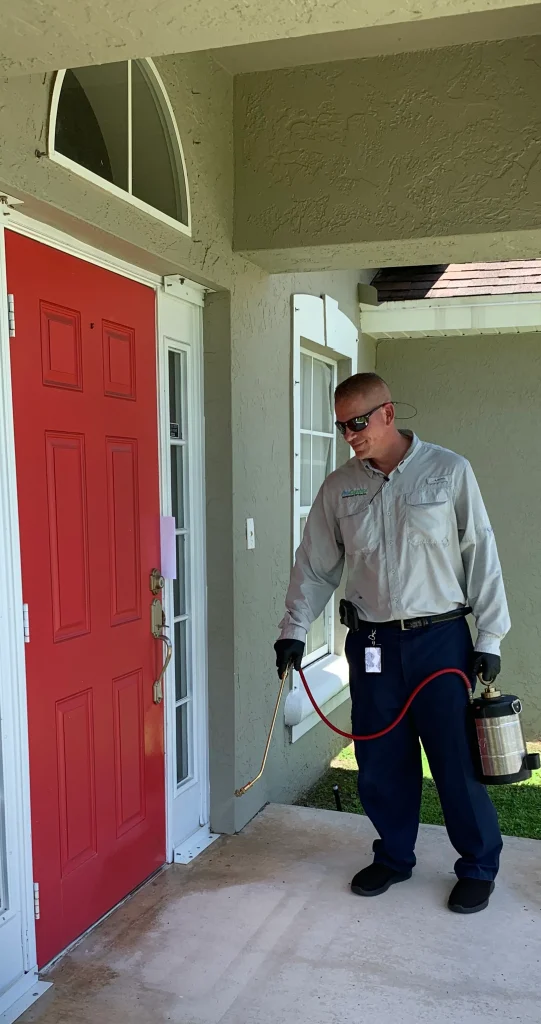
Bee and wasp nests are one of the more urgent pest situations we handle. A nest that’s been building quietly in a soffit, under a deck, or inside a wall void can reach thousands of insects before it’s discovered — and once disturbed, the response can be fast and dangerous. This is not a situation where a can of store-bought spray and a quick retreat is a reasonable plan.
We handle bee nest removal and yellow jacket nest removal with the kind of care the job actually requires. Yellow jackets in particular are aggressive defenders of their nests and will pursue a perceived threat well beyond the nest itself. They’re also ground-nesters in many cases, which means the entry point isn’t always obvious. A professional inspection locates the nest, assesses the size and species, and determines the safest removal approach — whether that’s chemical treatment, physical removal, or exclusion after the colony is eliminated.
For honeybees specifically, we take a different approach when possible. Honeybees are ecologically important, and in many cases relocation is preferable to extermination. The right answer depends on the location of the nest, its size, and whether it poses an immediate risk to the people on the property. We’ll give you a straight answer about what makes sense for your specific situation rather than defaulting to the fastest option.
For bed bug control, we use a combination of approaches depending on the severity and layout of the affected space. Bed bug heat treatment is one of the most effective options available — it raises the temperature in the treated area to a level that kills bugs and eggs at every life stage, with no chemical residue left behind. That makes it a strong choice for families with young children or pets, or anyone who wants a chemical-free resolution. Chemical treatments remain effective for many situations and are often used in combination with heat for severe infestations. We’ll walk you through the options clearly so you can make the right call for your home and your family — not just the most expensive one.
Here’s what we’ve learned after nearly two decades working in Port St. Lucie, Fort Pierce, Tradition, Stuart, and the rest of the Treasure Coast: most people call us after they’ve already tried something else. A spray, a bait station, another company. And when those things don’t work, the problem is usually worse than it was to begin with.
We’re not here to oversell you on a service you don’t need. We’re here to figure out what’s actually going on, treat it the right way, and stand behind the result. Every service we provide comes with a satisfaction guarantee — if the problem isn’t resolved, we come back. We offer free estimates to every client, we use eco-friendly methods that are safe for families and pets, and we’re available 24/7 when the situation can’t wait until Monday morning.
If you’re dealing with cockroaches, bed bugs, or anything else that’s disrupting your home or business in St. Lucie County, reach out to us. We’ll start with a free estimate and go from there.
Article details:
Share:
Continue learning: