Termite damage is expensive, invisible, and not covered by insurance. Here's what actually works — and how to choose the right method for your home.
Share:
Summary:
If you’ve spotted a swarm near your windows, found hollow-sounding wood, or noticed what looks like sawdust near a door frame, you already know something’s wrong. The question is what to do about it — and more importantly, what will actually fix it versus what will just buy you a few months before the problem comes back.
Termite control isn’t one-size-fits-all. The right method depends on which species you’re dealing with, how far the infestation has spread, and what your home is made of. Here in St. Lucie County, where termites are active every single month of the year, getting that diagnosis right from the start matters more than most people realize.
The single biggest mistake homeowners make is jumping straight to treatment without knowing what they’re treating. A liquid soil barrier is the right call for subterranean termites living underground — but it won’t do anything for drywood termites nesting inside your attic framing. Recommending tent fumigation for a localized infestation, or applying the wrong chemical to the wrong species, wastes your money and leaves the colony intact.
St. Lucie County deals with four main termite species, and we inspect every property thoroughly to identify exactly what’s present before recommending any treatment. That step isn’t a formality — it’s what determines everything that comes after.
Eastern subterranean termites are the most common species in Port St. Lucie and the surrounding Treasure Coast. They live underground, build the mud tubes you might notice running up your foundation or along a wall, and send workers up into the wood structure of your home to feed. A mature colony can hold 60,000 to 200,000 termites and feed continuously, 24 hours a day. They swarm in spring — typically February through April — often after a warm rain, which is when most homeowners first realize they have a problem.
Drywood termites are different in almost every way. They don’t need soil contact. They move directly into dry wood — attic framing, window frames, furniture, door casings — and live entirely inside the material they’re eating. One of the clearest signs is frass: tiny pellets that look like sawdust or coffee grounds near wood surfaces. They swarm later in the year, typically late summer through fall, and because they stay hidden inside the wood, infestations can go undetected for a long time.
Dampwood termites are less common but worth knowing. They’re drawn to wood with elevated moisture content — think a slow roof leak, a plumbing drip behind a wall, or wood sitting in prolonged contact with wet soil. Finding dampwood termites usually signals a moisture problem that needs to be addressed alongside the pest treatment itself.
Then there’s the Formosan subterranean termite — the one pest professionals take most seriously. Originally from East Asia, Formosan termites are now well established throughout South Florida and increasingly active in St. Lucie County. A Formosan colony can contain several million termites, compared to the 60,000–200,000 of a native subterranean colony. They cause structural damage faster than any other species, sometimes within six months of establishing a colony. They swarm at night in spring, often around exterior lights, and are frequently mistaken for native subterranean termites until the scale of damage makes the difference obvious.
Subterranean termites — both the native Eastern species and the invasive Formosan — are the dominant termite threat in St. Lucie County, and they’re also the most structurally destructive. Understanding how they operate helps explain why certain treatment methods work and others fall short.
These termites live in the soil beneath and around your home. The colony establishes underground, then workers travel up through the earth, through cracks in your slab, along your foundation, or through the mud tubes they construct to reach wood above grade. The tubes protect them from light and predators and keep the humidity levels they need to survive. If you see mud tubes — even pencil-thin ones — running up a foundation wall or along a floor joist in a crawl space, that’s a confirmed subterranean termite sign.
What makes them particularly difficult to control is the size and depth of the colony. You can kill every termite you can see and barely touch the population underground. Surface sprays and contact treatments don’t reach the queen or the workers deep in the soil. Effective treatment has to either create a chemical barrier the termites can’t cross, or use a bait system that workers carry back to the colony and share — eliminating the source rather than just the symptom.
In Port St. Lucie, the dominant construction style — slab-on-grade homes built during the 1980s through 2000s development boom — creates specific vulnerabilities. Utility penetrations, expansion joints, and the wall plates sitting directly on the slab are all entry points where subterranean termites commonly gain access. Homes in older Fort Pierce neighborhoods with pier-and-beam construction face a different but equally real exposure. Knowing your home’s construction type is part of how we determine which treatment approach makes the most sense.
Once the species is confirmed and the scope of the infestation is mapped, the treatment conversation gets specific. There are seven primary termite control methods we use, and each one has a different mechanism, a different target, and a different set of circumstances where it performs best.
The method that’s right for your home depends on what species you have, how far the infestation has spread, your home’s construction type, and your preferences around chemical exposure. Here’s how each one works.
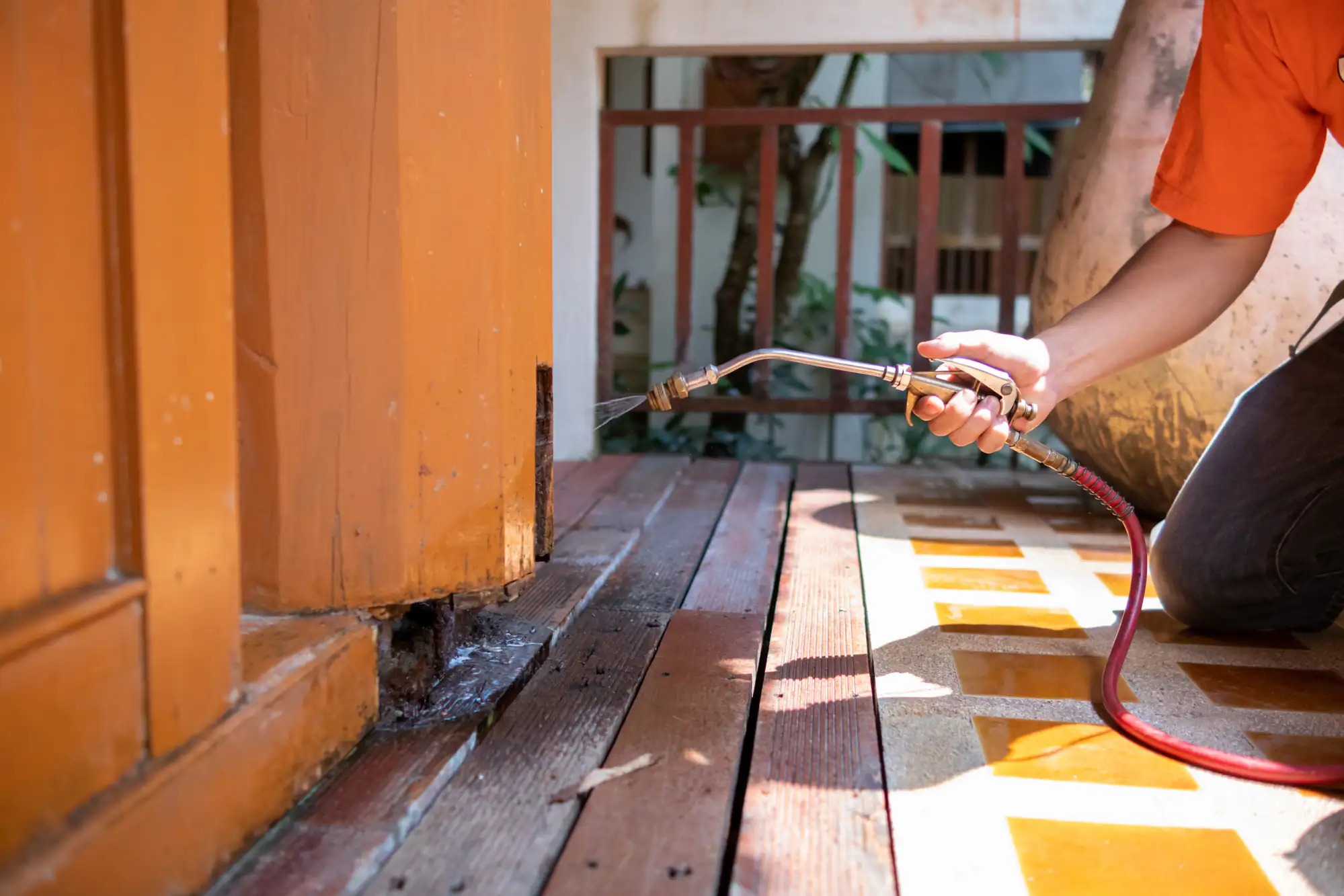
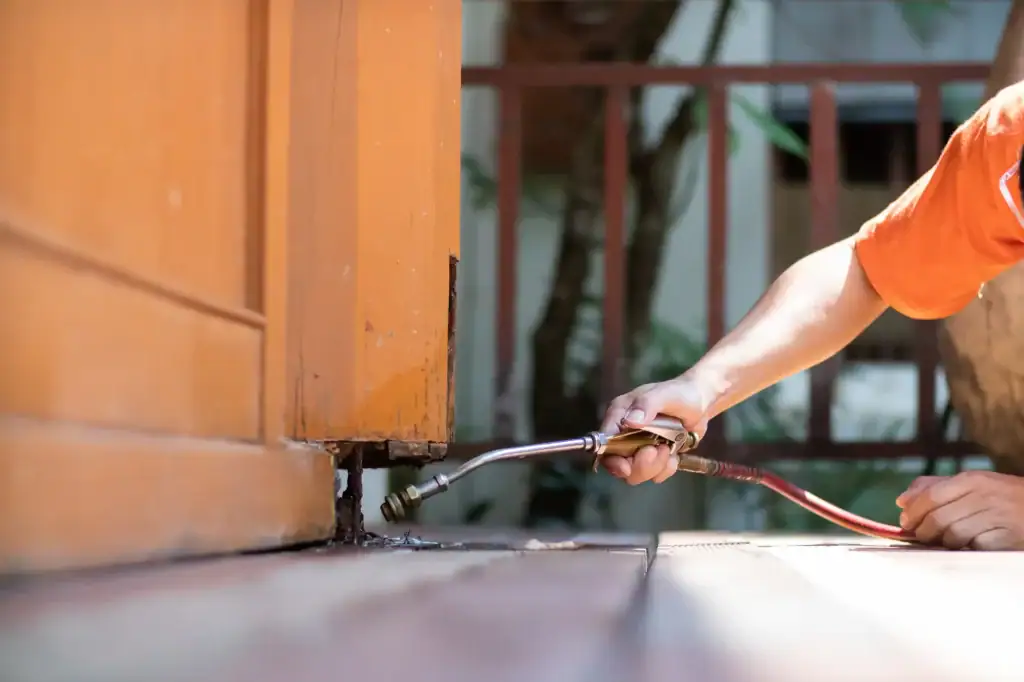
Liquid termiticide treatment — sometimes called a soil barrier or chemical barrier — is one of the most widely used methods for subterranean termites. A termiticide is applied to the soil around and beneath the foundation, creating a treated zone that termites either avoid or pass through and carry back to the colony. Modern termiticides are non-repellent, meaning the termites don’t detect them and walk right through — which is actually what you want, because it allows the chemical to spread through the colony before taking effect. This method works well for Eastern subterranean termites and is often our first line of defense for slab-on-grade homes in Port St. Lucie.
Perimeter bait stations take a different approach. We install stations in the soil around the structure, and termites foraging underground find them and feed. The bait contains a slow-acting compound that workers carry back to the colony and share with others, including the queen. Over time, the colony collapses. Bait systems require monitoring and patience — they’re not an overnight fix — but they’re highly targeted, use minimal chemical volume, and are one of the more eco-friendly options available. They’re particularly effective as both a treatment and an ongoing prevention tool.
Heat treatment is worth understanding because it’s one of the few methods that works without any chemical residue at all. The structure or a targeted section of it is heated to temperatures above 120°F and held there long enough to kill termites at every life stage — eggs, larvae, workers, and reproductives — throughout the wood. It’s especially effective for drywood termites in attic spaces or wall voids where chemical access is limited. For families with young children, pets, or chemical sensitivities, heat treatment is often the preferred choice. We use it regularly in St. Lucie County homes where the infestation is concentrated in a specific area and a targeted, chemical-free approach is the priority.
Tent fumigation — what most people picture when they think of termite treatment — involves enclosing the entire structure in a sealed tent and introducing a gas fumigant that penetrates every cavity, crack, and piece of wood in the building. It’s highly effective for widespread drywood termite infestations where the colony has spread through multiple areas of the structure and targeted treatment isn’t practical. The fumigant dissipates completely after treatment, and the home is cleared for re-entry within a few days. It’s important to understand, though, that tent fumigation does not protect against future infestation — it eliminates what’s present at the time of treatment, but it creates no residual barrier. For subterranean termites, fumigation isn’t the right tool at all, since the colony lives underground and outside the tent’s reach.
Borate wood treatments work differently. Borates are naturally occurring compounds we apply directly to wood surfaces — framing, joists, subflooring — where they absorb into the wood and create a long-lasting toxic environment for any termite that feeds on it. They’re particularly useful during construction or renovation, when framing is exposed and accessible. Borate treatments are low in toxicity to humans and pets, making them a strong eco-friendly option for preventative protection during a build or remodel.
Foundation treatments are targeted applications of termiticide at and around the foundation itself — addressing the specific entry points where subterranean termites most commonly gain access to a structure. This is different from a full perimeter soil treatment; it’s more surgical, focused on the highest-risk zones. Underground preventative treatments take a similar philosophy but go deeper, treating the soil before termites establish rather than after. For new construction in St. Lucie County, Florida law actually requires pre-construction termite treatment under Statute 482.0815 — but existing homeowners can also benefit from proactive soil treatments that make the area around the foundation inhospitable to subterranean colonies before they ever get started.
The honest answer to “which method is best” is that it depends entirely on your specific situation. We’ve been called in after other companies applied the wrong treatment to the wrong species, and the difference in outcome is significant. Getting the diagnosis right first is what makes everything else work.
Termites are active in St. Lucie County every month of the year, and your homeowner’s insurance won’t cover a dollar of the damage they cause. The good news is that every one of the methods above works — when it’s matched to the right species, the right infestation scope, and the right home.
What matters most is starting with an honest inspection by someone who knows what they’re looking for. Not every pest control company has the depth of experience to distinguish a Formosan subterranean colony from a native one, or to recognize when a bait system is the smarter long-term play over a liquid barrier. That difference in expertise is real, and it shows up in the results.
If you’re dealing with something that a previous treatment didn’t fix, or you just want to know what’s actually going on before the problem gets worse, we offer free estimates and we’ll tell you exactly what you’re dealing with before recommending anything.
Article details:
Share:
Continue learning: