Not all termite treatments are created equal — especially when you have kids, pets, and a Florida home to protect. Here's what you need to know.
Share:
Summary:
If you’ve spotted a swarm near your windows, found mud tubes along your foundation, or just have that gut feeling something is quietly eating your home — you’re right to take it seriously. Termites cause over $500 million in damage across Florida every year, and standard homeowner’s insurance doesn’t cover a cent of it. But here’s what most companies won’t tell you upfront: you have more options than a full tent fumigation. Safer options. Ones that don’t require you to pack up your family and your pets for three days. We walk you through what those options look like, what they cost, and why they work.
When homeowners search for a natural termite spray, they’re usually asking a fair question: is there something that kills termites without filling my home with chemicals? The honest answer is yes — and these approaches have come a long way from being considered second-tier.
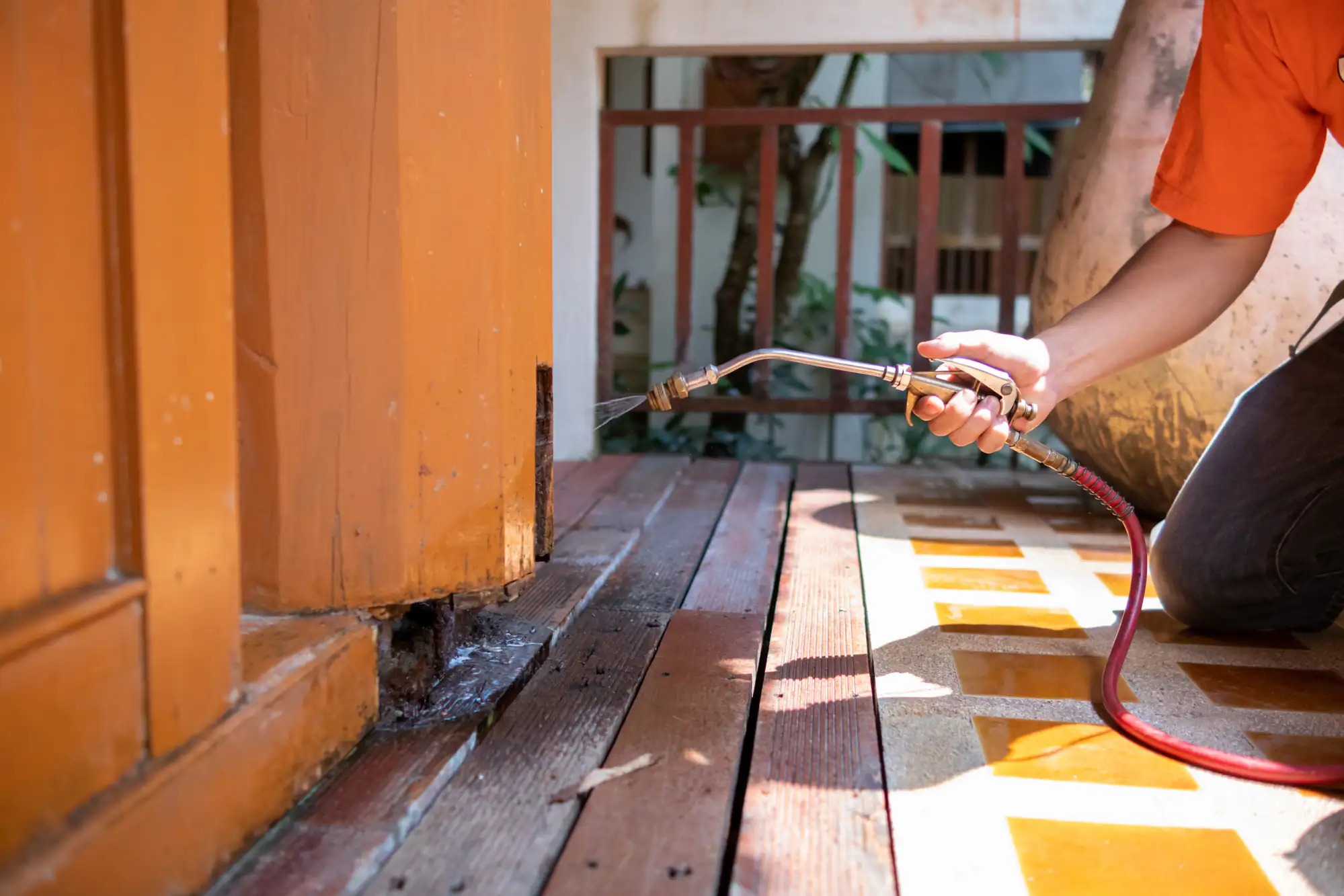
Borate-based treatments are one of the most proven eco-friendly options we recommend. Borates are a naturally occurring mineral compound that we apply directly to wood, where it disrupts the termites’ ability to digest cellulose — essentially starving the colony. It’s non-toxic to humans and pets when applied correctly, and the protection can last up to 20 years. For new construction or renovation projects in Port St. Lucie, borate treatments applied during the build phase are one of the smartest investments a homeowner can make.
Orange oil — derived from orange peels and containing a compound called d-limonene — is another option that works well as a targeted, contact-based treatment, particularly for drywood termites. It won’t reach a deep subterranean colony on its own, but as part of a broader treatment plan, it’s effective and leaves no harmful residue behind.

Subterranean termites are the most destructive species active in St. Lucie County — and they’re also the hardest to spot until they’ve already done serious damage. They live underground and travel through mud tubes they build along your foundation, crawl spaces, and any wood-to-soil contact point. By the time you see those tubes, there’s a well-established colony behind them.
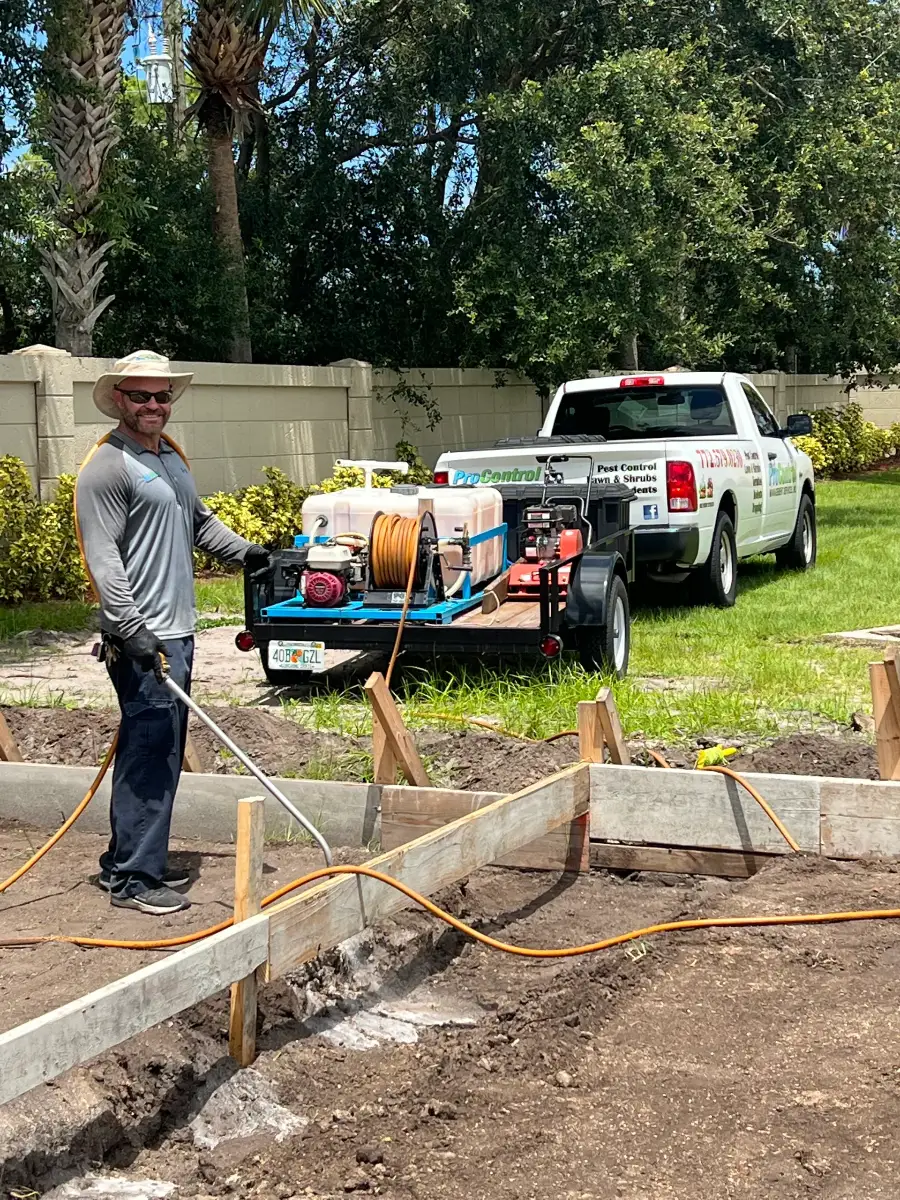
Treatment for subterranean termites typically involves one of two approaches: a liquid barrier treatment or a bait station system. Liquid treatments — sometimes called trench-and-treat — involve applying a termiticide around the perimeter of your home’s foundation. Termites pass through it and either die on contact or carry it back to the colony. These run roughly $3 to $16 per linear foot of foundation, which for a typical Treasure Coast home often lands somewhere between $500 and $2,500 depending on the size of the structure and the severity of the infestation.
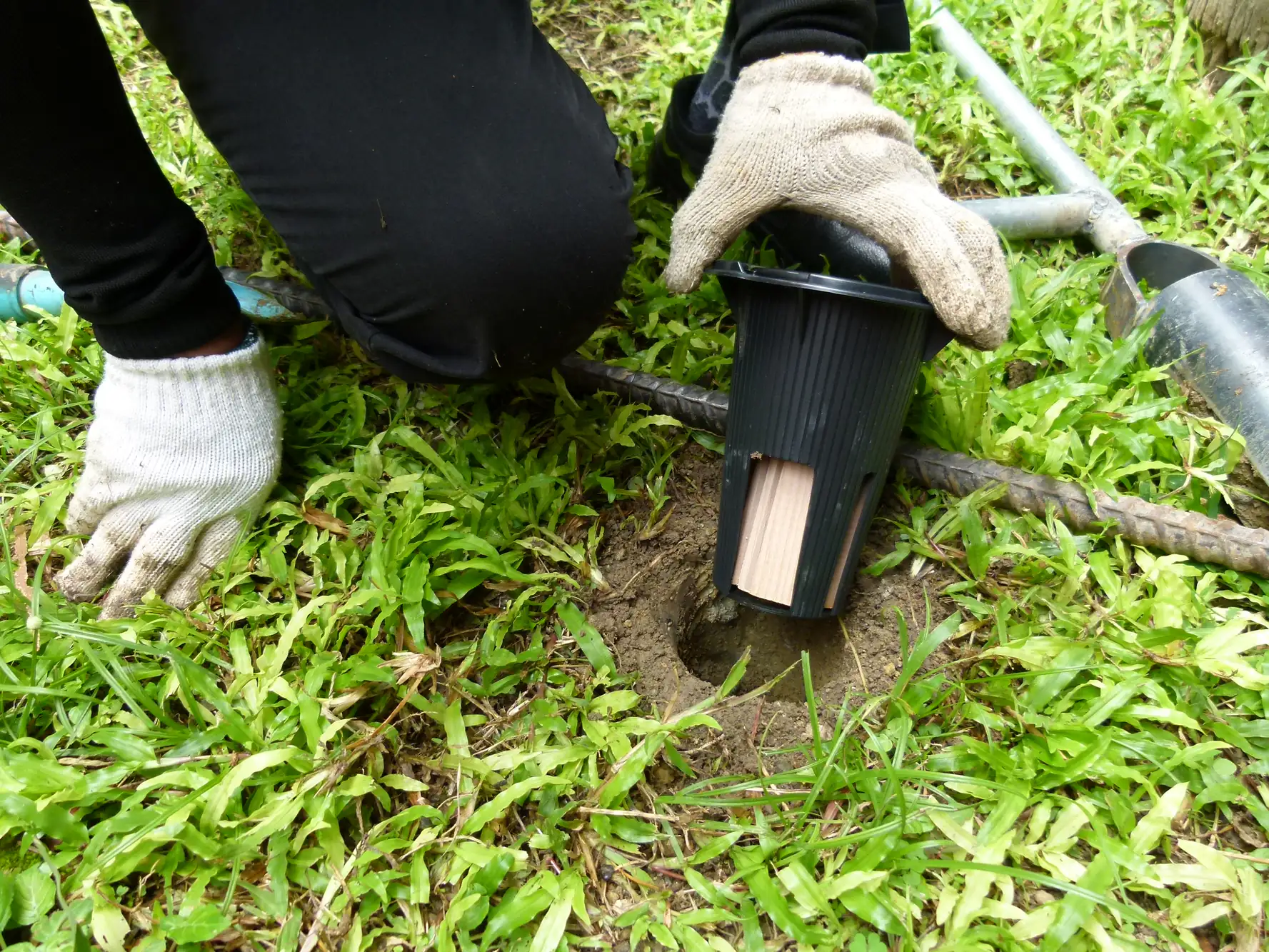
Bait station systems take a slower but strategic approach. We install stations around the property and load them with a cellulose material that termites find attractive. Once they start feeding, a slow-acting growth regulator prevents the colony from reproducing — eventually collapsing it from the inside. Stations run about $8 to $12 each, plus annual monitoring fees that typically range from $200 to $400 per year. It costs more upfront than a one-time liquid treatment, but it offers ongoing protection and requires no chemical injection into your soil.
One thing worth understanding about St. Lucie County specifically: the sandy, moisture-rich soil throughout Port St. Lucie and the canal-adjacent neighborhoods near the North Fork of the St. Lucie River creates near-ideal conditions for subterranean termite colonies. Homes near the water — and there are a lot of them here — face elevated pressure year-round. The Formosan subterranean termite, an invasive and particularly aggressive species, is also established in this region and moves faster than native subterranean species. That’s not meant to alarm you. It’s meant to explain why a thorough inspection matters more here than it might in a drier climate.
For context on why these treatment costs are worth taking seriously: the average termite repair bill in Florida runs between $8,000 and $12,000 per incident. Your homeowner’s insurance won’t cover it. Insurance companies classify termite damage as a preventable problem, which means the financial risk lands entirely on you as the homeowner.
Prevention is almost always cheaper than treatment — and in South Florida, where termites are active every single month of the year, it’s not a question of if you’ll face pressure, but when. There are no cold winters here to slow colonies down. The same climate that makes the Treasure Coast a great place to live makes it a great place for termites to thrive.
Pre-construction borate treatments — applied to wood framing before drywall goes up — typically cost between $500 and $2,000 for a residential build. Many of these treatments come with lifetime guarantees and use mineral-based compounds that are minimally toxic and highly effective over the long term. If you’re building new in western Port St. Lucie or anywhere in the Tradition or Torino corridors, this is worth asking your contractor about before the walls close up.
For existing homes, an annual monitoring plan with bait stations is the most common preventive approach we recommend. At $200 to $400 per year, it’s a fraction of what you’d spend responding to an active infestation. We inspect the stations on a regular schedule, replace them when necessary, and serve as an early warning system — catching activity before it becomes a structural problem.
There’s also a product worth mentioning that we offer: T.A.P. Insulation. It stands for Thermal Acoustical Pest Control insulation, and it’s borate-treated insulation that gets installed in your attic. It does the job of regular insulation — reducing energy costs, improving acoustics — while also creating a continuous chemical barrier against termites, ants, and other insects. For homeowners who are already thinking about upgrading their insulation, it’s a two-for-one that makes a lot of sense.
The broader point is this: prevention costs a predictable, manageable amount each year. Repair costs are unpredictable, often significant, and entirely out-of-pocket. When you frame it that way, the math isn’t complicated.
The phrase “eco-friendly” gets used loosely in this industry. For us, it means something specific: Integrated Pest Management, or IPM. It’s an approach that starts with a thorough inspection to identify the species, the extent of the infestation, and the conditions making your property vulnerable. From there, we match treatment to the actual problem — not default to the most aggressive option available.
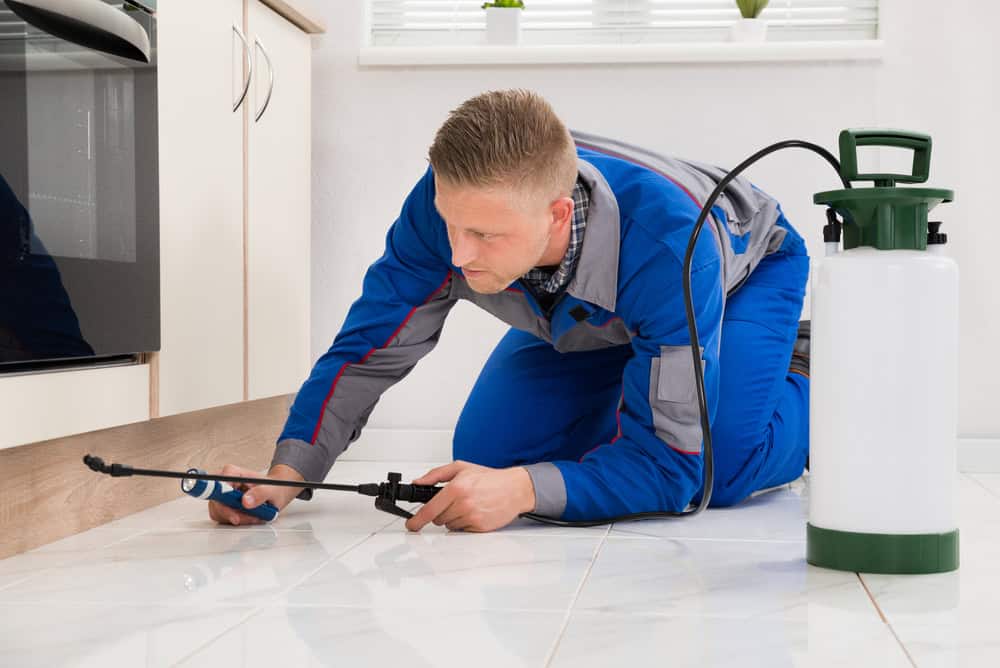
What this looks like in practice is a combination of targeted methods: borate applications where wood is accessible, bait stations for ongoing colony suppression, botanical sprays for contact treatment where appropriate, and moisture and structural recommendations to reduce future risk. Our goal is to eliminate the colony effectively while using the least disruptive, least toxic approach that will actually work.
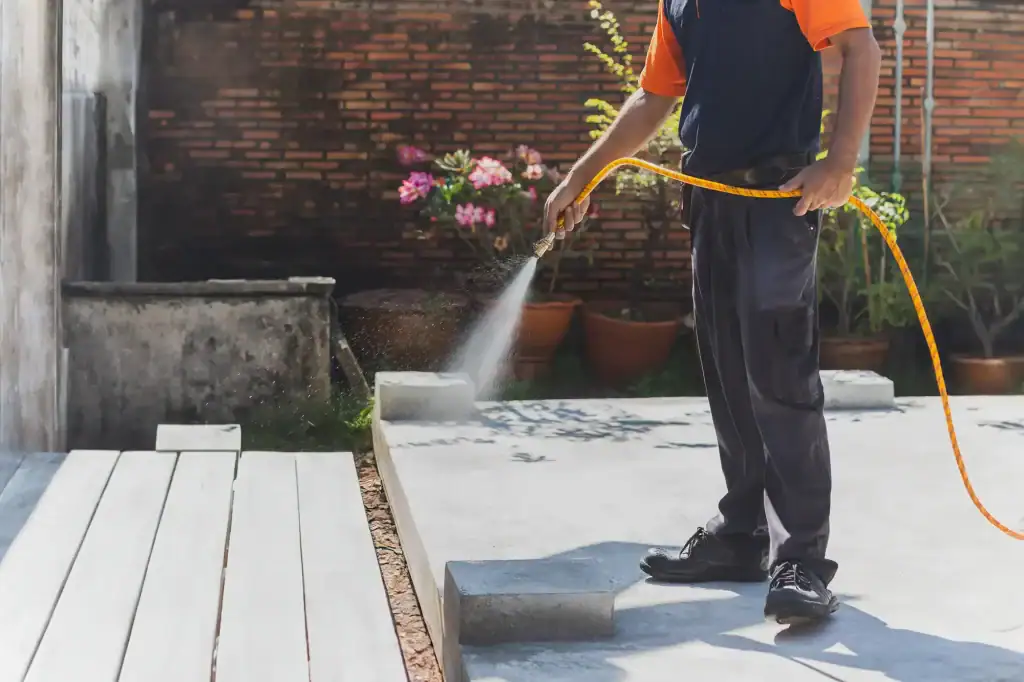
This is the question we hear most often, and it’s the right one to ask. The short answer is yes — when the right products are used and applied correctly, eco-friendly termite treatments are safe for families and pets. But “safe” deserves more explanation than just a checkbox.
Borate treatments, for example, have a toxicity profile similar to table salt for mammals. We apply them directly to wood surfaces or inject them into wall voids, not broadcast through the air. Once dry, there’s no residue risk for children or animals moving through the home. Orange oil treatments are similarly low-risk — the active compound, d-limonene, is the same substance used in food-grade cleaning products.
Bait station systems are perhaps the most family-friendly option of all. The active ingredient in most modern bait systems is an insect growth regulator — a compound that interferes with termite development but has no pathway to harm mammals. The bait itself is contained within tamper-resistant stations we install in the ground around your property, so there’s no indoor exposure at all.
What this means practically is that most eco-friendly termite treatments don’t require you to leave your home. There’s no airing-out period, no bagging up food, no kenneling your dog. For families with young children or pets — which describes a lot of Port St. Lucie and Stuart households — that distinction matters. Tent fumigation remains an option for severe drywood termite infestations throughout an entire structure, but it’s not the starting point, and for many situations, it’s not necessary at all.
Before any treatment, we walk you through exactly what’s being used, how it works, and what the safety profile looks like for your specific household. If you have a crawling infant or a dog that digs in the yard, those details matter and they change how we approach the job. That conversation should happen before the truck pulls away — not after.
We’ve seen homeowners in St. Lucie County call us after another company already came out, treated the property, and then the problem came back. It’s more common than it should be, and it usually traces back to the same issue: the inspection wasn’t thorough enough to identify the full scope of the infestation or the specific species involved.
Drywood and subterranean termites require different treatment approaches. Treating a drywood infestation with a method designed for subterranean termites — or vice versa — doesn’t work. And because both species are active here in St. Lucie County, a proper inspection has to account for both. That means checking the attic, the crawl space if there is one, the garage framing, window and door frames, wood siding, and any wood-to-soil contact points around the foundation. It means looking for mud tubes, frass (termite droppings), hollow-sounding wood, and damaged structural members — not just a quick walk around the exterior.
When we inspect a property, we document what we find in writing. You’ll know what species we identified, where the activity is concentrated, what conditions are contributing to the problem, and what we recommend. That written report matters — not just for your own records, but because it’s required by Florida law for any licensed wood-destroying organism inspection. Florida’s Department of Agriculture and Consumer Services (FDACS) holds pest control operators to a specific certification standard for termite work, separate from a general pest license. It’s worth asking any company you’re considering whether they hold WDO certification — because not all of them do.
We’ve been doing inspections on Treasure Coast properties since 2006. The older wood-framed homes near the river in Port St. Lucie, the newer block construction in Palm City and Jensen Beach, the waterfront properties in Stuart — they each come with different vulnerabilities, and we know what to look for in each one. Our inspections are free. There’s no pressure to commit to anything before you understand what you’re dealing with.
Termite treatment doesn’t have to be a disruptive, chemical-heavy ordeal — and it doesn’t have to catch you off guard financially. The options available today are more targeted, more effective, and safer for families than they were even a decade ago. The key is matching the right method to the actual problem, which starts with an honest inspection from someone who knows what they’re looking at.
If you’re in St. Lucie County and you’ve been putting this off — because you’re not sure what you’re dealing with, or you’re worried about cost, or you’ve already had a bad experience with another company — that’s exactly the situation we’re used to walking people through. No pressure, no guesswork.
Reach out to us for a free estimate. We’ll tell you what we find, explain your options clearly, and let you decide what makes sense for your home and your family.
Article details:
Share:
Continue learning: