Wondering what termite treatment actually costs in St. Lucie County? Here's what homeowners are really paying — and what drives the difference.
Share:
Summary:
If you’re searching for termite treatment costs, you’re probably not just curious — you’re worried. Maybe you spotted mud tubes near your foundation, heard something hollow when you knocked on a wall, or watched a swarm of winged insects pour out of your ceiling on a warm spring evening. Whatever brought you here, the question underneath the search is the same: how bad is this going to be?
The honest answer is that it depends — but not in a vague, frustrating way. There are real numbers, real factors, and a real process that determines what you’ll pay. Here’s what you need to know before you call anyone.
National averages for termite treatment tend to float around $450 to $2,000 for a one-time treatment, with a commonly cited midpoint near $680 for a standard liquid perimeter application on a roughly 1,750-square-foot home. Those numbers aren’t wrong, but they don’t tell the full story for homeowners here on the Treasure Coast.
In Port St. Lucie specifically, termite control averages around $44 per month, or $205 to $361 annually depending on home size. Data from completed local projects in Fort Pierce puts the typical range at $226 to $330 for standard treatments, though scope and severity can push that number in either direction. These figures reflect the reality of St. Lucie County’s pest pressure — a climate where termites don’t take winters off and where three separate termite species are all active year-round.
The treatment method is the single biggest variable in what you’ll pay. Not every infestation calls for the same approach, and a company that recommends the same solution for every home is cutting corners somewhere.
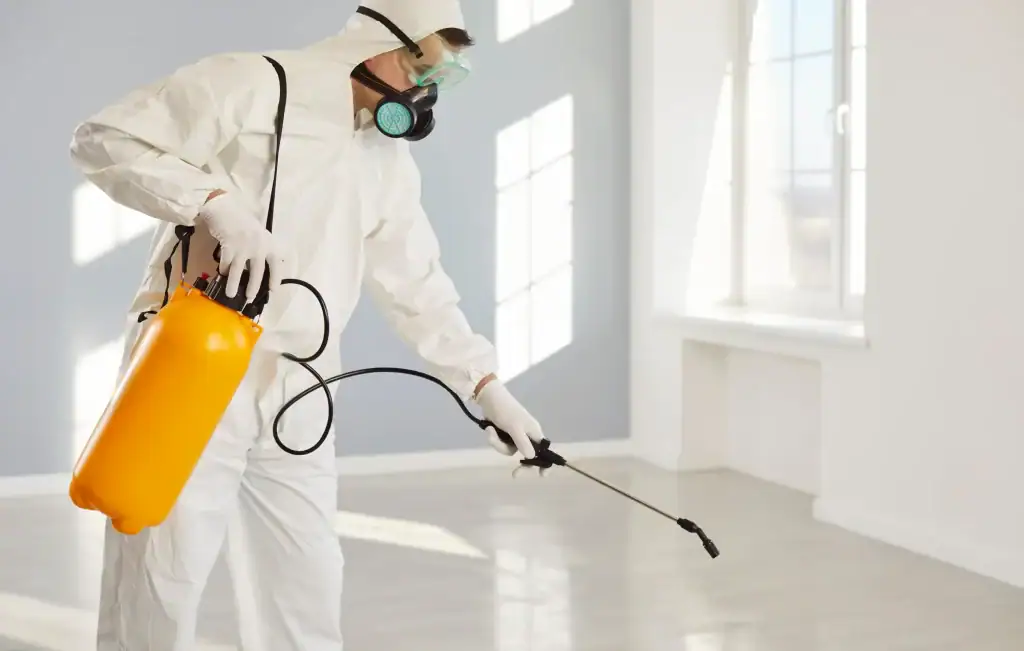
Liquid chemical barrier treatment is the most common method for subterranean termites. It’s priced by the linear foot of your foundation’s perimeter, typically running $3 to $20 per linear foot. For a standard St. Lucie County home on a slab foundation, that usually means drilling through the concrete to inject termiticide into the soil beneath — a step that affects both cost and treatment complexity. The result is a treated zone that subterranean termites can’t cross without picking up the product and carrying it back to the colony.
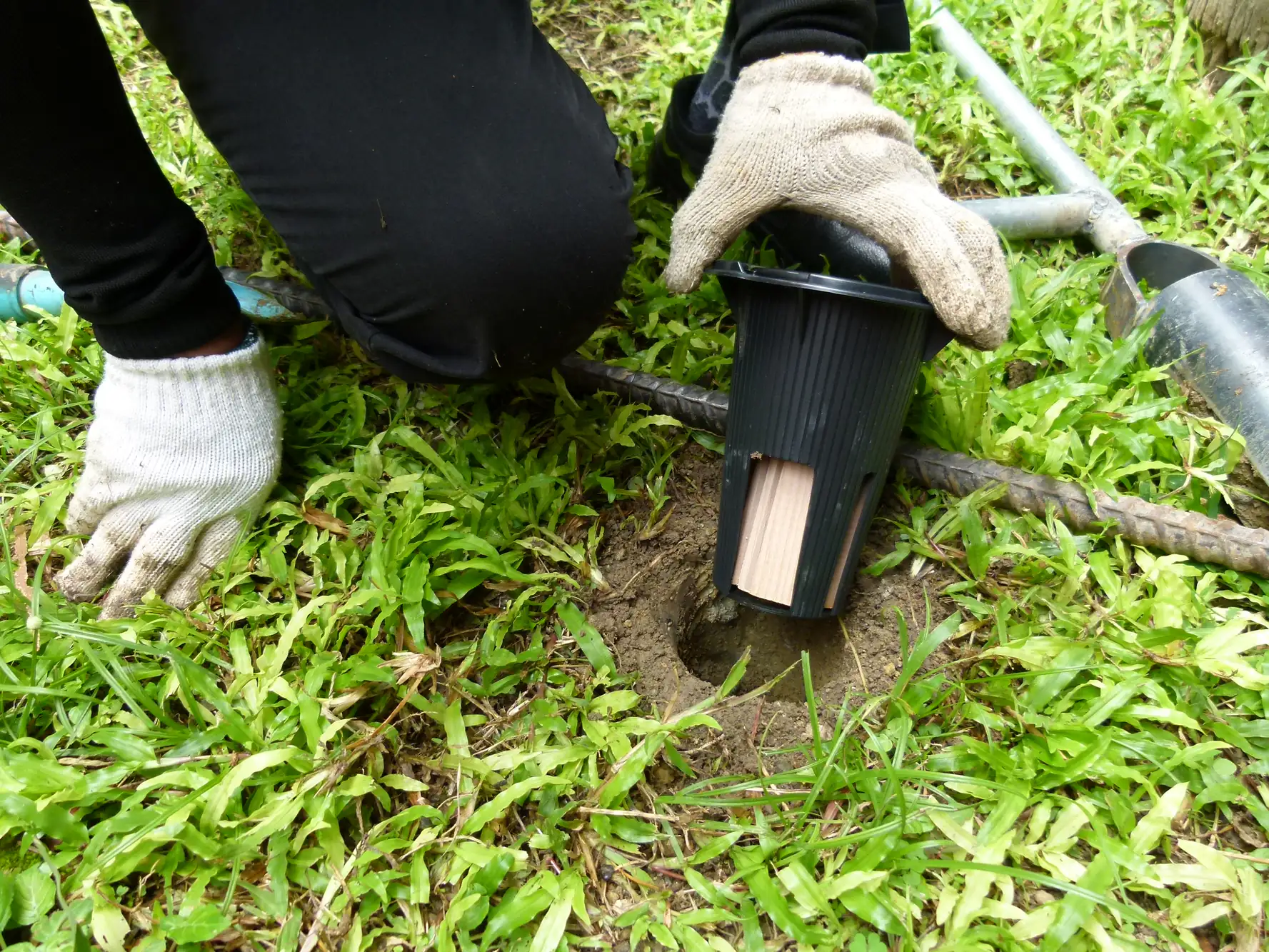
Termite bait stations work differently. Instead of creating a barrier, they use monitoring stations installed around the perimeter to intercept foraging termites and introduce a slow-acting bait that spreads through the colony. Installation runs $8 to $12 per linear foot, with annual maintenance fees of $300 to $500. It’s a lower-disruption option that works well for ongoing monitoring, especially in neighborhoods where subterranean pressure is high and re-infestation from neighboring properties is a real concern.
Fumigation — what most people picture when they hear “termite tenting” — is reserved for widespread drywood termite infestations. It costs $1 to $4 per square foot, putting the typical range at $2,000 to $8,000 for an average-sized home. It requires vacating the property for two to three days, which is a real disruption. The important thing to understand is that fumigation does not prevent subterranean termite re-infestation — it addresses what’s in the structure at the time of treatment, not what’s in the soil around it. If a company recommends tenting for a subterranean termite problem, that’s worth asking about.
Heat treatment is another no-chemical option for drywood termites, running $1 to $3 per square foot. It heats the structure to temperatures that kill termites throughout the wood without leaving chemical residue — a meaningful consideration for families with young children or pets.
Once you understand the baseline ranges, the next question is what pushes your specific quote toward the high or low end. A few factors matter more than others.
Property size is the most straightforward one. Liquid treatments are priced by the linear footage of your foundation perimeter, so a larger home costs more to treat — not because the work is harder, but because there’s simply more ground to cover. Fumigation is priced by square footage or cubic footage of the structure, so a two-story home will cost more than a single-story home of the same footprint.
Infestation severity affects both the treatment method and the labor involved. A localized drywood termite colony in one section of attic framing is a very different job than a widespread subterranean infestation that has spread through the wall voids of an entire home. Early detection almost always means lower treatment cost — which is one reason a free inspection matters more than most homeowners realize.
Foundation type plays a real role in St. Lucie County, where the majority of homes are built on concrete slabs. Treating a slab-on-grade home for subterranean termites requires drilling through the concrete to access the soil below. That’s standard practice here, but it adds to the scope of the job compared to a home with a different foundation type. Many homes throughout the county are also CBS construction — concrete block exterior with wood framing inside — and while the block walls themselves aren’t vulnerable to termites, the roof trusses, fascia boards, and interior framing absolutely are. Don’t let a block exterior give you a false sense of security.
Finally, follow-up requirements affect total cost. A single treatment on a minor infestation may be sufficient. An active, widespread infestation typically requires a treatment plan with scheduled follow-up visits to confirm effectiveness and monitor for re-infestation. Annual monitoring is standard practice in St. Lucie County because the climate that makes the Treasure Coast a great place to live also makes it one of the most active termite environments in the country.
It’s tempting to grab something off the shelf at a hardware store when you first suspect a termite problem. The products are cheaper upfront, and the idea of handling it yourself feels like a way to avoid a big bill. The problem is that most over-the-counter termiticides are repellent formulations — termites detect them and route around them, which means you may push the colony deeper into the structure without eliminating it. By the time the damage becomes visible again, the scope of the infestation has often grown.
Professional-grade non-repellent termiticides work through a transfer effect: termites pick up the product while foraging, carry it back to the colony, and spread it through contact with other termites. The colony doesn’t know the product is there until it’s too late. That’s a fundamentally different outcome than what a store-bought spray delivers.
One of the most common sources of confusion around termite treatment pricing is the difference between square footage and linear footage. Understanding which one applies to your situation helps you evaluate a quote and ask the right questions.
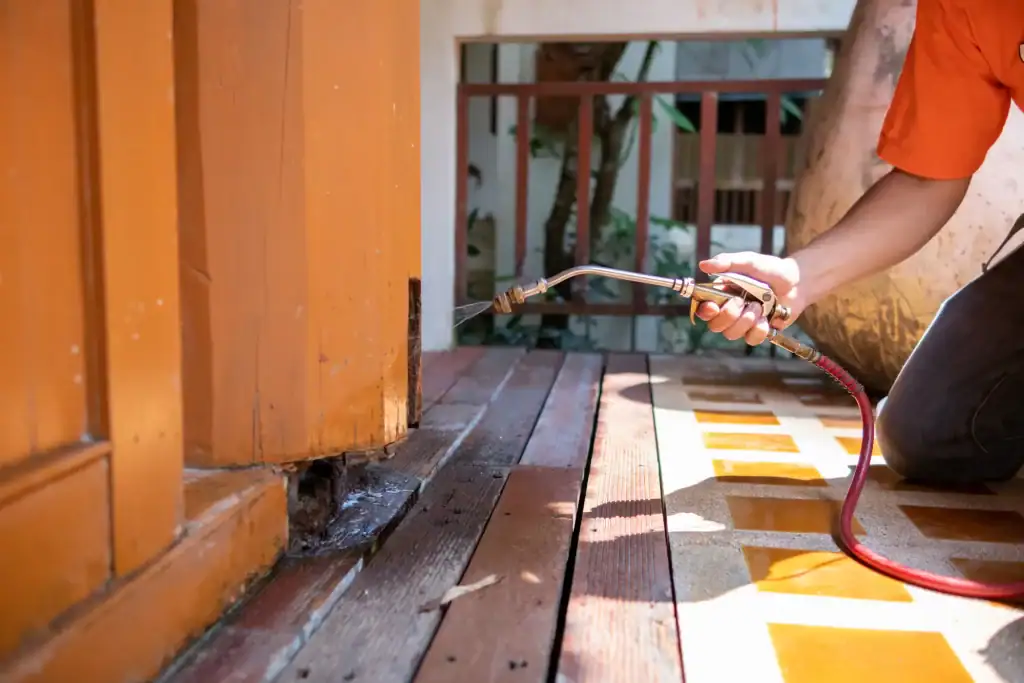
Subterranean termite treatment — the most common treatment type in St. Lucie County — is typically priced by the linear footage of the foundation perimeter, not the total square footage of the home. A 2,000-square-foot home might have a foundation perimeter of 180 to 200 linear feet, and at $3 to $20 per linear foot, that puts the treatment range at roughly $540 to $4,000 depending on the method and materials used. The wide range reflects real variation in treatment complexity, product quality, and whether follow-up visits are included.
Drywood termite treatments, including fumigation and heat treatment, are priced by square footage or cubic footage of the structure. Fumigation runs $1 to $4 per square foot. Heat treatment comes in slightly lower at $1 to $3 per square foot.
Bait station systems are also priced by linear footage — $8 to $12 per linear foot to install — with an ongoing annual maintenance fee. For a homeowner who wants long-term monitoring without a one-time large treatment cost, bait stations can make financial sense, particularly in areas of Port St. Lucie and Fort Pierce where subterranean termite pressure from neighboring properties makes re-infestation a realistic concern.
What a quote should always include — and what you should ask about if it doesn’t — is a clear breakdown of what’s covered: the inspection findings, the treatment method being recommended and why, the number of visits included, and what the warranty or guarantee covers. A vague quote with a single number and no explanation is a red flag regardless of whether the number looks reasonable.
Termites cause roughly $5 billion in property damage across the United States every year — more than floods, fires, and tornadoes combined. That’s the actual economic reality of an insect that works silently, continuously, and invisibly inside the structure of a home. And here’s the detail that changes the financial calculus for most homeowners: standard homeowners insurance does not cover termite damage. It’s explicitly excluded from most policies as a preventable condition.
That means the cost of structural repairs — replacing damaged floor joists, wall framing, roof trusses, or sub-floor material — comes entirely out of pocket. In St. Lucie County, where homes near the St. Lucie River, the Indian River Lagoon, and the area’s extensive canal system face elevated moisture exposure, the conditions for subterranean and dampwood termite activity are particularly favorable. Waterfront and canal-adjacent homes carry a higher risk profile, and the repair bills that follow an untreated infestation reflect that.
We’ve been doing this work on the Treasure Coast since 2006. In that time, we’ve seen what happens when a small, early-stage infestation gets missed — either because a homeowner tried a DIY approach that didn’t reach the colony, or because a previous pest control company applied the wrong treatment for the species present. We get called in after those situations more often than you’d expect. The treatment cost at that stage is higher, the damage is worse, and the homeowner is frustrated and out money twice.
The value of professional termite treatment isn’t just about eliminating what’s there today. It’s about the monitoring, the follow-up, and the guarantee that if something comes back, we address it. We offer a satisfaction guarantee on all our services because we stand behind the work — and because a treatment that doesn’t solve the problem isn’t worth paying for. We’re fully licensed (FDACS license numbers JE79547 and JF265009), fully insured, and available 24/7 if you’re dealing with an active swarm or an urgent situation that can’t wait until Monday morning.
For St. Lucie County homeowners, the free estimate we offer isn’t a promotional hook — it’s the most useful first step you can take. It removes the financial uncertainty that keeps most people from calling, gives you a real number based on your actual home, and lets you make an informed decision without any pressure.
The range of termite treatment costs is real — $200 to $8,000 is a wide spread, and it reflects genuine variation in treatment methods, property size, infestation severity, and what’s actually included in the service. What it doesn’t have to mean is confusion or anxiety about what you’ll pay.
The clearest path forward is a professional inspection that looks at your specific home, identifies the species and scope of the problem, and gives you a transparent quote with no hidden fees. That’s exactly what we do at ProControl Management Services — and we’ve been doing it for homeowners across Port St. Lucie, Fort Pierce, Jensen Beach, and the surrounding St. Lucie County communities for nearly two decades.
If you’re ready to stop guessing and get a real number, reach out to us. The estimate is free, there’s no obligation, and you’ll walk away knowing exactly what you’re dealing with.
Article details:
Share:
Continue learning: