Tenting isn't always the answer. Here's what St. Lucie County homeowners should know before committing to fumigation — and what else actually works.
Share:
Summary:
Discovering termites in your home is stressful enough. Then someone mentions tenting, and suddenly you’re thinking about bagging up your food, finding somewhere for your family to stay, and writing a check for several thousand dollars. It’s a lot to process.
The truth is, tenting is the right call in some situations — and completely unnecessary in others. Knowing the difference can save you time, money, and a significant amount of disruption. We’ve been helping homeowners across St. Lucie County navigate this exact decision since 2006, and we want to give you an honest picture of both options before you commit to anything.
Termite tenting and termite fumigation are the same thing — the terms get used interchangeably, but they describe one process. A licensed fumigator seals your entire home under a large vinyl tent, then introduces a gas called sulfuryl fluoride (sold under the brand name Vikane) that penetrates walls, wood, and structural voids to kill termites at every life stage, including eggs.
It’s effective. For a widespread drywood termite infestation — the kind that’s spread through multiple areas of the structure — it’s often the most thorough option available. But it’s also a significant undertaking, and understanding what’s involved helps you go in with realistic expectations.
Before the tent goes up, you’ll receive a preparation checklist. You’ll need to remove or double-bag all food, medications, and baby items in special nylon polymer bags. Plants, fish tanks, and pets need to leave the structure entirely. All pilot lights must be extinguished, and every door and drawer inside the home gets left open so the gas can circulate freely.
Once the tent is in place, the fumigant is introduced and held inside for a calculated period — typically anywhere from six hours to a full day or more, depending on the size of the structure, the severity of the infestation, and the temperature. The whole process, from tent installation to the point where you’re cleared to re-enter, usually takes two to four days.
After the exposure period, the tent comes down and the structure is ventilated. A certified fumigator then tests the air inside using specialized equipment to confirm that gas levels have dropped below the safe re-entry threshold. You don’t go back in until that clearance is given — not based on a timer, but based on an actual reading.
One thing that surprises a lot of homeowners: sulfuryl fluoride leaves zero chemical residue once it dissipates. That means your home is thoroughly treated at the time of fumigation, but there’s no lasting barrier against new termite entry afterward. Annual inspections and warranty coverage matter precisely because of this — re-infestation is possible if new termites find their way in.
Florida law also requires that a licensed fumigator notify the Florida Department of Agriculture and Consumer Services (DACS) at least 24 hours before any general fumigation. If you’re hiring someone who can’t explain this requirement, that’s worth paying attention to.
Termite tenting cost in St. Lucie County typically runs between $2,000 and $8,000 for a standard residential home. Pricing is usually calculated by square footage (roughly $1 to $4 per square foot of interior space) or by linear footage of the home’s exterior perimeter ($5 to $20 per linear foot). The range is wide because several factors push the number up or down.
Home size is the biggest driver — a 1,200-square-foot bungalow in Fort Pierce costs considerably less to tent than a 3,500-square-foot home in Tradition or Port St. Lucie. Infestation severity matters too. A more established colony that’s spread through multiple areas of the structure may require a longer gas exposure period, which adds to the cost. Roof complexity and the number of stories also affect how the tent is installed and secured.
Beyond the treatment itself, there are real out-of-pocket costs homeowners often don’t think about upfront. You’ll need lodging for two to four nights — figure $200 to $600 depending on your family size and how long the process takes. Some food items can’t be bagged and saved, so you may be replacing pantry staples afterward. These aren’t hidden fees from us; they’re just the practical reality of vacating your home for several days.
Termite fumigation cost and termite tenting cost refer to the same service — if you’re getting quotes and one company uses one term while another uses the other, they’re describing the same process. What you want to compare is what’s included: does the quote cover the clearance testing? Is there a warranty, and how long does it last? Basic warranties after tenting are typically one year, with extended coverage of two to ten years available for an additional $100 to $300 annually.
A $2,500 treatment that prevents $15,000 in structural repairs is a straightforward value calculation. But it’s still worth making sure you actually need tenting before you commit — which brings us to the alternative.
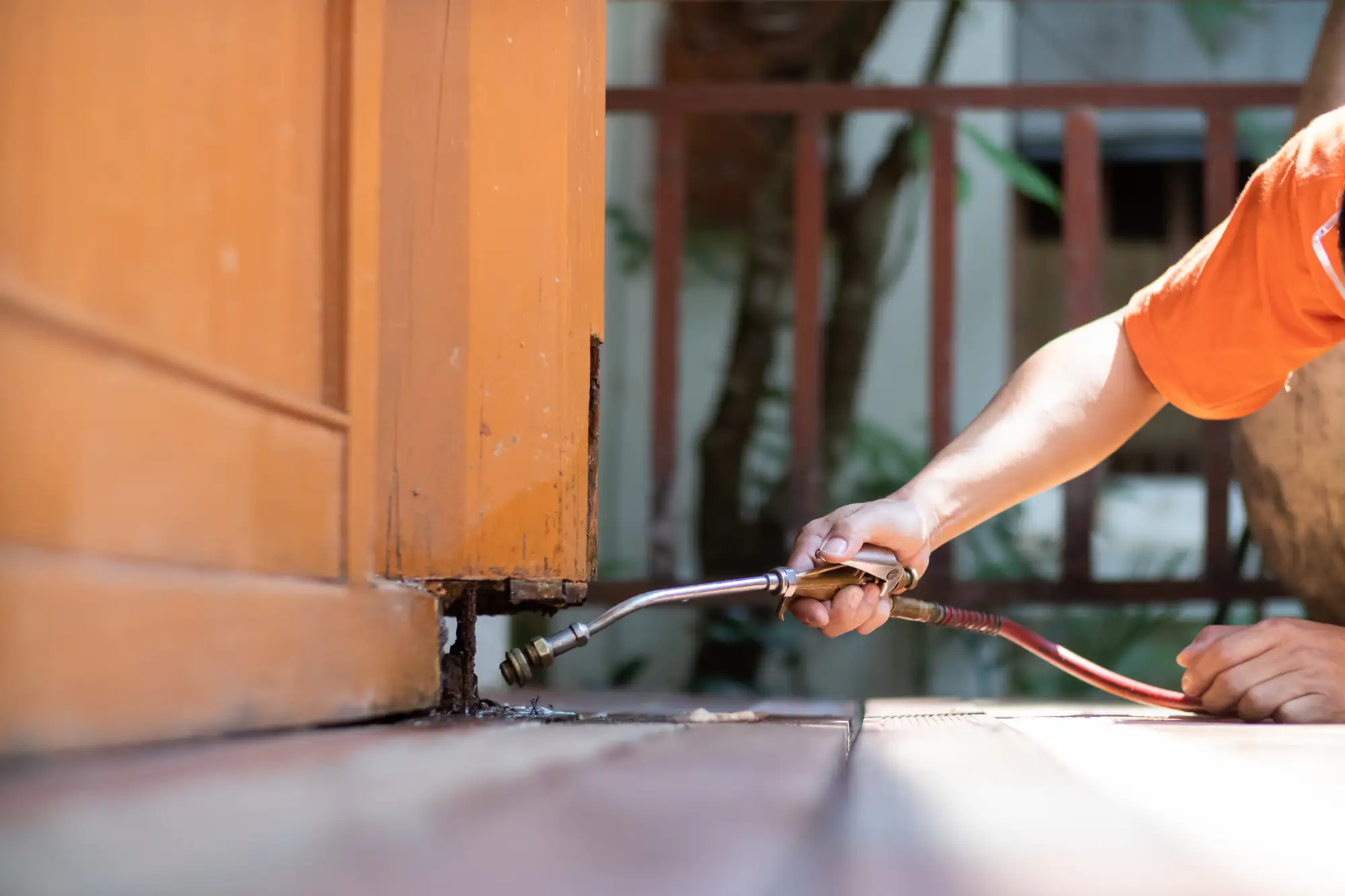
Not every termite infestation requires tenting. For localized drywood termite activity — where the infestation is contained to a specific area of the structure rather than spread throughout — eco-friendly alternatives can be just as effective, far less disruptive, and in some cases, more protective over the long term.
We’ve been offering these alternatives to homeowners across Port St. Lucie, Fort Pierce, and the surrounding Treasure Coast communities for years. The misconception that eco-friendly means less effective is one we run into constantly, and it’s worth addressing directly.
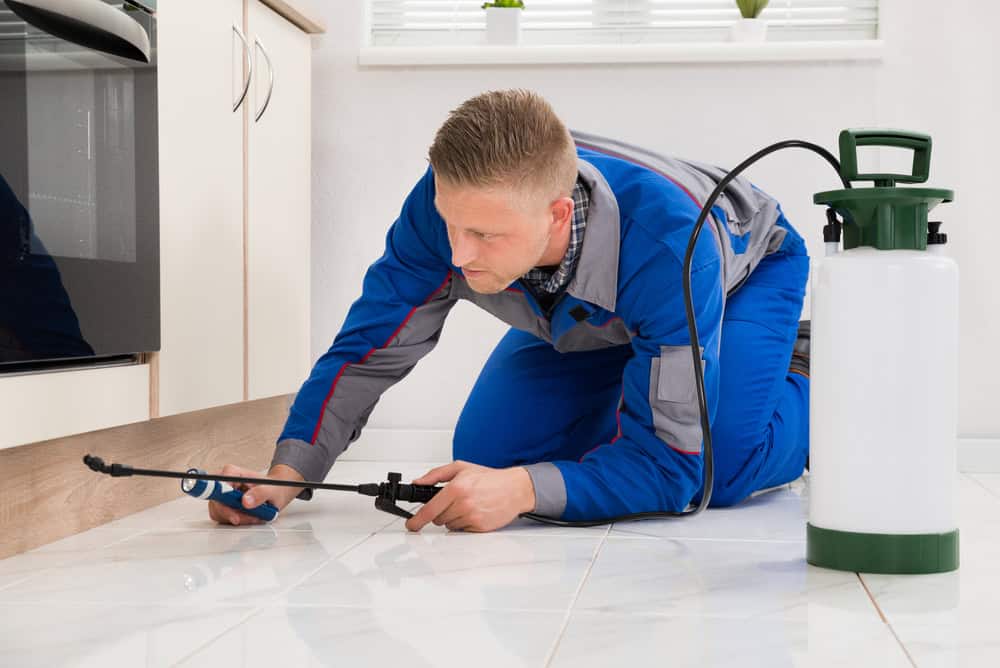
Borate-based termite treatment — products like Tim-bor or Boracare — work by penetrating directly into wood, where they’re absorbed into the cellular structure of the material itself. Termites that feed on or contact treated wood ingest the borate compound, which disrupts their digestive system and kills them. The colony breaks down over time as workers carry the product back and spread it through normal termite behavior.
Here’s the part that matters most when comparing this to tenting: borates stay in the wood. They don’t dissipate. Once treated, that wood continues to kill termites that contact it for years. Tenting achieves a near-total kill of everything present in the structure at the time of treatment — but the moment the gas clears, your home has no ongoing defense. Borate treatments provide residual protection that fumigation simply can’t match.
For homeowners in St. Lucie County communities like Tradition or Torino, where wood-frame construction is common and homes are now hitting the 15-to-25-year mark, this kind of lasting protection is worth understanding. A home that was treated with borates during construction or after an early infestation is in a fundamentally different position than one that was tented and left without residual coverage.
Borate treatments are also significantly less disruptive. There’s no tent. No mandatory evacuation. No bagging up your kitchen. For families with young children, pets, or anyone with health sensitivities, the reduced chemical exposure profile is a meaningful benefit.
The honest answer is that it depends on two things: the species of termite and the extent of the infestation. Tenting is designed specifically for drywood termites — the species that live entirely inside wood without any soil contact. If you have a widespread drywood infestation that’s moved through multiple areas of the structure, fumigation may genuinely be the most practical path to full elimination.
But tenting is not effective on subterranean termites, including the Formosan subterranean termite, which is present in St. Lucie County and is one of the most destructive species in the world. Subterranean termites live in the soil and access your home through mud tubes. Fumigating the structure does nothing to address the colony living underground. If you have subterranean termites and someone is recommending tenting, that’s a red flag worth questioning.
For localized drywood infestations — a section of a wood deck, an isolated area of framing, a garage door header — spot treatment or borate application is often the more appropriate call. It targets the problem without treating the entire home as if it’s under siege.
This is where having an honest inspection matters more than anything else. We’ve been called in after homeowners spent thousands on treatments that didn’t match their actual problem. A good inspection identifies the species, maps the infestation, and recommends the treatment that fits — not the one that generates the highest invoice. That’s how we’ve operated since we opened our doors in Port St. Lucie in 2006, and it’s why a lot of our clients come to us after a frustrating experience somewhere else.
If you’re in the middle of a home sale in St. Lucie County and a WDO report just came back with activity, the timeline pressure is real — but it’s still worth taking twenty minutes to understand what you’re actually dealing with before signing off on a treatment plan.
Termite tenting works when it’s the right tool for the job. So do eco-friendly alternatives — and in many cases, they work better over the long run because they leave lasting protection behind. The decision comes down to your specific situation: what species you’re dealing with, how far the infestation has spread, and what level of disruption you’re willing to manage.
What you shouldn’t do is assume tenting is always necessary, or that eco-friendly means settling for less. Both assumptions cost homeowners money and peace of mind they didn’t need to spend.
If you’re dealing with a termite problem in Port St. Lucie, Fort Pierce, or anywhere across the Treasure Coast, we offer free estimates and honest assessments — no pressure, no upsell. Reach out and let’s figure out what you’re actually working with.
Article details:
Share:
Continue learning: