Florida's mosquito season never truly ends in St. Lucie County due to year-round warm temperatures and humidity creating perfect breeding conditions.
Share:
Summary:
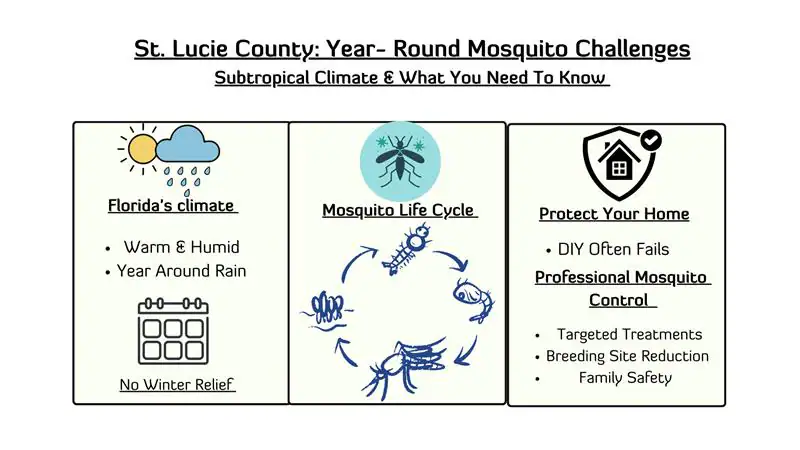
Florida’s subtropical climate doesn’t play by traditional mosquito season rules. In places like St. Lucie County, winter temperatures often hover well above the 50°F mark—the minimum threshold required to slow mosquito activity. Without that temperature drop, mosquitoes never truly go dormant.
They might thin out for a few days during a cold front, but once that sun peeks back through, so do the bites. Add in high humidity, plentiful rainfall, and abundant standing water, and you’ve got an environment where mosquitoes can breed, feed, and thrive virtually nonstop.
In the extreme South and Hawaii, mosquito season has been known to last throughout the year! This reality hits St. Lucie County particularly hard due to our coastal location and year-round warmth.
As the region moves toward cooler months, changing weather patterns across the state are affecting mosquito activity levels. While mosquito activity typically declines once temperatures fall below 50 degrees Fahrenheit, a combination of drought and late-season rainfall has created complex conditions potentially influencing mosquito populations.
Florida’s wild weather gives mosquitoes the upper hand. El Niño, hurricanes, and surprise storms create warm, wet conditions that extend mosquito breeding season. Even what seems like relief can backfire. After a chill, a quick warm-up with rain can trigger a mosquito baby boom. So if you’ve noticed more bites after a cold front, it’s not just bad luck—it’s how mosquitoes roll.
Additionally, where residents turn to irrigation in drought zones, an item as simple as a bucket or a poorly drained culvert can quickly accumulate enough water to serve as a mosquito breeding site. The transition from dry conditions in late spring and early summer to heavy rainfall during late summer and fall has a direct impact on mosquito populations.
Our location along the I-95 corridor means we experience these weather swings intensely. In South Florida, residents have reported swarms of Aedes taeniorhynchus, commonly known as the eastern salt marsh mosquito, a species that thrives in brackish water and coastal wetlands.
Mosquito life cycles vary with environmental conditions. Warm and moist conditions can lead to a very short life cycle. Although, some species’ eggs will overwinter until the weather is just perfect for survival. This adaptability makes them incredibly resilient in Florida’s climate.
The entire life cycle can be as short as a few days to an entire month or longer for dormant eggs. Female mosquitoes lay their eggs on the surface of standing water. Depending on weather conditions and access to food, larvae will hatch in one to three days, although some species may take up to two weeks. Larvae feed for five to fourteen days before they reach maturity and become adults.
On average, a mosquito lays up to 300 eggs at a time, and the process can repeat itself multiple times during the summer months. But in St. Lucie County, “summer months” stretch much longer than most places. As the weather warms, the mosquito breeding cycle time shortens, which ultimately results in an increase in the number of mosquitoes on your property.
Some eggs need water to hatch while other species’ eggs need a drying out period to hatch. This means different species emerge at different times, creating overlapping generations that maintain mosquito populations throughout our extended warm season. Understanding these cycles helps explain why you might see population surges after rain events, even in cooler months.
St. Lucie County monitors 26 different traps strategically placed around the county, tracking more than 37 different varieties of mosquitoes that reside here. This diversity means different species are active at different times, creating a year-round challenge that requires professional expertise to manage effectively.
The St. Lucie County Mosquito Control District covers 301 square miles and includes the City of Fort Pierce and Port St. Lucie. Despite these public efforts, private properties need additional protection to create truly comfortable outdoor spaces.
Two common types of mosquitoes in Port St. Lucie are the aedes aegypti and salt marsh mosquitoes. Aedes aegypti mosquitoes are dark brown to black and have scales on their thorax that form a violin-like pattern. The tarsal segment on their hind legs has white bands, giving their legs a striped appearance. These mosquitoes can thrive in urban areas and prefer to feed on people.
Florida is home to some of the most dangerous mosquitoes in the U.S. While not every bite leads to illness, some of the species flying through our neighborhoods are known vectors for viruses like Zika, dengue, and even malaria. And with the climate shifting, these threats are becoming less seasonal and more persistent.
Aedes aegypti is active year-round, especially in South Florida, and is the primary vector for dengue, Zika, yellow fever, and chikungunya. Unlike most mosquitoes, it bites during the day, often multiple times per host. It thrives in urban environments, using containers, planters, and even bottle caps as breeding sites.
Many homeowners are surprised to learn that Florida has experienced locally acquired mosquito-borne illnesses in recent years, not just travel-related cases. In 2023, Sarasota confirmed multiple malaria cases transmitted by local mosquitoes, the first documented instance in over 20 years. These weren’t isolated cases; they were a warning sign that mosquito-borne illnesses don’t need to be imported anymore—they’re evolving with the environment.
Throughout the southern United States, the threat of mosquitoes infecting cats and dogs with parasitic heartworm is significant. If not treated, the infection is fatal. This means protecting your family extends to protecting your pets as well.
The year-round presence of disease-carrying mosquitoes makes professional mosquito control not just a comfort issue, but a health necessity for St. Lucie County families.
While citronella candles, bug sprays, and even bug zappers are popular go-to fixes, they’re often just band-aid solutions. Citronella can help mask human scents, but it won’t stop mosquitoes determined to find a meal. Bug zappers, meanwhile, often kill beneficial insects instead of targeting mosquitoes. Most DIY strategies focus on repelling mosquitoes temporarily—not breaking the breeding cycle.
Each DIY mosquito control solution has its problems! The best way to reduce mosquito populations around your home is to limit their access to potential breeding grounds. But in St. Lucie County’s climate, this becomes nearly impossible without professional intervention.
Mosquitoes are prolific breeders, especially during peak mosquito season. The best way to get rid of mosquitoes is to disrupt their breeding cycle. That’s where an effective professional approach can be the biggest ally in your ongoing fight against these swarming, bloodsucking pests.
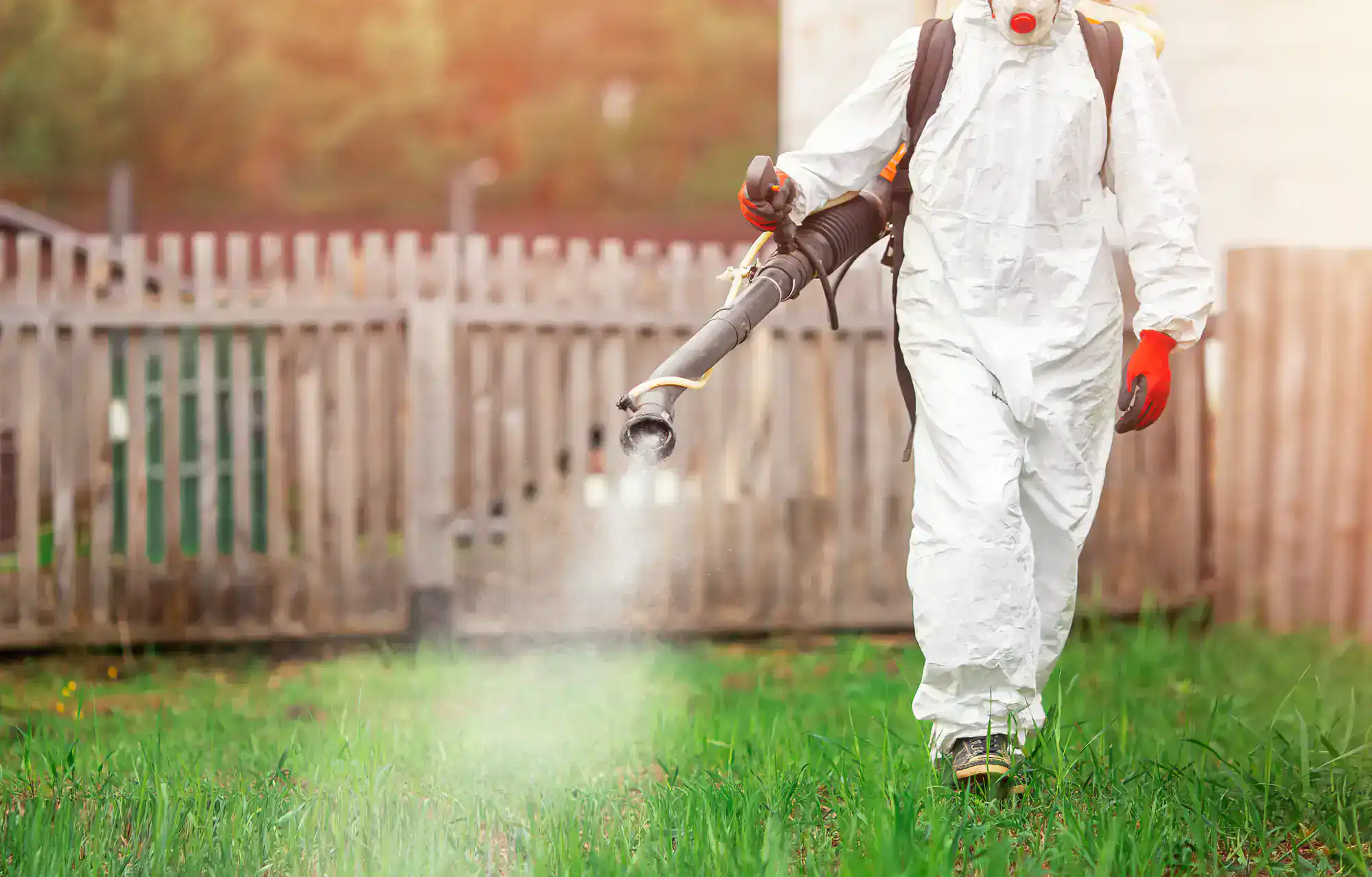
We understand local species, their specific breeding habits, and how to target them effectively. Our professional mosquito control services include the careful application of the best treatments available, including fast-acting, long-lasting barrier sprays. We can identify and treat breeding sites you might miss, apply targeted treatments that actually work, and provide ongoing monitoring to prevent population rebounds.
A customized mosquito control program targets breeding sites, treats active areas, and provides ongoing protection throughout the season. The best defense is a layered approach—staying vigilant at home and partnering with trusted pest control experts.
Florida’s mosquito season is long, relentless, and too risky to tackle alone. By understanding why DIY methods fall short and taking proactive steps, you can protect your family and your home from itchy bites and bigger health concerns.
The reality is clear: St. Lucie County’s mosquito season never really ends because our climate creates perfect conditions year-round. But that doesn’t mean you have to surrender your outdoor spaces or worry constantly about disease transmission.
Professional mosquito control makes the difference between enduring another year of bites and actually enjoying your property. When you’re ready to reclaim your yard and protect your family from Florida’s year-round mosquito challenge, we provide the expertise, eco-friendly solutions, and local knowledge that St. Lucie County homeowners trust.
Article details:
Share:
Continue learning: