Hiring a termite inspector in St. Lucie County? Here's what Florida law actually requires — and how to confirm your inspector is the real deal before they arrive.
Share:
Summary:
You’ve got someone coming out to inspect your home for termites. Maybe you’re closing on a property in Port St. Lucie. Maybe you spotted something in the garage and want answers. Either way, you’re about to let a stranger walk through your home and make a call that could affect your finances significantly.
Here’s the thing most people don’t know to ask: is that inspector actually licensed to do this in Florida? Not just “licensed in pest control” — but specifically authorized to issue a legally valid termite inspection report? There’s a difference, and it matters more than most people realize. Here’s what to look for.
In Florida, a termite inspection tied to a real estate transaction is officially called a Wood Destroying Organism inspection, or WDO inspection. It’s governed by the Florida Structural Pest Control Act under Chapter 482 and produces an official report on Form DACS-13645, issued by the Florida Department of Agriculture and Consumer Services (FDACS).
To legally perform that inspection and sign off on that report, the inspector must hold a specific FDACS credential — not just a general pest control license. That distinction is important, and it’s one that gets glossed over constantly in this industry.
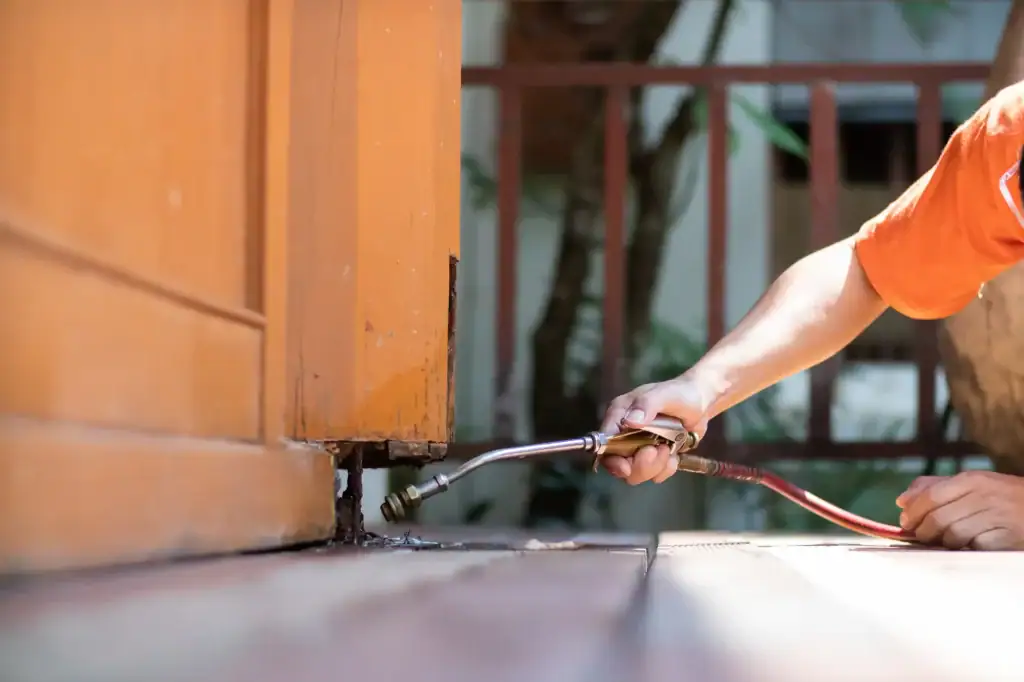
The credential you’re looking for is an FDACS-issued WDO Inspector ID card. Inspectors who hold this authorization are State Certified Operators in the Termite and Other Wood Destroying Organisms category, or licensed applicators working directly under one. Here’s the detail worth remembering: WDO inspector license numbers in Florida begin with the prefix “JE.” That’s the specific credential that authorizes someone to issue a legally valid WDO report.
A general pest control license — even a legitimate, active one — does not cover WDO inspections. The two are separate authorizations under Florida law. So if a company tells you they’re licensed without being able to give you a JE-prefix license number, that’s worth a follow-up question before you let them through the door.
You can verify any inspector’s credentials directly through the FDACS license database online. It takes about two minutes. Search the company name or license number, confirm the JE prefix is there, and confirm the license is active. It’s a simple step that most buyers skip entirely — and that most pest control companies never mention because they assume you won’t bother.
One more thing worth knowing: home inspectors cannot legally issue WDO reports in Florida. If your general home inspector “checked for termites” during a walkthrough, that check has no legal standing for mortgage or real estate purposes. FHA and VA lenders specifically require a report signed by a state-licensed WDO inspector, with their license number on the document. A home inspection and a WDO inspection are two completely different things.
We hold active FDACS licenses JE79547 and JF265009. Both are publicly verifiable through the state database. We mention the actual numbers here because “we’re licensed” is something anyone can say — a real license number is something you can check.
Here’s a scenario that plays out more often than it should. A homeowner hires a pest control company that appears legitimate. An inspector shows up, does a quick walkthrough, and hands over a report. The homeowner submits it to their lender. Weeks later, the deal falls apart — or worse, it closes, and the new owner discovers damage that was missed entirely.
If the inspector wasn’t properly credentialed, the WDO report is legally invalid. That means no warranty protection, no recourse if damage was overlooked, and no legal standing if you try to dispute the findings. The financial exposure here is real. Termite damage repair in Florida averages $8,000 to $12,000 per incident, with severe cases running well past $20,000. Standard homeowner’s insurance doesn’t cover any of it — termite damage is universally excluded from Florida policies as a preventable maintenance issue.
There’s also a bait-and-switch problem that’s worth knowing about. Some companies send a licensed technician to do the initial inspection — which technically satisfies the legal requirement — but then send an undertrained or unlicensed technician back to do the actual treatment work. The inspection looks legitimate on paper, but the treatment is carried out by someone without the proper credentials or training. If the treatment fails or causes property damage, the homeowner has very little recourse.
The practical way to protect yourself is to ask for the license number before scheduling, verify it on the FDACS database, and confirm that the same level of credentialing applies to both the inspection and any treatment work that follows. A company that can both inspect and treat under the same licensed roof is generally more accountable from start to finish — there’s no referral to a third party, no warranty shuffling, and no gap between what was found and what gets fixed.
St. Lucie County sits at the northern edge of Florida’s highest-risk termite zone. The Treasure Coast’s subtropical climate — warm year-round, consistently humid, with regular rain and an active hurricane season — keeps termites active in ways that most northern homeowners have never had to think about. Termites in this climate consume wood up to seven times faster than in cooler regions, and they don’t slow down in winter.
That context matters when you’re choosing who to trust with an inspection. The qualifications that matter in a market like St. Lucie County go beyond a license number on a form. You want someone who understands the specific species pressure in this area, the construction types common in Port St. Lucie neighborhoods, and what the warning signs actually look like in a slab-on-grade home that’s been standing since the 1980s and 1990s.
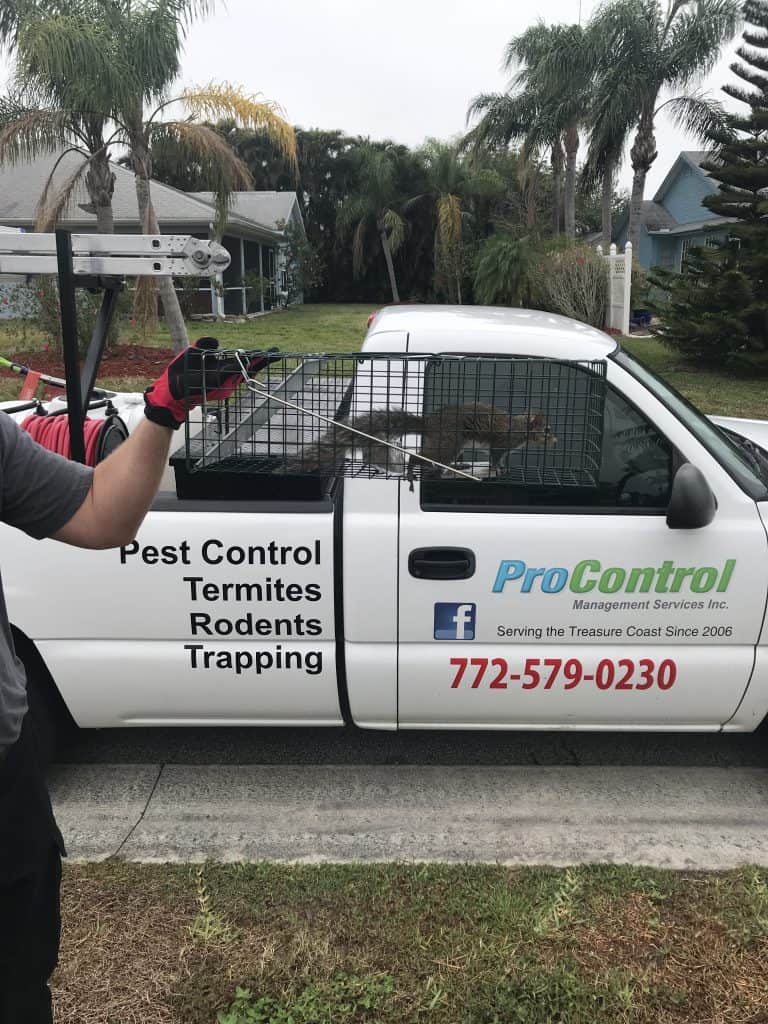
A proper termite inspection takes between 45 and 90 minutes for an average-sized home. If an inspector is in and out in 15 minutes, they haven’t done a complete job. That’s not an opinion — it’s a function of what a thorough inspection actually requires.
A qualified inspector covers the foundation perimeter looking for mud tubes, which are the pencil-thin tunnels subterranean termites build to travel from the soil into your home’s structure. They check the attic for moisture damage, compromised wood, and signs of drywood termite activity. They examine interior walls, floors, and ceilings for hollow-sounding wood, sagging, or visible deterioration. They look at exterior walls, eaves, door and window frames, and any point where wood meets soil or concrete — which, in slab-on-grade construction common throughout Port St. Lucie, creates natural entry points at wall plates, utility penetrations, and expansion joints.
After the inspection, you should receive a written report documenting what was found, what conditions exist that are conducive to future infestation, and what treatment options are appropriate. For real estate transactions, that report should be on official FDACS Form DACS-13645, signed by a licensed inspector with their credential number clearly included.
What separates a thorough inspection from a rushed one isn’t always obvious in the moment. But it becomes obvious later — when the damage shows up in a wall that was never checked, or when a lender rejects a report that doesn’t meet the documentation standard. The Treasure Coast real estate market is active right now, with median home prices around $385,000 and buyer due diligence expectations running high. A proper WDO inspection is one of the most financially protective steps in that process, and it’s worth doing right the first time.
There are three termite species that inspectors need to be actively looking for in the Port St. Lucie area: Eastern subterranean termites, which are the most common and build their colonies underground before moving into your home’s structure; drywood termites, which live entirely within the wood itself and spread when infested materials are moved; and Formosan subterranean termites, an invasive species with colonies that can number in the millions and cause structural damage in as little as six months under Florida conditions.
University of Florida entomologists have documented the northward spread of Formosan and Asian subterranean termites from Miami-Dade and Broward counties toward the Treasure Coast. This isn’t a distant threat — it’s an active expansion that’s changing the inspection calculus for St. Lucie County homeowners. An inspector who knows this region understands that the identification question has gotten more complicated in recent years, and they inspect accordingly.
We’ve been based in Port St. Lucie since 2006. That’s 18 years of working in these neighborhoods, in this climate, with these specific species. We know what termite pressure looks like in homes built during the Port St. Lucie construction boom of the 1980s and 1990s — old enough to have had years of undetected activity, but not so old that structural replacements have already occurred. We also use eco-friendly treatment methods, which matters particularly for homes near the St. Lucie River and the canal systems that run through much of the county. Effective termite treatment and environmental responsibility aren’t mutually exclusive — and in a community with waterways this close to residential areas, it’s a distinction worth making.
We’re locally owned, not a franchise. The people doing this work live here too. That’s not a marketing line — it’s just the reality of what it means to be a neighbor rather than a vendor.
**How do I verify a termite inspector’s license in Florida?** Go to the FDACS license database online and search by company name or license number. Look for a JE-prefix license number, which is the specific credential required for WDO inspections. Confirm the license is active before scheduling. Our license numbers — JE79547 and JF265009 — are publicly listed and verifiable there.
**What is a WDO inspection and is it the same as a termite inspection?** A WDO (Wood Destroying Organism) inspection is broader than a basic termite check. It covers termites, wood-destroying beetles, wood-decaying fungi, and conditions that make a property vulnerable to future infestation. In Florida, this is the report type required for most real estate transactions, and it must be issued on official FDACS Form DACS-13645 by a licensed inspector.
**How often should St. Lucie County homeowners get a termite inspection?** Annual inspections are recommended for all homeowners in St. Lucie County — not just when buying or selling. Florida’s year-round subtropical climate means termite colonies can establish and grow at any time of year. Given that Formosan termite activity is expanding northward toward the Treasure Coast, the case for annual inspections in St. Lucie County is stronger than it’s ever been. Catching an infestation early is far less expensive than discovering it after structural damage has occurred.
**What happens if I hire an unlicensed termite inspector?** The WDO report they issue is legally invalid for real estate purposes. You lose warranty protection, have no recourse if damage is missed, and your lender may reject the report entirely. Any chemical treatments applied by an unlicensed operator may also fall outside legal compliance. The financial risk of skipping this verification step is significant.
**Does homeowner’s insurance cover termite damage in Florida?** No. Standard homeowner’s insurance policies exclude termite damage across the board. Insurers treat it as a preventable maintenance issue rather than a sudden loss. Every dollar of termite repair comes directly out of pocket, which is exactly why a thorough, licensed inspection is worth taking seriously.
If you’re in St. Lucie County and want to know what’s actually going on in your home — not a rushed walkthrough, but a real inspection from a licensed, locally based team that’s been doing this work here since 2006 — reach out to us. We offer free estimates, we’re available 24/7, and we stand behind everything we do.
Article details:
Share:
Continue learning: