Searching for the cheapest termite treatment? Here's what that decision actually costs — and what smarter protection looks like in St. Lucie County.
Share:
Summary:
If you searched “cheapest termite treatment,” you’re probably not trying to cut corners — you just don’t want to get gouged on something you don’t fully understand yet. That’s fair. Termite treatment pricing feels opaque, and it’s hard to know what’s reasonable when you’ve never dealt with this before.
Here’s what we’ve learned after 18 years of treating homes across St. Lucie County: the cheapest option usually isn’t cheap. Not when you factor in what happens if it doesn’t work. This page will walk you through the real cost of different treatment approaches — and help you figure out what actually makes sense for your home.
The lowest-cost option is always the store-bought route — foam applicators, borate sprays, orange oil treatments. These products run anywhere from $20 to $150 and are easy to find at any home improvement store. The appeal is obvious: you see the problem, you buy a product, you treat it yourself.
The issue is that termites don’t live where you can see them. Subterranean colonies tunnel through soil, sometimes spanning hundreds of feet underground. Drywood termites nest inside the wood itself — deep inside. Surface-level products rarely reach the colony, which means the feeding continues while you think the problem is solved.
By the time visible signs appear — mud tubes along your foundation, hollow-sounding wood, wings piled on a windowsill — the infestation is usually well established. DIY products can knock back what’s visible. They almost never eliminate what isn’t.
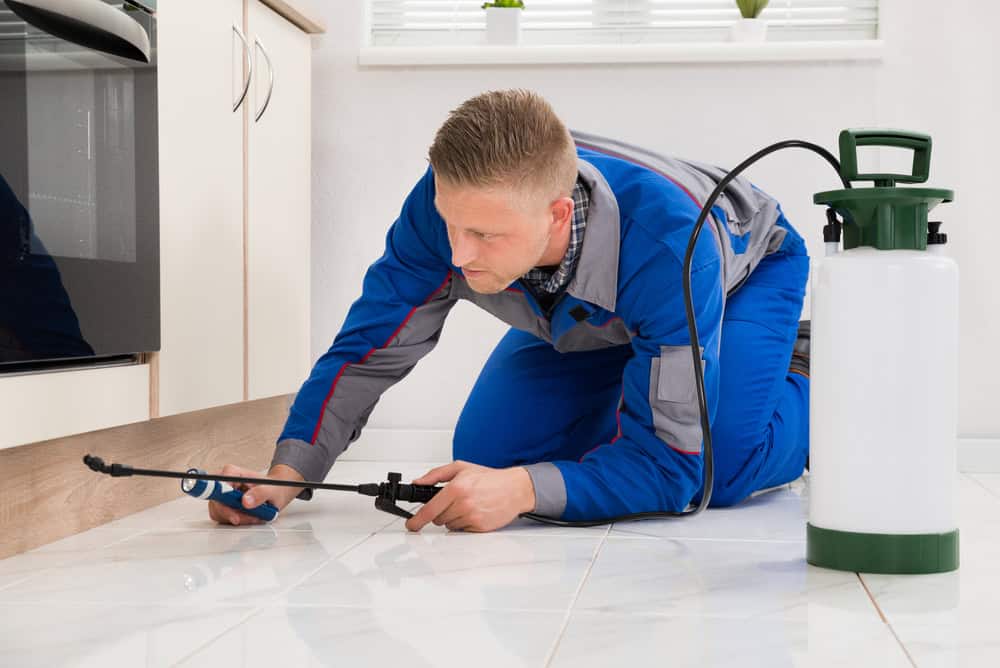
Professional termite treatment in Florida typically falls between $700 and $2,000 for a standard residential job, though that range shifts depending on the treatment method, the size of the home, and how far the infestation has spread.
Liquid soil treatments — where a termiticide barrier is applied around the foundation — are one of the most common approaches for subterranean termites. Bait station systems, like Sentricon, work differently: stations are installed around the perimeter and monitored over time, with bait that workers carry back to the colony. For drywood termites, tent fumigation is often the most thorough option, though no-tent alternatives exist for smaller, localized infestations.
For Port St. Lucie homeowners specifically, annual termite protection plans average around $44 per month — roughly $205 to $361 per year depending on home size. That’s the ongoing cost of monitoring, inspections, and retreatment coverage if something comes back. When you compare that to the average cost of termite damage repair in Florida — which runs $8,000 to $12,000 for homeowners without a bond — the math shifts quickly.
One thing worth knowing: homeowners insurance does not cover termite damage. Insurance companies classify infestations as a preventable maintenance issue, not an accidental event. That means if a colony does structural damage to your home, you’re paying for it out of pocket unless you have a termite bond or service agreement in place. A bond is the only financial protection available for termite damage in Florida, and understanding what yours covers — or whether you have one at all — matters more than most people realize until it’s too late.
The species involved also affects cost significantly. St. Lucie County has upward of ten identified termite species, including Eastern Subterranean, drywood varieties, and Formosan termites — the most destructive species on the list. A Formosan colony can contain millions of members and consume more than a pound of wood per day. Treating a Formosan infestation requires a different approach than treating a small drywood pocket in an attic. A company that doesn’t distinguish between the two isn’t giving you an accurate quote — or an effective treatment plan.
Getting multiple quotes is smart. Taking the lowest one without asking what it includes is where things go sideways.
A low-bid termite treatment might use diluted product concentrations, skip a thorough inspection, misidentify the species, or come with no warranty at all. You pay less upfront, the treatment is applied, and then six months later the colony is back — or still there — because the root problem was never properly addressed. Now you’re paying for a second treatment, and the damage that happened in between isn’t covered by anyone.
We get called in to fix this situation regularly. Homeowners who went with the cheapest option first, watched it fail, and are now dealing with a worse infestation than when they started. It’s not a knock on budget-consciousness — it’s just the pattern we see when treatment is chosen purely on price without asking the right questions.
The questions worth asking any termite company before you commit: Are you licensed through the Florida Department of Agriculture and Consumer Services? What species do you suspect, and how are you confirming that? What does your warranty actually cover — retreatment only, or damage repair too? What happens if the infestation comes back in six months?
If a company hesitates on any of those, that’s useful information. A company confident in its work can answer them without blinking.
Worth noting for Treasure Coast homeowners specifically: Formosan termites swarm in late spring, typically April through June, and they do it at night. If you’ve seen a cloud of insects around your porch lights on a warm May evening, that’s the window when infestations are most likely to start or be discovered. Acting quickly matters — Formosan colonies grow fast and cause damage faster than most other species.
Price and value aren’t the same thing in termite control. A $300 treatment with no warranty and no follow-up isn’t cheaper than a $900 treatment that includes annual inspections, monitoring, and a retreatment guarantee — because if the $300 job fails, you’re starting over.
What you’re really paying for with professional treatment is certainty: that the species was correctly identified, that the right product was used at the right concentration, that the coverage was thorough, and that someone stands behind the work if something goes wrong. That’s what a warranty actually represents. Not paperwork — accountability.

A termite bond is a service agreement between you and a licensed pest control company. At its core, it means the company commits to retreating your home if termites return within the coverage period. More comprehensive bonds also include coverage for damage repair — meaning if a retreatment is needed because the original treatment failed, the company pays for fixing what the termites damaged, not just re-spraying.
In St. Lucie County, termite bond costs typically run $500 to $2,000 for the initial treatment and inspection, with annual renewal fees ranging from $100 to $500 depending on the level of coverage and the treatment method used. That annual renewal is what keeps your protection active and your home inspected on a regular schedule.
Here’s why this matters locally: Florida real estate transactions require a Wood-Destroying Organism inspection at closing. If you’re planning to sell your home in Port St. Lucie, Fort Pierce, or anywhere else in St. Lucie County, an active termite bond makes that process significantly smoother — and some mortgage lenders require it. Buyers’ agents know to ask about it. Having one in place isn’t just protection for the home you’re living in; it’s protection for the asset you may eventually sell.
Port St. Lucie is one of the fastest-growing cities in Florida, which means a large portion of homes were built in the last ten to twenty years on soil that received pre-construction termite treatment. Those treatments expire. If your home was built in the early 2000s or before and you’ve never had a termite inspection, there’s a real possibility that whatever pre-treatment was applied has degraded — and the sandy, loamy soil throughout St. Lucie County makes it easy for subterranean colonies to move in once that barrier is gone.
For most Florida homeowners, yes — and the reason comes down to climate. Unlike states where cold winters slow termite activity to a crawl, St. Lucie County’s subtropical conditions mean colonies are active every single month of the year. There’s no off-season. There’s no point where you can assume the pressure has eased.
An annual termite protection plan in the Port St. Lucie area covers regular inspections, ongoing monitoring, and retreatment if activity is detected. You’re not just paying for one treatment — you’re paying for someone to keep watch.
Compare that to the cost of not having coverage. Severe Formosan infestations — which are a real and documented risk on the Treasure Coast — can push structural damage costs to $50,000 or more. And again, none of that is covered by homeowners insurance.
The honest answer to “is it worth it” is: if you own a home in St. Lucie County and you’re not on some kind of annual monitoring plan, you’re carrying a financial risk that most people don’t fully account for until something goes wrong. The yearly cost of protection is a fraction of what a single serious infestation can cost to repair.
We offer free estimates to every homeowner we work with — residential, commercial, all of it — because we think you should know exactly what you’re dealing with before you spend anything. No obligation, no pressure. Just a clear picture of your home’s current situation and what, if anything, needs to happen next.
The search for the cheapest termite treatment usually starts with a real concern — you don’t want to overpay, and you’re not sure what fair looks like. That’s a reasonable place to start. But the most important thing to understand is that termite control isn’t a product you buy; it’s a result you’re paying for. And the cheapest path to a failed result isn’t actually cheap.
What actually saves money is getting the inspection right, identifying the species correctly, using the right treatment method, and having a warranty that means something if anything goes wrong. That’s true whether you own a newer home in Tradition, a ranch house in Fort Pierce, or a property anywhere else across St. Lucie County.
ProControl Management Services has been doing this work in St. Lucie County since 2006. We’re locally owned, eco-friendly, and we back every service with a satisfaction guarantee. If you want to know what your home is actually dealing with before committing to anything, reach out for a free estimate — and we’ll give you a straight answer.
Article details:
Share:
Continue learning: