Bed bugs in Florida don't take a season off. Here's how to identify them, understand your treatment options, and stop an infestation before it spreads.
Share:
Summary:
You woke up with bites. Maybe you’ve seen a tiny reddish-brown bug near the mattress seam. Maybe you’ve been Googling for an hour and still aren’t sure what you’re dealing with. That uncertainty is one of the worst parts — not knowing whether you have a real problem or just a few mosquito bites from last night’s walk.
Here’s what we can tell you: if you’re in St. Lucie County and something is biting you at night, bed bugs are absolutely worth ruling out. Florida’s climate keeps them active year-round, and this area has some unique risk factors that most people don’t know about. This guide covers how to identify them, what actually works to get rid of them, and what to expect from the process.
Most people picture a visible, obvious bug. The reality is more subtle. Adult bed bugs are about the size of an apple seed — flat, oval, and reddish-brown. After feeding, they swell and darken. Young bed bugs, called nymphs, are smaller and nearly translucent, which makes them genuinely hard to spot without knowing what you’re looking for.
What you’re more likely to notice first are the signs they leave behind. Tiny rust-colored stains on your sheets or mattress seams. Small dark spots — fecal matter — along the edges of your mattress or box spring. Shed skins in the folds of your bedding. In a heavier infestation, there’s sometimes a faint musty smell that’s hard to place. The bugs themselves hide during the day and feed at night, so seeing one in the open is actually uncommon.
This is where a lot of people get stuck. Bed bug bites look similar to mosquito bites — small, red, and raised — but they tend to appear in clusters or a rough line, often on exposed skin like your arms, neck, or shoulders. The pattern shows up that way because a single bug will feed multiple times in one spot as it moves along your skin.
The tricky part is that not everyone reacts visibly. Some people develop a noticeable welt within hours. Others have no skin reaction at all, which means two people sleeping in the same bed can have completely different experiences. One partner wakes up covered in bites while the other shows nothing. That asymmetry causes a lot of confusion and delays people from taking the problem seriously.
It’s also worth knowing that roughly 84% of pest professionals say they were initially called about a different pest entirely before identifying bed bugs. Most people assume fleas, mosquitoes, or even a skin condition before they land on the right answer. If you’ve been treating for something else and the bites keep coming back, it’s worth getting a professional set of eyes on the situation.
One thing that’s specific to Florida: the state is home to the tropical bed bug, *Cimex hemipterus*, in addition to the common bed bug found across the rest of the country. The tropical species is harder to eliminate and is resistant to most standard insecticides. It’s one of the reasons a treatment approach that works in a northern state may not hold up here — and why working with someone who knows Florida’s pest environment specifically actually matters.
The name is a little misleading. Bed bugs do favor the area around where you sleep, but they don’t limit themselves to your mattress. They hide anywhere they can stay close to a host — which means box springs, bed frames, headboards, and the gap between your mattress and the wall are all common spots. Beyond the bed itself, they’ll move into nightstands, upholstered furniture, electrical outlets, baseboards, and even behind picture frames.
Start your inspection at the mattress seams and corners. Use a flashlight and a credit card or thin piece of paper to probe the seams — you’re looking for live bugs, shed skins, dark fecal spots, or tiny white eggs about the size of a pinhead. Work outward from there to the box spring, then the frame, then the surrounding furniture.
If you’ve recently traveled, that’s the first place to trace things back. Bed bugs are exceptional hitchhikers. They move in luggage, on clothing, in secondhand furniture, and through shared walls in multi-unit housing. In St. Lucie County, this is a real and recurring issue — the area draws a significant seasonal population every fall and winter, with snowbirds returning from states like New York, New Jersey, and Ohio, all of which rank among the highest for bed bug activity nationally. Spring training season at Clover Park brings another wave of out-of-state visitors to Port St. Lucie every February and March, filling local hotels and short-term rentals. If you’ve had guests, stayed somewhere, or recently picked up used furniture, those are all worth factoring in.
The short version: if you’re not sure, don’t guess. A professional inspection is the only way to know for certain what you’re dealing with and how far it’s spread.
This is where a lot of people go wrong. The instinct is to grab something from the hardware store and handle it yourself. The problem is that bed bugs are among the most difficult pests to eliminate, and most DIY products don’t address the full life cycle. Eggs are immune to chemical treatments, which means even a product that kills adults on contact leaves behind a new generation that will hatch in one to two weeks.
Foggers and bug bombs are particularly problematic. The University of Florida’s Institute of Food and Agricultural Sciences explicitly warns against them for bed bug treatment. Rather than eliminating the infestation, they can scatter bugs into new rooms and walls, making the problem harder to treat and easier to spread. If you’ve already tried a fogger and things seem worse, that’s likely why.
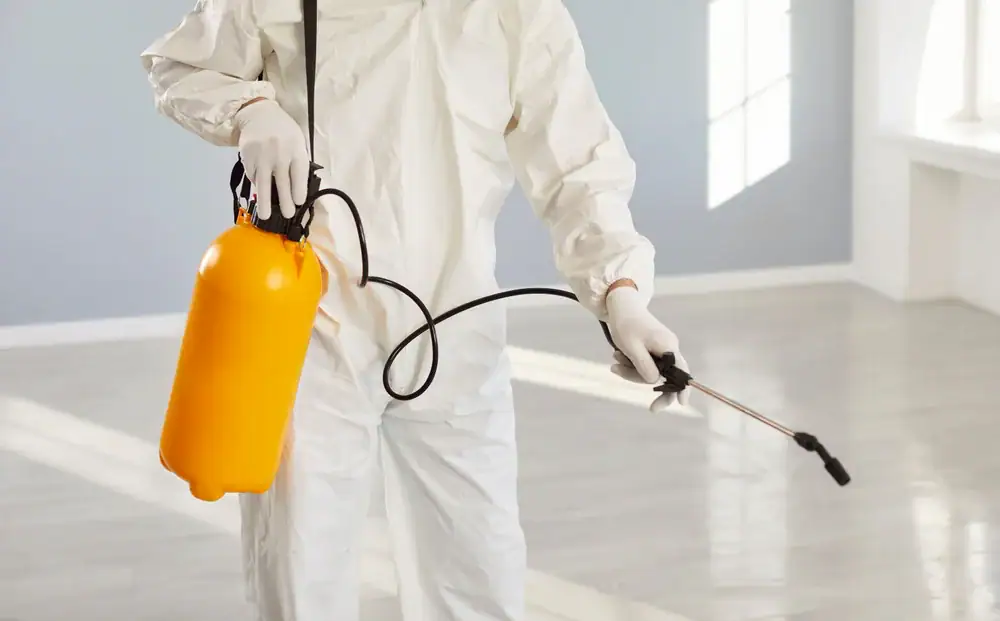
A professional bed bug inspection is more thorough than most people expect. It’s not a quick walkthrough — a good inspector works methodically through every room, checking mattress seams, furniture joints, baseboards, electrical outlets, and wall voids. The goal is to confirm whether bed bugs are present, identify how widespread the infestation is, and find the likely entry points or spread patterns.
Before the inspection, it helps to avoid disturbing the areas you suspect. Don’t vacuum, move furniture, or apply any products — doing so can scatter bugs and make the inspection less accurate. If you’ve already tried a treatment, let the inspector know, because that changes what they’re looking for and how they interpret what they find.
In St. Lucie County, we see a specific pattern worth mentioning: infestations in vacation rentals and short-term properties along Hutchinson Island and the coastal areas tend to go undetected longer than in primary residences, simply because the property isn’t occupied full-time. By the time a guest or owner notices something, the infestation has often had weeks or months to establish. If you manage a rental property in the area, routine inspections between guest stays are a practical precaution, not an overreaction.
After the inspection, we’ll walk you through what we found, explain the severity, and present your treatment options before any work begins. You should receive a clear picture of what the process involves, how many visits are likely needed, and what you’ll need to do to prepare. If someone quotes you a single spray visit and calls it done, that’s a red flag.
We offer free estimates for all inspections — residential and commercial pest control — because we think you should understand what you’re dealing with before you commit to anything.
Once an infestation is confirmed, there are two primary professional approaches: heat treatment and chemical-based Integrated Pest Management, often called IPM.
Heat treatment involves raising the temperature in the affected space to above 130°F, which kills bed bugs at every life stage — including eggs — in a single treatment. It’s chemical-free, which makes it a strong option for households with children, pets, or chemical sensitivities. The main trade-off is cost: whole-home heat treatment typically runs between $2,000 and $4,000, and it requires thorough preparation before the technician arrives.
Chemical IPM uses a combination of low-toxicity pesticide applications, targeted to the specific areas where bed bugs are hiding. Because eggs survive the initial treatment, this approach requires follow-up visits — typically three to four over the course of about two months — to catch newly hatched nymphs before they reach maturity and reproduce. It’s a lower upfront cost than heat treatment, but it requires more time and consistency to be effective.
We offer both approaches, and we’re straightforward about which one makes more sense given the size of the infestation, the layout of your home, and your household’s specific situation. For families who want to avoid chemical exposure entirely, heat treatment is often the right call. For a contained infestation in a single room, a well-executed IPM protocol can be just as effective at a lower cost.
What we don’t do is oversimplify it. Bed bug control in Florida isn’t a one-size-fits-all situation, especially with the tropical bed bug species present in this state. The protocols we use here are calibrated for South Florida’s pest environment — not copied from a national playbook designed for a different climate. We’ve been treating bed bugs in St. Lucie County since 2006, and that experience shows up in how we approach each job.
Every treatment we do comes with a satisfaction guarantee. If the problem isn’t resolved, we’re not finished.
The honest answer is: sooner than feels necessary. Bed bugs reproduce quickly, hide well, and don’t respond to most over-the-counter products the way people expect. The longer an infestation goes untreated, the more rooms it can reach — and the more complicated and costly the treatment becomes.
If you’ve confirmed the signs, or you’ve tried something that didn’t work, or you’re just not sure and want a professional opinion, that’s exactly what we’re here for. We offer free estimates, we’re available around the clock for urgent situations, and we’ve spent nearly two decades learning how these pests behave specifically in the Treasure Coast’s climate and housing stock.
Reach out to ProControl Management Services and let’s figure out what you’re actually dealing with — before it gets any harder to fix.
Article details:
Share:
Continue learning: