A bee sighting isn't always an emergency. But sometimes it absolutely is. Here's how to tell the difference — and what to do about it.
Share:
Summary:
You found a hive. Maybe it’s tucked under your soffit, wedged into the wall near your lanai, or hanging from a tree your kids play under every afternoon. Now you’re wondering: is this a call-right-now situation, or can it wait until Tuesday?
That question matters more than most people realize — especially here in St. Lucie County, where Africanized honey bees are a documented reality, not a distant concern. The difference between a scheduled pest control visit and an emergency response isn’t just about timing. It’s about the right equipment, the right training, and knowing exactly what you’re dealing with before anyone gets hurt.
Most bee encounters don’t start as emergencies. A small swarm lands in your yard, you give it some space, and it moves on within a day or two. That’s normal behavior for a colony in transit between nesting sites, and in those cases, waiting it out is often the right move.
But St. Lucie County isn’t a low-risk environment for bee encounters. Africanized honey bees — which are visually identical to the European honey bees most people picture — are established throughout this area. They defend a much larger territory, respond to perceived threats in far greater numbers, and will pursue a threat well beyond the hive. That changes the calculus significantly when a colony is anywhere near your home, your family, or anyone with a known sting allergy.
The clearest sign that you’re dealing with an emergency is proximity and behavior. If a hive is within close range of a door, a play area, a pool, or any space where people move through regularly, that’s not a situation to monitor from a distance. An established colony near high foot traffic is an active hazard — not a problem that improves with time.
Aggressive behavior is another hard signal. If bees are already following people, responding to movement or sound, or have stung someone unprovoked, you’re past the “let’s schedule something for next week” stage. That’s a same-day call.
Children, elderly residents, and anyone with a known allergy to bee stings face a heightened level of risk that changes the urgency entirely. Anaphylaxis can set in within minutes of a sting, and roughly one in thirty people carry that risk without ever knowing it until it happens. When vulnerable family members share a space with an active hive, the margin for error is essentially zero.
One scenario we see regularly around Port St. Lucie and Fort Pierce involves hives that have moved into wall cavities or attic spaces — often in older homes with more structural voids. By the time a homeowner notices the activity, the colony is already established. The hive is no longer a swarm passing through; it’s a structure inside your structure. That’s a different problem entirely, and it requires more than a spray treatment at the entrance.
A disturbed hive is also worth mentioning specifically. If someone has already tried to treat the bees — whether with store-bought spray, a garden hose, or anything else that agitated the colony without eliminating it — the situation is now more dangerous than it was before. Partially treated Africanized colonies can become significantly more aggressive, and the appropriate response is immediate professional intervention, not a second DIY attempt.
Standard pest control service is genuinely effective for a wide range of problems — ants, roaches, spiders, mosquitoes, and other common household pests that respond well to scheduled, preventive treatment. A regular maintenance plan handles those situations cleanly and keeps them from becoming bigger issues over time.
Emergency bee removal is a different category of work. Most general pest control technicians carry basic wasp and bee spray, which is useful for small, accessible nests. What they typically don’t carry — and aren’t always trained for — is the full protective equipment, structural access tools, and behavioral knowledge required to safely manage an established honey bee colony, particularly one that may be Africanized.
The distinction that matters most here is between exterminating bees and removing the hive. Treating the entrance of an in-wall colony will kill a portion of the bees, but it leaves the honeycomb intact inside your walls. Left behind, that comb ferments, attracts secondary pests like ants, cockroaches, and rodents, and creates moisture damage that works its way into the structure over time. Proper removal means extracting the comb, not just treating the visible bees.
That’s not a criticism of general pest control — it’s just an honest description of where the service ends and where specialty removal begins. If you call a company and they don’t ask about the hive location, colony size, or whether the comb will be removed, those are worth asking before you agree to anything.
We’ve been called out to properties across St. Lucie County after previous treatments didn’t hold — situations where a hive was sprayed but not extracted, and the colony either reorganized or the remaining comb drew in a new swarm weeks later. Getting it right the first time is almost always less expensive than fixing an incomplete job.
Bees get most of the attention when it comes to emergency calls, but they’re not the only wildlife situation that can’t wait for a scheduled appointment. Emergency wildlife removal covers a broader range of scenarios — and the common thread across all of them is that the risk of waiting outweighs the inconvenience of acting fast.
Raccoons in an attic, bats roosting in a living space, a snake inside the home, or an injured animal behaving erratically near children — these situations need a licensed professional with the right equipment, the right knowledge of animal behavior, and the ability to respond the same day.
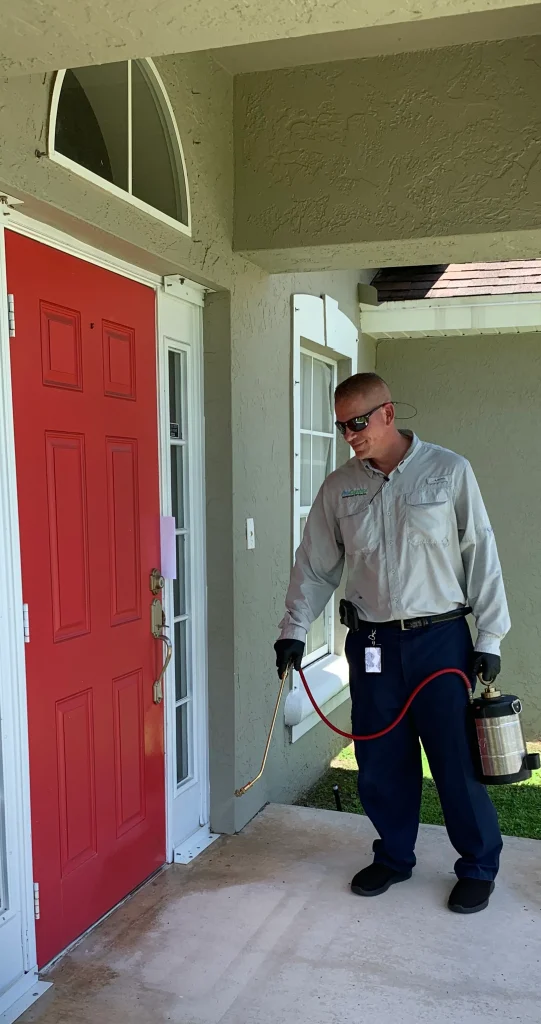
The clearest indicator is direct risk to people. If a wild animal has made contact with a person or pet, is showing signs of distress or aggression, or is occupying a living space rather than an exterior void, that’s an emergency by any reasonable definition. Rabies exposure risk alone — relevant with raccoons, bats, and foxes — makes delayed response medically irresponsible.
Property damage is a secondary but still serious trigger. Animals that are actively chewing through wiring, structural wood, or insulation can cause significant damage in a short window. Waiting several days for a scheduled visit while that damage continues isn’t a cost-saving move — it’s a cost-multiplying one.
The Treasure Coast’s subtropical climate and the ongoing residential growth in western Port St. Lucie and the Tradition corridor have pushed wildlife encounters closer to homes than many residents expect. New construction disturbs habitats that previously kept animals at a distance from neighborhoods. Mature landscaping in established communities — the citrus trees, palms, and dense ornamental shrubs that make St. Lucie County beautiful — also provides ideal cover and foraging territory for wildlife that eventually finds its way into attics, crawl spaces, and garages.
We hold the appropriate licensing through Florida’s regulatory agencies for both pest control and nuisance wildlife removal. That matters because wildlife removal in Florida isn’t something any pest operator can legally perform — it requires specific permits and training that not every company carries. When you call us, you’re getting a licensed response to a situation that legally and practically requires one.
Emergency service costs more than a scheduled visit. That’s straightforward, and it’s worth understanding why before you’re in a situation where you need to make a fast decision.
After-hours response, rapid technician deployment, and specialized equipment all carry real operational costs. When we dispatch a licensed technician at 10 p.m. on a Saturday because a hive has been disturbed near a child’s bedroom window, that response isn’t running on the same infrastructure as a Tuesday afternoon appointment. The premium reflects what it actually takes to be available and ready at any hour.
What’s worth weighing against that cost is what happens if the situation isn’t addressed promptly. An established bee colony inside a wall that goes untreated for weeks can cause moisture damage, attract secondary infestations, and require structural repair that runs well into the thousands. A wildlife intrusion that continues unchecked while you wait for a scheduled opening causes compounding damage. And a bee sting that triggers anaphylaxis in someone who didn’t know they were allergic carries consequences that no service fee comes close to.
We offer free estimates for every job, including emergency calls. That means you can get a clear picture of the scope and cost before committing to anything. Our satisfaction guarantee applies across all services — if the job isn’t done right, we come back and make it right. For bee removal specifically, that means the hive is fully extracted, the comb is removed, and entry points are sealed. Not just the bees you can see, but the problem underneath them.
We’ve been doing this in St. Lucie County and across the Treasure Coast since 2006. We’re a locally owned company with deep familiarity with the specific conditions, the pest pressures, and the housing stock in this area. That combination of local knowledge and 24/7 availability is what makes the difference when a situation genuinely can’t wait.
Not every bee sighting is a crisis. But when the hive is established, the colony is aggressive, or someone in your household is at risk, waiting is the wrong call. The same applies to wildlife situations that have moved past nuisance and into genuine hazard territory.
The practical question isn’t whether emergency removal costs more than a scheduled visit — it’s whether the risk of delay costs more than the response. In most of the situations we’re called out for, the answer is clear.
If you’re unsure what you’re dealing with, reach out to us. We’ll give you an honest assessment, a free estimate, and a straight answer about whether what you’re seeing requires immediate action or can be handled on a normal schedule. That’s all most people need to make the right call.
Article details:
Share:
Continue learning: