Not all bed bug treatments work the same way. Here's what actually separates heat from chemical methods — and why it matters where you live.
Share:
Summary:
Finding bed bugs is one of those moments that stops you cold. Whether it was a spot on the mattress, a bite you couldn’t explain, or something you saw while changing the sheets — the discovery is unsettling, and the questions come fast. Do I need to throw out my furniture? Can I stay in my home? Will sprays from the store actually work?
The short answer to that last one: probably not. But before you call anyone, it helps to understand what you’re actually dealing with — and what kind of treatment will get the job done instead of just buying you a few weeks of relief. Here’s what you need to know.
Bed bugs are not like most household pests. They don’t come in through a gap in the foundation or a torn screen. They travel on luggage, used furniture, clothing, and personal items — which means any home, any neighborhood, any income level is fair game. A clean house is not a protected house.
What makes them genuinely difficult to eliminate is where they hide. Bed bugs spend most of their time tucked inside mattress seams, box spring folds, baseboards, wall voids, electrical outlets, and furniture joints. A spray that hits the surface doesn’t reach the places where the population is actually living — and more critically, it doesn’t reach the eggs. That’s where most DIY attempts and even some professional chemical treatments fall apart.
Effective bed bug control means treating the full infestation, not just the bugs you can see. That distinction drives everything that follows.
Heat treatment works by raising the temperature inside a treated space to between 120 and 145 degrees Fahrenheit and holding it there long enough to kill bed bugs at every life stage — eggs included. Industrial heating equipment is brought into the home, and remote temperature sensors are placed throughout the space to confirm that lethal heat is reaching inside walls, furniture, mattresses, and every other area where bed bugs could be hiding.
The reason heat is so effective is physics, not chemistry. No organism can develop resistance to a temperature that denatures its proteins. That’s a meaningful distinction from chemical treatment, where bed bug populations have been developing resistance to common pesticides — including Deltamethrin, one of the most widely used active ingredients — since the 1980s. When a chemical stops working, you need a different chemical. Heat doesn’t have that problem.
A full heat treatment typically takes six to nine hours, and in most cases you can return to your home the same day. There’s no pesticide residue on surfaces, no chemical odor, no need to bag up food or relocate pets for days. For families with young children, anyone with respiratory sensitivities, or pet owners who don’t want their animals exposed to treated surfaces — that matters a lot.
One thing worth knowing: heat treatment does require some preparation. Aerosol cans, candles, and certain heat-sensitive items need to be removed beforehand. Our technician will walk you through exactly what needs to move before the equipment goes in. It’s a manageable process, and the prep list is shorter than most people expect.
The other significant advantage is the number of visits required. A single heat treatment, when done correctly, eliminates the infestation in one session. Chemical treatment — even when it works — typically requires two to four visits over three to six weeks to catch hatching cycles, because the initial application can’t kill eggs. That’s not a flaw in the technician’s work; it’s a limitation of the method itself.
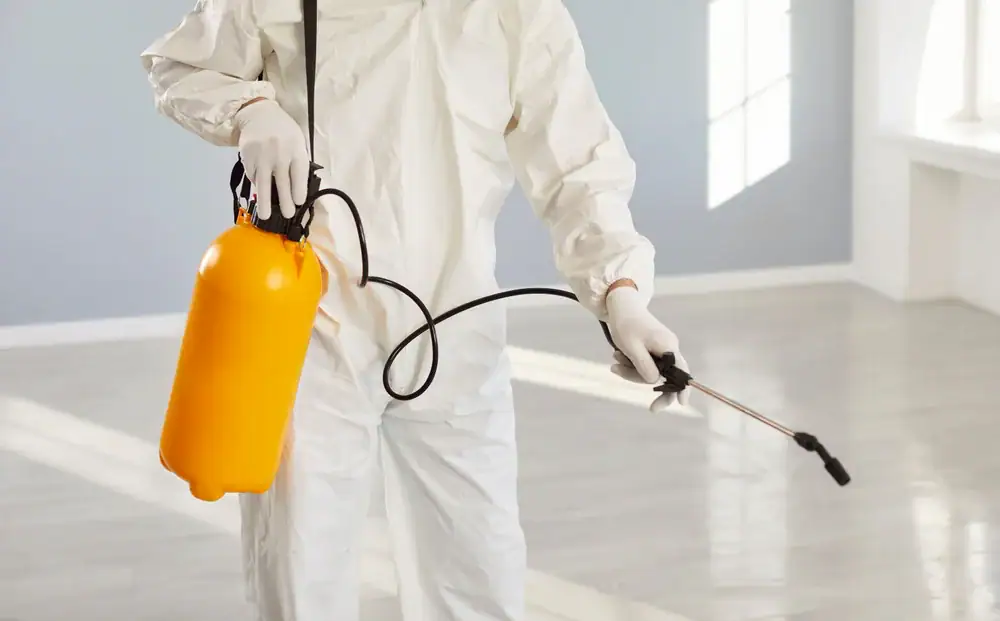
Chemical treatments still have a place in bed bug control — they’re just not a standalone solution for most infestations. EPA-registered insecticides applied by a licensed professional can be effective when used as part of a broader integrated approach, particularly as a residual barrier after heat treatment to reduce the risk of re-introduction.
The challenge with chemicals alone is the egg problem. Most insecticides cannot penetrate a bed bug egg’s protective casing. That means even a thorough chemical application leaves a portion of the population intact and on a hatching schedule. Follow-up visits are built into chemical treatment plans specifically to address this — the idea is to catch each new wave as eggs hatch before the population can re-establish. It works in some cases, but it requires patience, multiple appointments, and consistent access to the treated space.
There’s also the resistance issue. Bed bugs have been adapting to chemical exposure for decades, and some populations no longer respond to treatments that worked reliably in the past. This isn’t unique to any one product or brand — it’s a documented pattern across the industry. In South Florida especially, where bed bug activity is year-round and populations cycle continuously, resistance is a real factor that affects treatment outcomes.
For certain situations — smaller, localized infestations, or cases where heat treatment isn’t feasible due to the property layout — a targeted chemical approach with proper follow-up can still produce good results. The key word is targeted. Broad chemical application without a thorough inspection first is rarely the right call, and it’s one of the reasons people end up calling us after another company’s treatment didn’t hold. When we come in after a failed attempt, the first thing we do is a full re-inspection to understand what was missed and why — before recommending anything.
A lot of people assume a bed bug inspection means someone checks the mattress and calls it done. A real inspection covers significantly more ground than that — and what gets found (or missed) in that first walkthrough determines everything about the treatment plan that follows.
Professional inspectors are looking for all life stages: eggs, nymphs at various stages of development, and adults. Each stage looks different and hides differently. Eggs are tiny, whitish, and often glued to surfaces inside furniture joints or along baseboards. Nymphs are translucent and easy to overlook. Adults are more visible but still expert hiders. Finding all of them requires methodical attention to every surface within roughly eight feet of where people sleep — which is where the vast majority of an infestation lives.
The inspection also looks for secondary signs: blood spots on sheets, shed exoskeletons, fecal staining along mattress seams, and in severe cases, a faint musty odor. These signs often confirm an infestation before a single live bug is found.
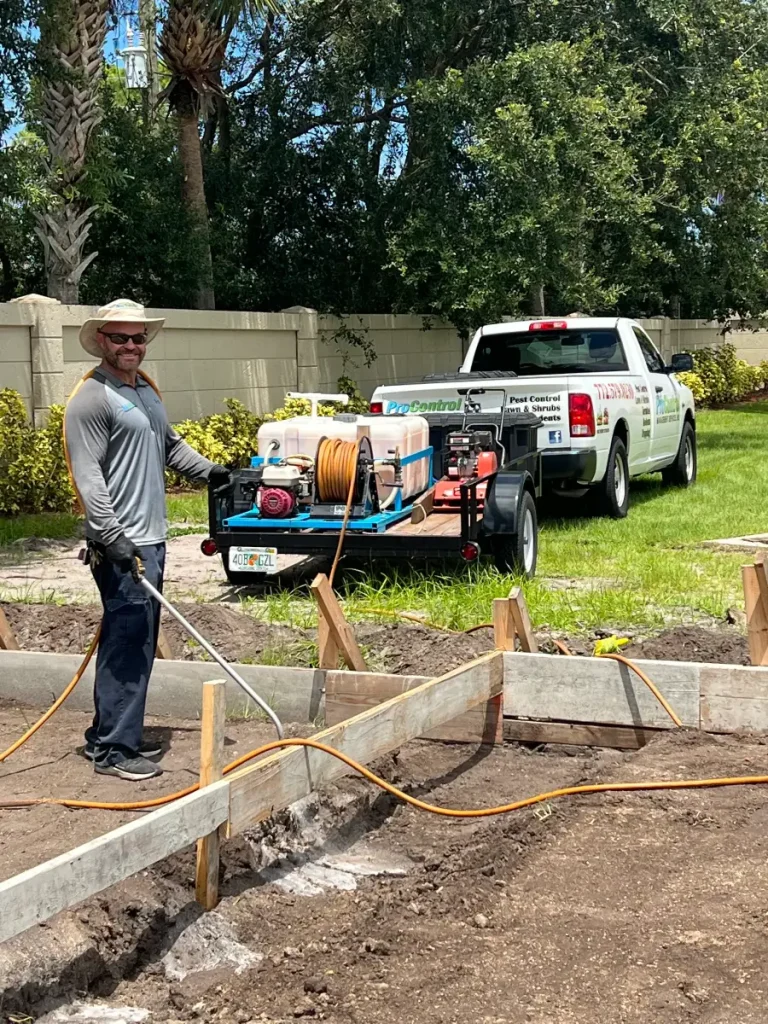
Beyond the mattress and box spring, we look at the headboard, bed frame, nightstands, upholstered furniture, baseboards, wall voids, electrical outlets, picture frames, and any clutter near sleeping areas. Bed bugs don’t need much space — a crack the width of a credit card is enough shelter for an adult. That’s why inspections take time, and why the quality of the inspection directly affects the quality of the treatment.
We’ve had clients come to us after another company’s treatment failed, and in many of those cases the original inspection simply didn’t go far enough. The treatment was applied to the right areas, but the full extent of the infestation — especially in wall voids or behind electrical outlets — was never identified. When you only treat what you find, you leave behind what you missed.
We can tell you, before any treatment begins, exactly where the infestation is concentrated, which life stages are present, how far it has spread beyond the primary sleeping area, and what treatment approach makes sense given the specific situation. That conversation should happen before any product is applied or equipment is brought in. If a company skips straight to treatment without that level of inspection, that’s worth noting.
In St. Lucie County, we also pay attention to how an infestation likely arrived — whether it came in through a vacation rental, a piece of used furniture, or a recent move from another part of South Florida. Understanding the source doesn’t change the treatment, but it does inform the prevention conversation that follows. The Treasure Coast’s growth has brought a lot of new residents from Miami-Dade, Broward, and Palm Beach County — markets where bed bug activity is high — and that movement creates real transmission risk that a locally aware inspection should account for.
In northern states, cold winters slow bed bug reproduction and give homeowners a natural window where infestations grow more slowly. That doesn’t apply here. St. Lucie County’s subtropical climate means bed bugs are active and reproducing every month of the year. A female bed bug can lay one to three eggs per day and up to 500 eggs in her lifetime. In a warm environment with no seasonal interruption, an infestation that starts small in January can be well-established by March.
Florida is consistently ranked among the top three most bed bug-infested states in the country, and the Treasure Coast’s combination of year-round warmth and active tourism creates ongoing pathways for bed bugs to move from high-traffic properties into private homes. The hotels near Hutchinson Island, the vacation rentals in Jensen Beach and Fort Pierce, and the steady stream of seasonal visitors all contribute to local exposure. You don’t have to travel to be exposed — you just have to have guests, buy secondhand furniture, or move into a unit that was previously occupied.
This is part of why we take the inspection step seriously before recommending any treatment. The source of an infestation and the speed at which it’s been growing both affect the right approach. A newly introduced infestation caught early may respond well to a targeted treatment plan. An established infestation that’s had months to spread through a mattress, a headboard, and into the wall void behind the bed requires a different level of response — typically heat, applied comprehensively, to reach every area where the population has taken hold.
We’ve been serving St. Lucie County since 2006. We know the local conditions, the seasonal patterns, and the specific situations — short-term rentals, multi-family housing, homes that have changed hands recently — where bed bug risk runs highest. That context shapes how we inspect, what we recommend, and how we follow up after treatment to make sure the problem is actually resolved.
Heat treatment and chemical treatment aren’t interchangeable options at different price points. They work through different mechanisms, have different strengths, and produce different results depending on the infestation. For most established bed bug situations — especially in Florida’s year-round warm climate — heat treatment offers the most complete elimination in the least amount of time, without leaving chemical residue behind. Chemical approaches still have a role, but they work best as part of a broader plan, not as a first and only step.
What matters most before any treatment decision is a thorough inspection by someone who knows what they’re looking for and will tell you honestly what they find. The treatment plan should follow the inspection — not the other way around.
If you’re dealing with bed bugs in St. Lucie County, or you’re not sure what you’re dealing with yet, we offer free estimates and have been serving the Treasure Coast since 2006. We stand behind every service we provide, and we’re available around the clock — because waiting until Monday morning isn’t always an option.
Article details:
Share:
Continue learning: