Honeybees and wasps aren't the same threat. One deserves protection, the other demands caution. Here's how to know which you're dealing with and when it's time to call for help.
Share:
Summary:
If it’s yellow and black and flying around your yard, it’s easy to assume it’s all the same. It’s not.
Honeybees are pollinators. They’re fuzzy, rounder in shape, and generally non-aggressive unless their hive is directly threatened. They feed on pollen and nectar, and they die after stinging once because their barbed stinger stays lodged in your skin. Honeybees are critical to Florida’s ecosystem and agriculture. When possible, they should be relocated, not killed.
Wasps are a different story. They’re smooth-bodied, slender, and built for hunting. Paper wasps, yellow jackets, and hornets are predators that feed on other insects. Unlike bees, wasps can sting you multiple times without dying. They’re more aggressive, especially when defending a nest, and they’re not interested in pollinating your garden.
Look at the body first. Bees have a fuzzy appearance with a rounder, fuller shape. Their legs are flat and covered in tiny hairs that help them collect pollen. Wasps, on the other hand, are sleek and shiny with a narrow, pinched waist and cylindrical body. Their legs are smooth and round.
Behavior is another clue. If you see insects hovering around flowers, moving slowly from bloom to bloom, you’re likely watching bees. They’re calm, focused on feeding, and generally unbothered by your presence unless you get too close to their hive.
Wasps are more erratic. They’re often spotted near trash cans, outdoor food, or protein sources like grills and pet bowls. They’re faster, more territorial, and quicker to react if they feel threatened. If you see them flying in and out of a specific spot repeatedly—under an eave, in a tree, or through a crack in your siding—they’re building or defending a nest.
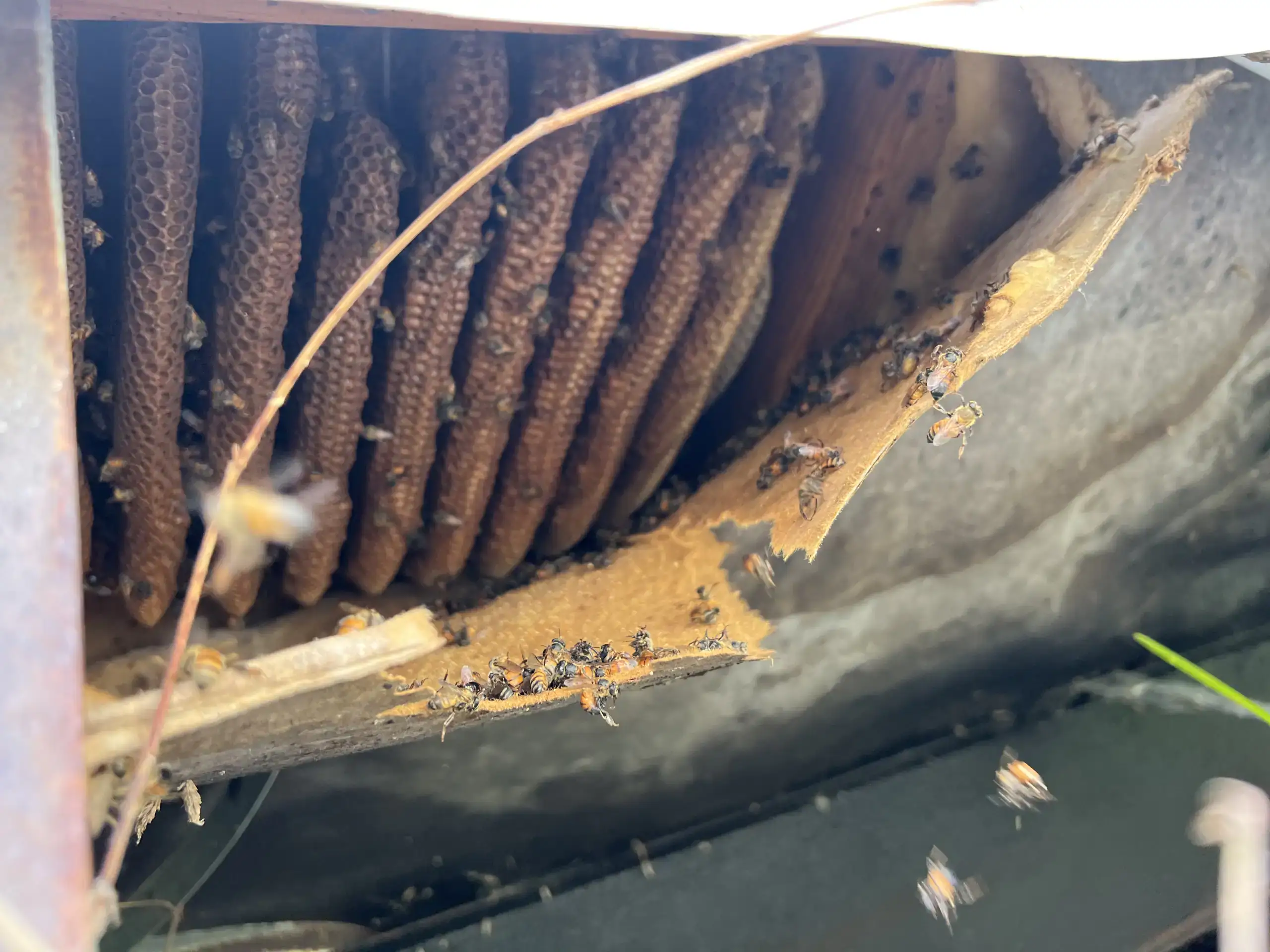
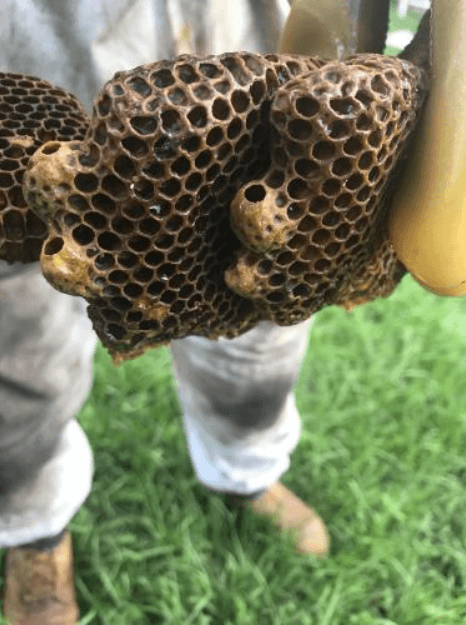
Nest structure tells you a lot too. Honeybees build wax combs, usually hidden inside hollow trees, walls, or attics. You won’t typically see the hive itself unless it’s exposed. Wasps build paper-like nests from chewed wood fibers. Paper wasps create umbrella-shaped nests that hang from a single stalk. Yellow jackets often nest underground or inside wall voids. Hornets build large, football-shaped nests that hang from trees or roof edges.
Knowing what you’re looking at helps you decide what comes next. If it’s honeybees, relocation is the right move. If it’s wasps, removal needs to happen carefully and completely.
Honeybees aren’t pests. They’re pollinators responsible for a significant portion of the food we eat. In Florida, they’re active year-round, supporting local agriculture and natural ecosystems. Killing them isn’t just unnecessary—it’s harmful.
When honeybees set up a hive in or around your home, the goal should be humane removal and relocation. This isn’t something you can do with a can of spray from the hardware store. It requires careful extraction of the entire hive, including the comb, honey, and queen. If you leave any part of the hive behind, the scent will attract other bees, ants, roaches, and rodents. The problem doesn’t go away—it multiplies.
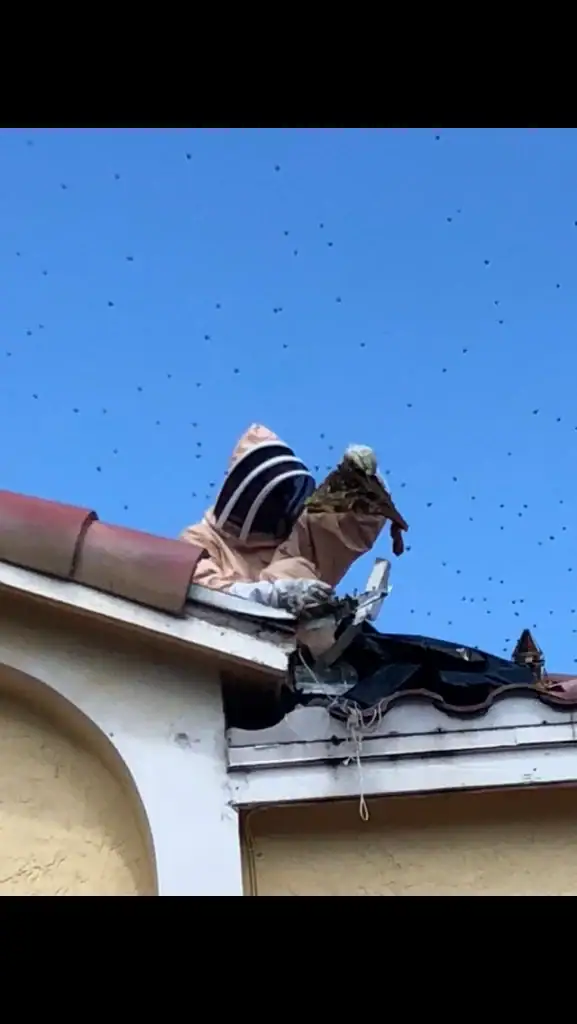
We know how to relocate colonies to safe environments where they can continue their work without threatening your family. We use protective equipment, specialized tools, and techniques that keep both the bees and the homeowner safe. It’s not about extermination. It’s about moving them to a better location.
Wasps, however, are a different matter. While they do play a role in controlling other insect populations, their aggressive nature and tendency to nest near human activity make them a legitimate safety concern. When wasps build a nest on your property, especially in high-traffic areas, removal is necessary. And it’s not a job for amateurs.
It’s tempting to grab a can of wasp spray and handle it yourself. The problem is that most DIY attempts either fail or make the situation worse.
Store-bought wasp sprays contain about 0.02% Pyrethrin, the active ingredient that kills wasps. Professional-grade products contain 0.50%—that’s 25 times stronger. The concentration matters because a weak spray won’t kill the entire colony. It’ll agitate the wasps, provoke a defensive swarm, and leave enough of the nest intact for them to rebuild within days.
Wasps don’t just sting once and die like honeybees. They sting repeatedly. And when one wasp stings, it releases pheromones that signal the rest of the colony to attack. What starts as one or two stings can quickly escalate into dozens.
Between 5 and 7.5% of Americans are hypersensitive to insect stings. For these individuals, a single sting can trigger anaphylactic shock—a life-threatening allergic reaction that requires immediate medical attention. Even if you’ve been stung before without issue, allergies can develop over time. You might not know you’re at risk until it’s too late.
Beyond allergic reactions, there’s the physical danger of the removal process itself. Wasp nests are often located in hard-to-reach places—high under eaves, inside wall voids, underground, or tucked into attics. Reaching these nests usually involves ladders, tight spaces, or awkward angles. Studies show that ladder-related injuries occur in over 40% of DIY wasp removal attempts. When you combine the risk of falling with the threat of an aggressive swarm, the danger multiplies.
Then there’s the issue of incomplete removal. Wasps are excellent builders. If you knock down part of a nest but don’t eliminate the entire colony, they’ll rebuild. And they’ll do it fast. Wasps have strong site fidelity—they return to the same nesting locations year after year because they remember where it’s safe. If the nest isn’t fully removed and the area isn’t treated to eliminate pheromone trails, you’ll be dealing with the same problem next season.
Some DIY methods are outright dangerous. Homeowners have tried everything from gasoline and fire to flooding nests with water. These approaches don’t work. They create fire hazards, cause structural damage, and often force wasps into living spaces through drywall or vents. What was an outdoor problem becomes an indoor emergency.
Certain situations should never be handled without professional help. If the nest is in a high-traffic area—near a doorway, patio, playground, or anywhere your family spends time—the risk is too high. One wrong move can put multiple people in danger.
If you see multiple nests or notice wasps returning after you’ve attempted removal, you’re dealing with a larger infestation. This requires more than a spray can. It requires proper identification of the species, understanding of their nesting behavior, and targeted treatment that eliminates the colony at its source.
Anyone in your household with a known allergy to stings should never be anywhere near a DIY removal attempt. The consequences of a sting in these cases can be severe, even fatal. It’s not worth the risk.
Nests located inside walls, attics, or underground are particularly dangerous. You can’t see the full extent of the colony, and disturbing them without the right equipment and protective gear is a recipe for disaster. We have the tools to access these hidden nests safely, treat them effectively, and ensure they don’t come back.
Late summer is peak aggression season for wasps in Florida. Colonies are at their largest, food sources are scarce, and wasps are more defensive than ever. If you discover a nest during this time, don’t wait. The longer you delay, the more dangerous the situation becomes.
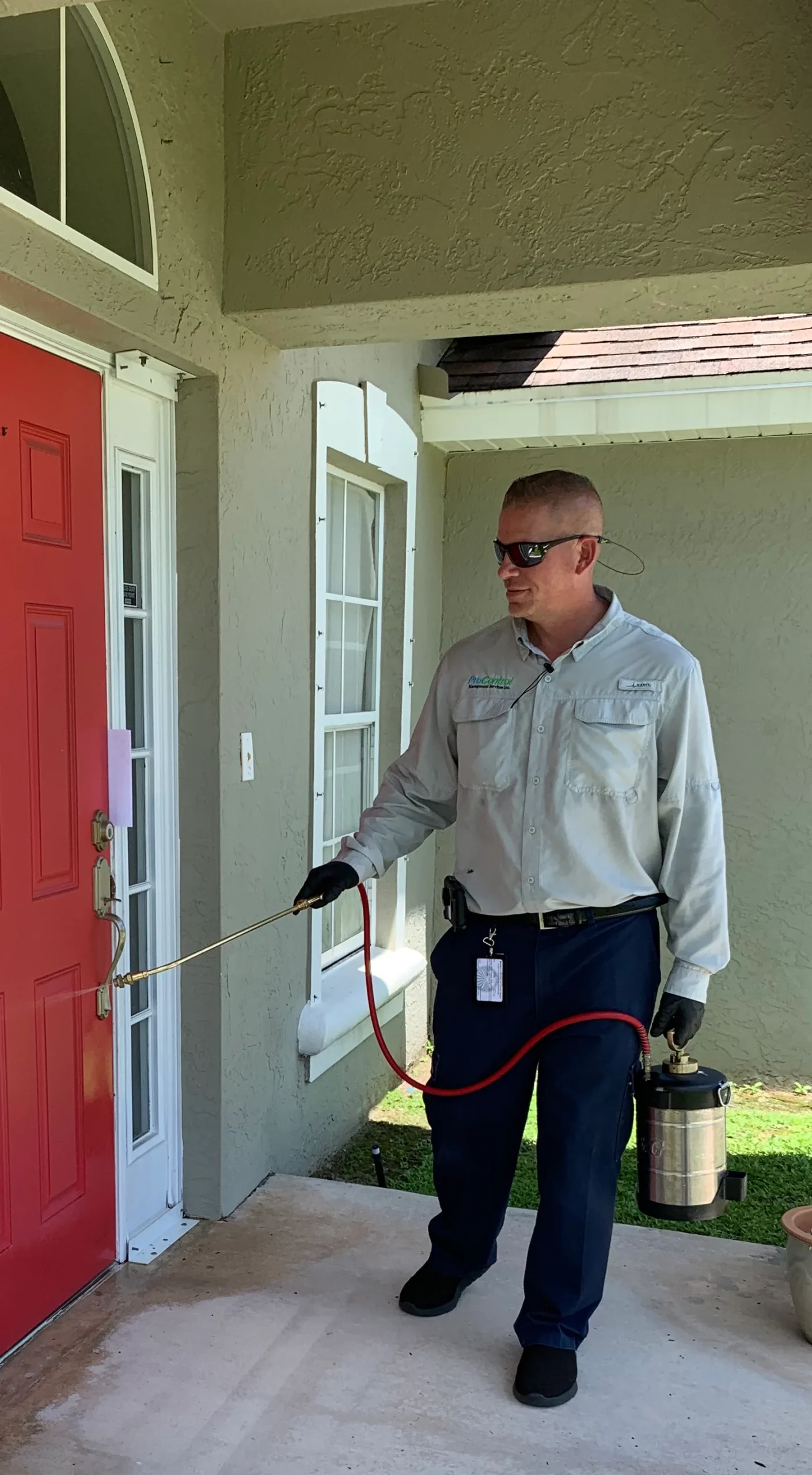
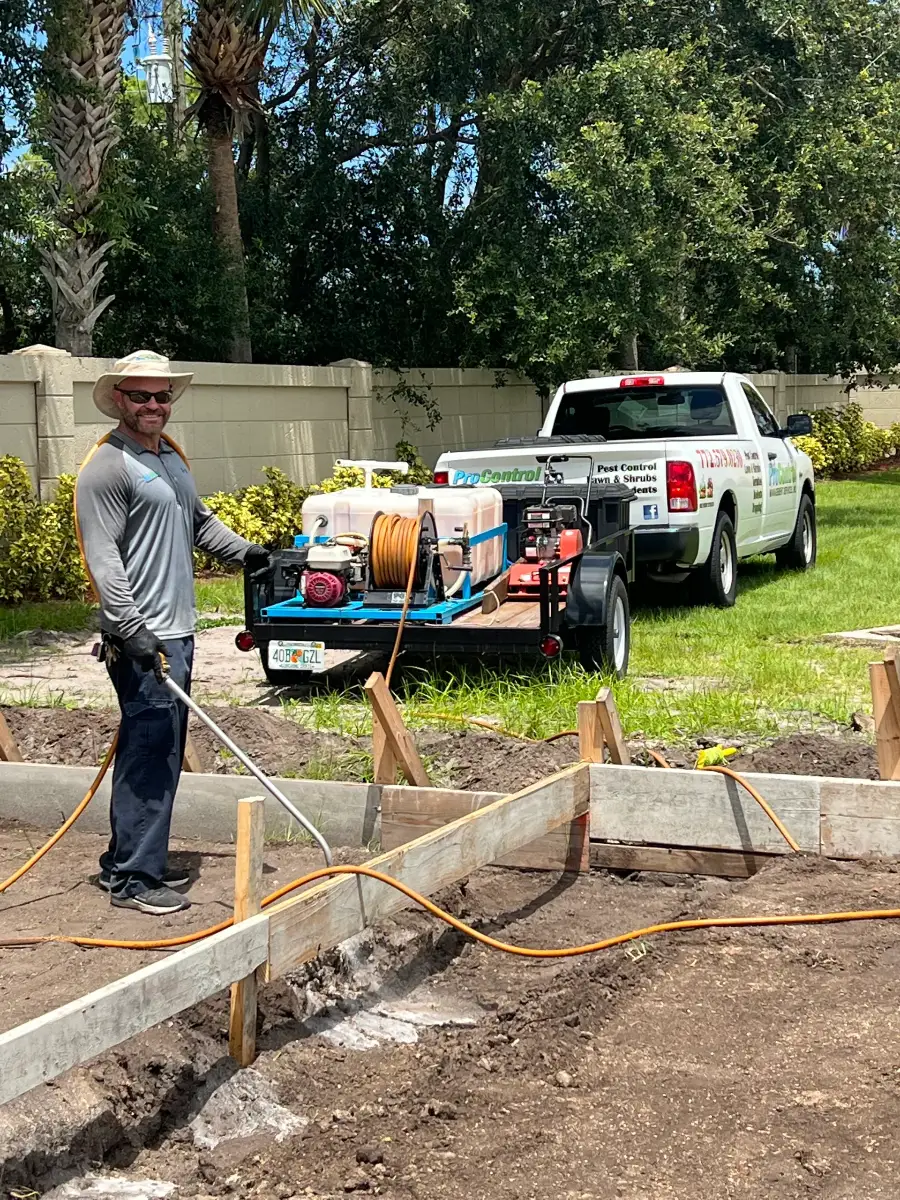
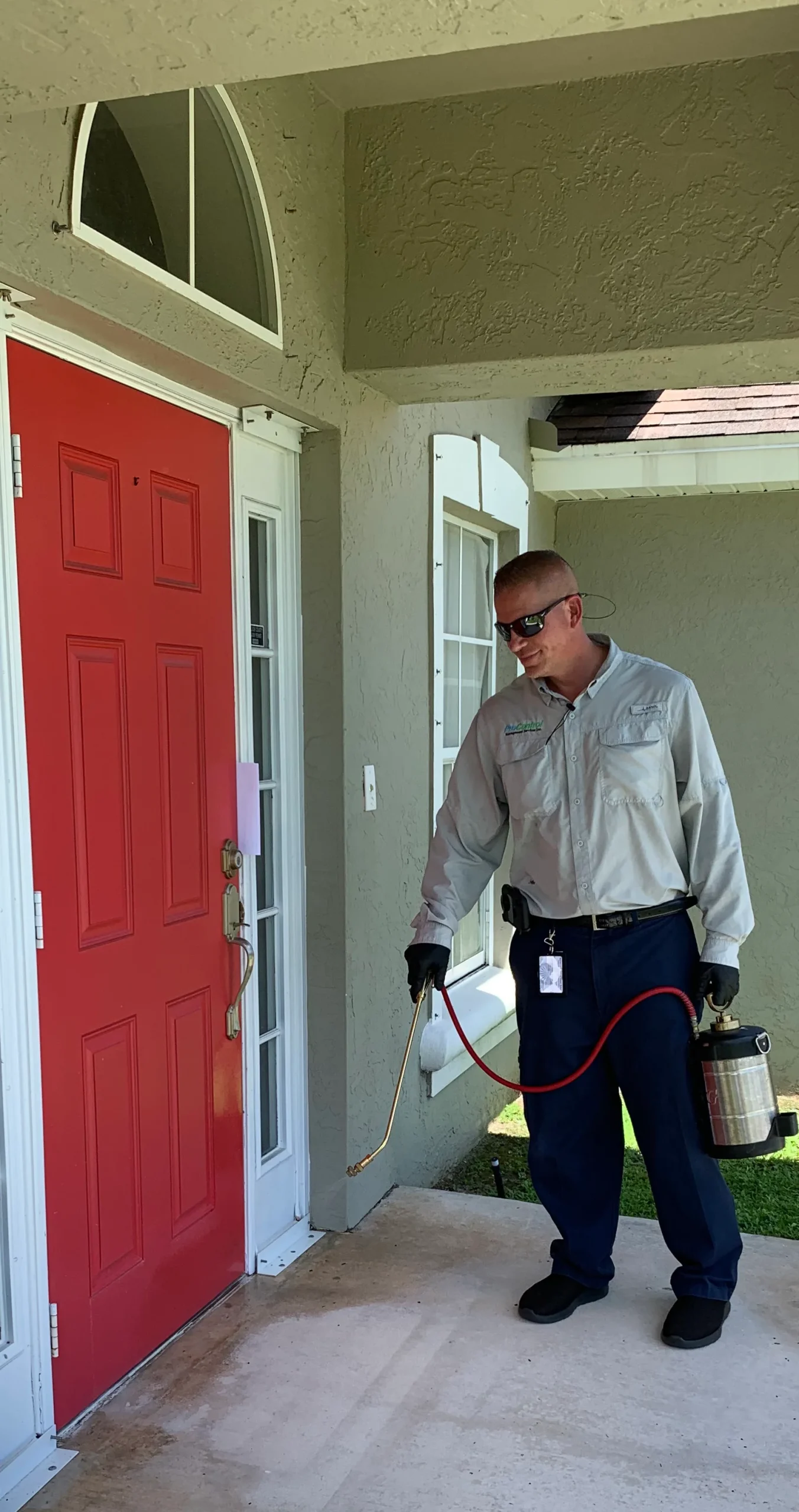
We bring more than just stronger chemicals. We bring expertise. We know how to identify wasp species, locate hidden nests, choose the right treatment method, and apply it safely. We wear protective equipment that reduces sting incidents by 95% compared to standard clothing. We understand wasp behavior and timing—when to approach, how to minimize risk, and what to do if things go wrong.
Not every buzzing insect around your home is a threat, but knowing which ones are—and how to handle them—makes all the difference. Honeybees deserve protection and relocation. Wasps require careful, complete removal. Both demand respect and the right approach.
DIY methods might seem like a quick fix, but they come with real risks. Incomplete removal, dangerous encounters, and recurring infestations aren’t worth the gamble. Professional removal protects your family, solves the problem correctly the first time, and gives you peace of mind.
If you’re dealing with bees or wasps in Port St. Lucie or anywhere in St. Lucie County, we have the experience, equipment, and eco-friendly solutions to handle it safely. With 24/7 emergency service, free estimates, and a satisfaction guarantee, you’re not just getting pest control—you’re getting a local team that understands Florida’s unique challenges and puts your safety first.
Article details:
Share:
Continue learning: