Florida has some of the worst termite pressure in the country. Here's what St. Lucie County homeowners need to know about identifying, treating, and preventing them.
Share:
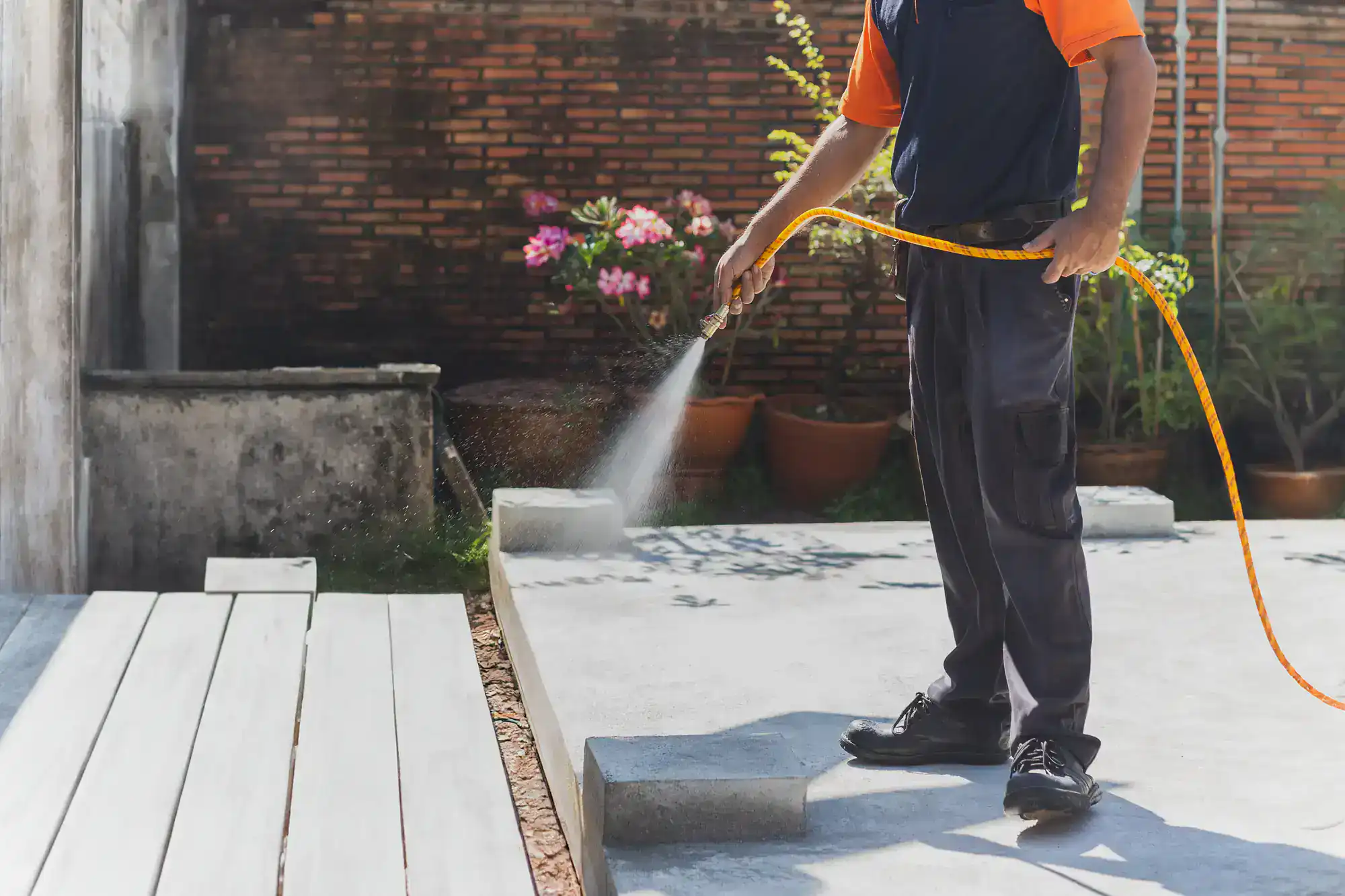
Summary:
If you live in St. Lucie County, you’re already in one of the highest-risk termite zones in the United States. That’s not a sales pitch — it’s the USDA’s official classification. Florida sits in TIP Zone #1, meaning the potential for termite damage here is as serious as it gets anywhere in the country.
Most homeowners don’t find out they have termites until something visible goes wrong. By then, the colony has often been active for years. This guide will walk you through the termite species active in South Florida, what early warning signs actually look like, what treatment costs in this market, and what to look for when choosing someone to handle it.
Most states deal with one or two termite species. South Florida — including St. Lucie, Martin, Indian River, and Palm Beach counties — has upwards of ten identified species. That matters because the treatment for one type often does nothing for another. A company that doesn’t identify the species first is essentially guessing.
The four you’re most likely to encounter in this area are subterranean, drywood, dampwood, and Formosan termites. Each one behaves differently, damages differently, and requires a different response.
Subterranean termites are the most common species in Florida and, in many ways, the most misunderstood. They live underground in large colonies and travel up through the soil to reach wood — which means they can be actively feeding on your home’s structure without ever appearing inside your living space.
The clearest sign of subterranean termite activity is mud tubes. These are pencil-thin tunnels made of soil, wood particles, and termite saliva that the colony builds to travel between the ground and their food source. You’ll typically find them along foundation walls, in crawl spaces, around utility penetrations through slabs, or on the inside of garage walls. If you see them, the colony is already established — and has likely been there for a while.
Florida’s slab-on-grade construction style, which is standard throughout Port St. Lucie and Fort Pierce, gives subterranean termites easy access. They enter through expansion joints in the concrete, cracks in the slab, and gaps around plumbing and electrical conduits. Homes built during the development booms of the 1980s and 1990s — which make up a large portion of St. Lucie County’s housing stock — are particularly vulnerable because the original construction often didn’t include chemical soil pre-treatment.
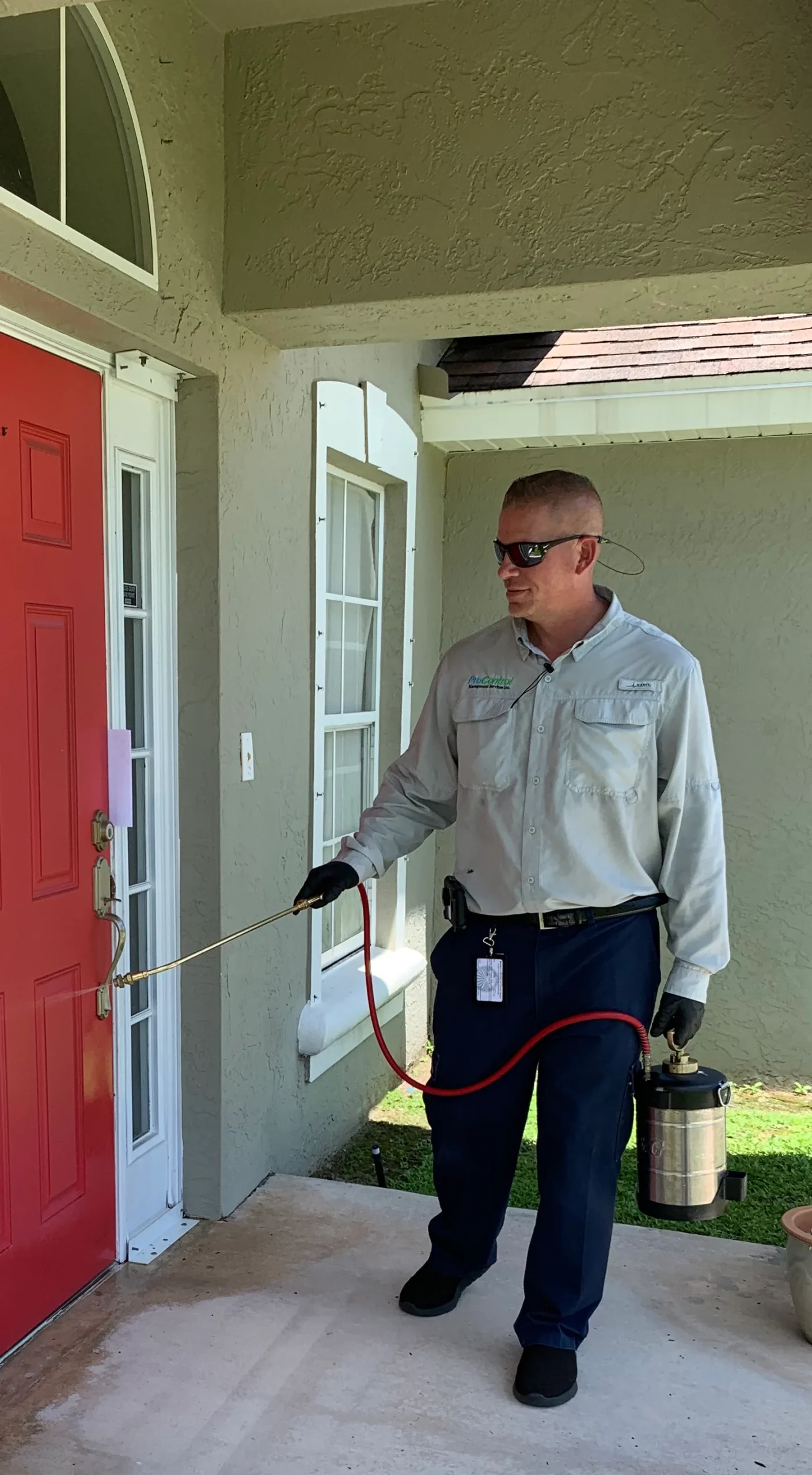
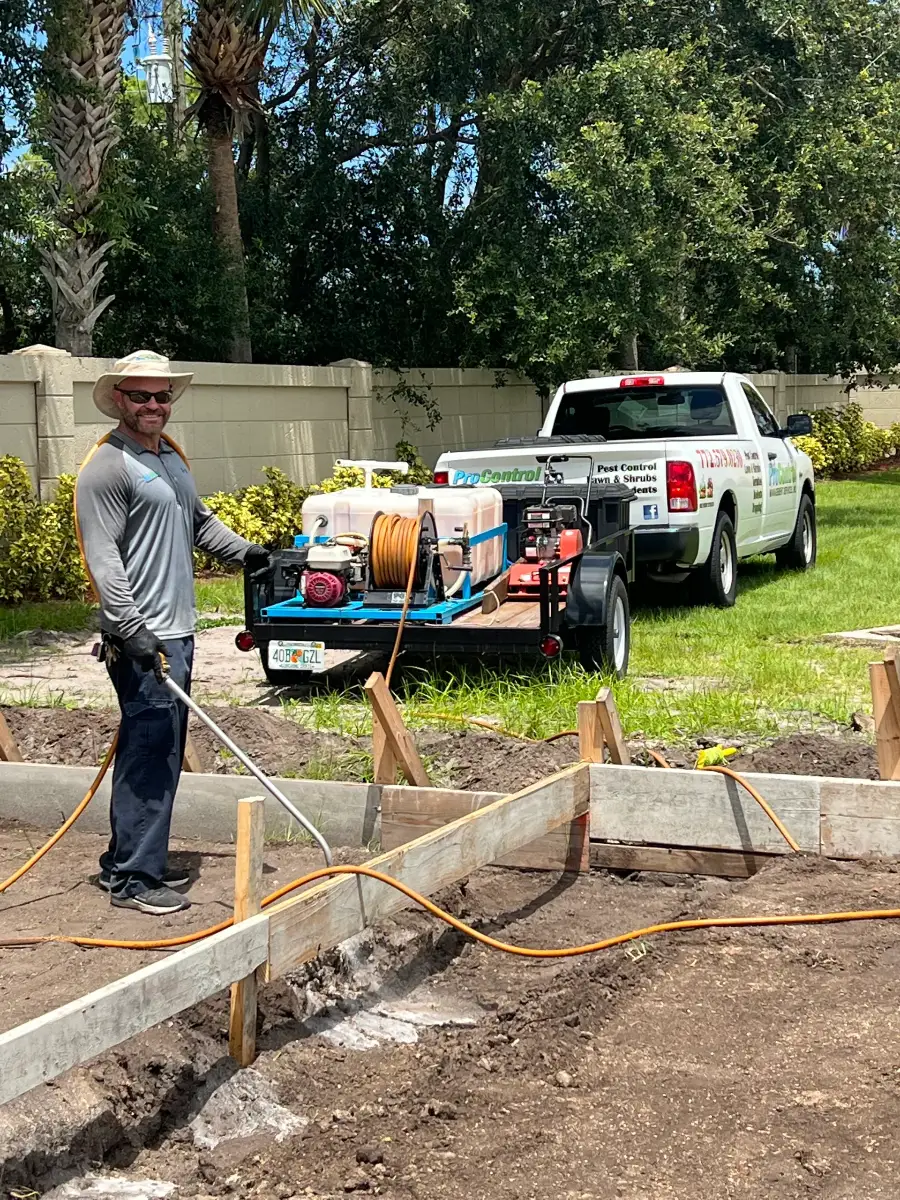
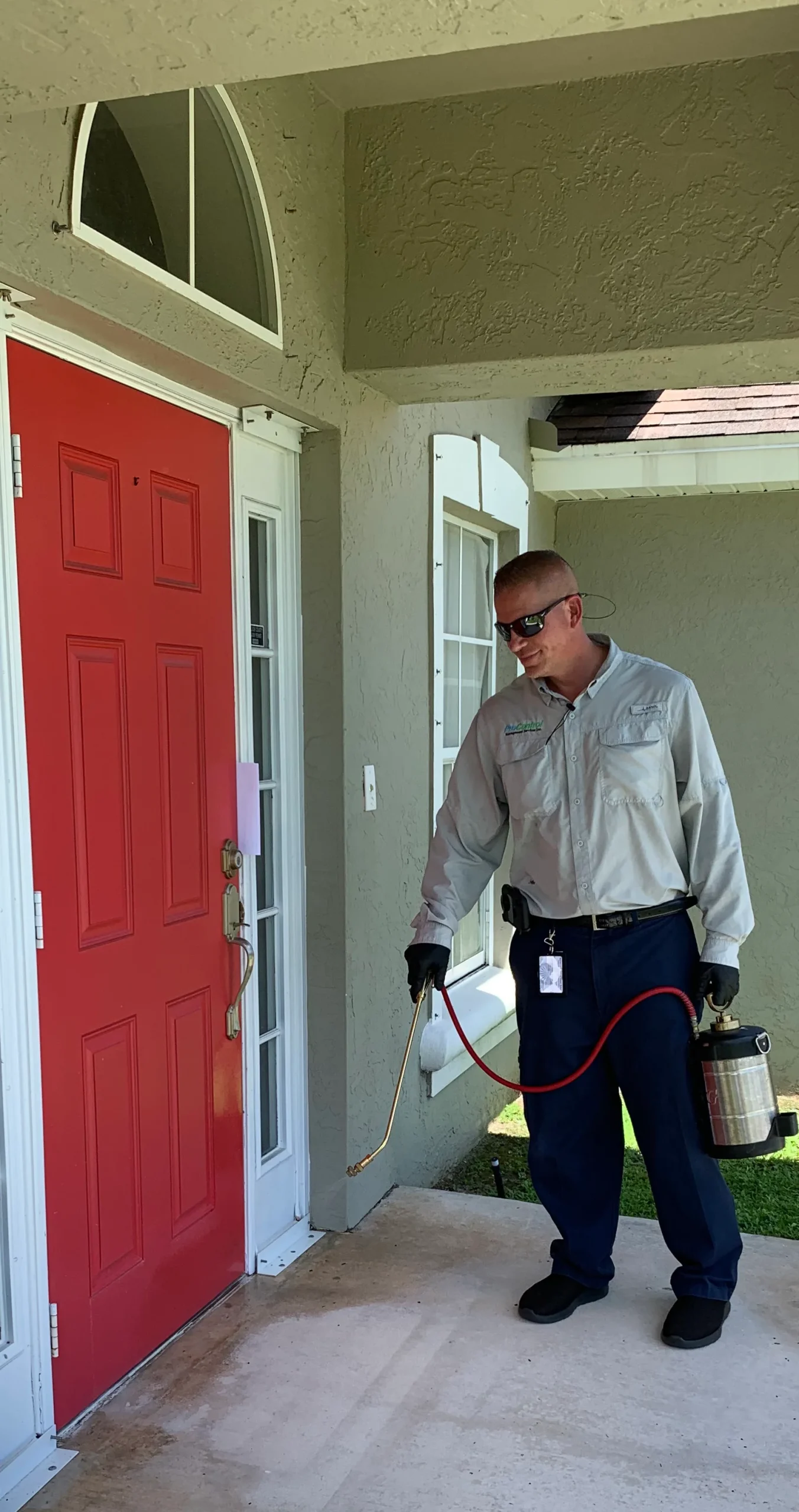
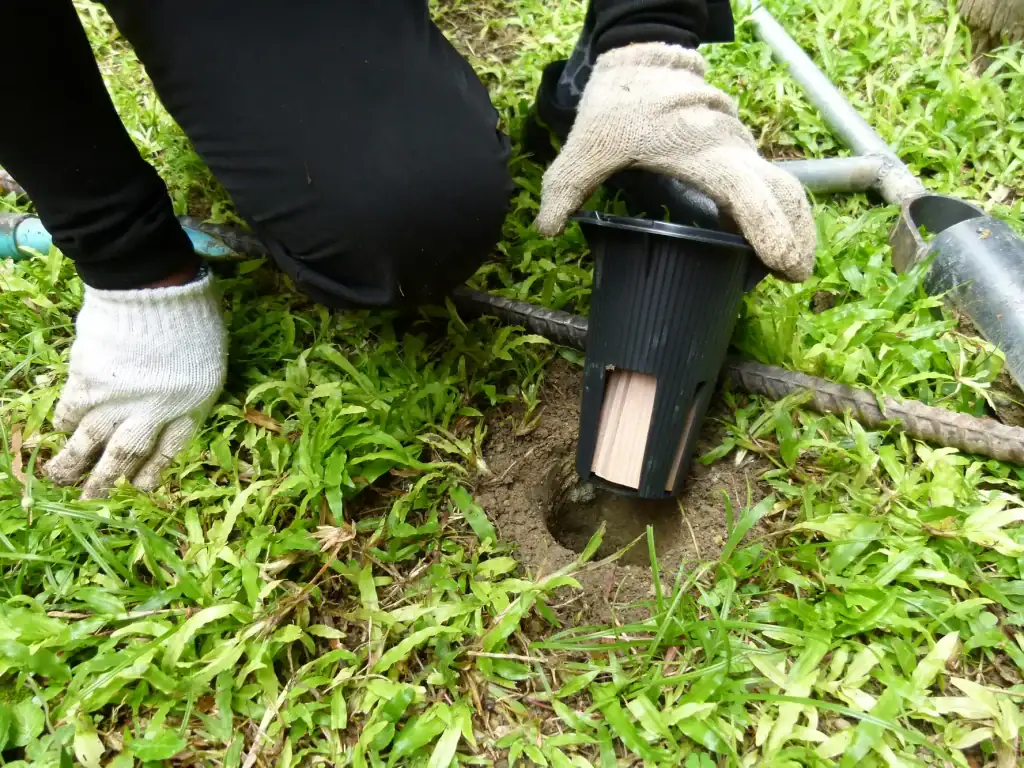
Treatment for subterranean termites typically involves either a liquid soil barrier (trenching termiticide around the foundation) or a bait station system installed in the ground around the perimeter of the home. Both approaches target the colony at the source rather than just the termites you can see. The right choice depends on the extent of activity, the construction type, and whether you’re treating an active infestation or setting up a prevention system.
One thing worth knowing: the Eastern subterranean termite and the Formosan subterranean termite are both active in this region, but they’re not the same pest. Formosan colonies are significantly larger and more destructive — we’ll cover those separately below.
Termites are called silent destroyers for a reason. By the time you notice something wrong, the damage has usually been building for years. A colony typically needs five or more years to grow large enough to cause visible structural damage — which means early detection isn’t just smart, it’s the difference between a manageable treatment and a major repair bill.
The signs vary by species. For subterranean termites, look for those mud tubes along your foundation, hollow-sounding wood when you knock on it, and floors or ceilings that suddenly feel soft or springy. For drywood termites — which are extremely common in South Florida attics — the telltale sign is frass. Frass looks like tiny pellets of sawdust or coffee grounds, often found in small piles beneath infested wood or on windowsills. It’s easy to dismiss as regular dust, especially in a home that gets a lot of use.
Swarmers are another sign people often misidentify. In spring — roughly March through May — termite colonies send out winged reproductives called alates to start new colonies. If you suddenly see dozens or hundreds of small winged insects around your windows, doors, or light fixtures, that’s a swarm. It doesn’t necessarily mean your home is infested, but it means there’s a colony nearby, and your home is at risk. Formosan termites swarm at night in late spring, often gathering around outdoor lights, which is a particularly alarming sight for homeowners who haven’t seen it before.
Other signs worth noting: paint that bubbles or peels without an obvious moisture source, wood that crumbles or breaks apart more easily than it should, and door frames or window frames that suddenly don’t close properly. Any of these, especially in combination, warrant a professional inspection — not a DIY treatment.
Drywood termites don’t need soil contact. They live entirely inside the wood they’re eating — roof trusses, attic framing, window frames, furniture — and they can go undetected for years because they don’t leave mud tubes or visible surface damage until the infestation is well advanced.
In St. Lucie County, drywood termites are particularly common in older homes and in any structure with wood-to-air exposure in the attic. The warm, dry conditions in Florida attics are ideal for these colonies, and because most homeowners rarely inspect their attic closely, infestations often go unnoticed until a WDO inspection or a renovation project reveals the damage.
Dampwood termites are less common than subterranean or drywood species, but they’re worth understanding — especially if your home is near water or has had any moisture issues. Unlike other species, dampwood termites require wood with a high moisture content to survive. They don’t build mud tubes and they don’t need soil contact. What they need is wet wood.
In St. Lucie County, homes near the Indian River Lagoon, along the barrier island communities of Hutchinson Island, or in areas with poor drainage are at higher risk. Any home with a history of roof leaks, plumbing leaks, or chronic condensation issues is also a candidate. The moisture problem and the termite problem are connected — fix one and you’re addressing the other.
Dampwood termite galleries (the tunnels they create inside wood) are larger than those of other species and often show a layered, papery appearance on the inside. The wood they infest tends to be dark and moist-looking rather than the dry, hollow quality you’d see with drywood termites. Frass from dampwood termites is also different — it tends to be darker and more compressed because of the moisture content.
The treatment approach for dampwood termites starts with eliminating the moisture source. Without that step, any chemical treatment is a temporary fix at best. After the moisture issue is resolved, the infested wood is typically treated or replaced depending on the extent of the damage. Because dampwood infestations are often tied to structural moisture problems — rotting sill plates, damaged fascia boards, water-damaged floor joists — the inspection needs to assess both the termite activity and the underlying conditions that made the infestation possible.
This is one reason a thorough inspection matters more than a quick quote. A company that doesn’t identify conducive conditions — the moisture sources, wood-to-soil contact points, and ventilation issues that invite termites in — is leaving you exposed to the same problem recurring after treatment.
Eco-friendly termite treatment isn’t a compromise. Modern approaches that minimize chemical exposure have become genuinely effective, and for families with children, pets, or anyone with health sensitivities, they’re worth understanding before defaulting to the most aggressive option.
Bait station systems are one of the most widely used eco-conscious approaches for subterranean termites. Stations are installed in the ground around the perimeter of the home, where foraging termites find them, feed on the bait, and carry it back to the colony. Over time, the colony is eliminated from the inside out. It’s a slower process than liquid barrier treatment, but it requires significantly less chemical application and has minimal impact on the surrounding soil and groundwater.
Heat treatment is another non-chemical option, particularly effective for localized drywood termite infestations. The affected area is heated to a temperature that’s lethal to termites at all life stages — no fumigant gases, no need to bag food or vacate for multiple days. It works well for attic infestations or specific sections of a structure where drilling and injecting termiticide directly into infested wood is either impractical or undesirable.
For homeowners who want ongoing prevention without repeated chemical applications, T.A.P. Insulation — Thermal Acoustic Pest Control insulation — is an option worth knowing about. It’s a pest-resistant insulation product installed in attic spaces that provides a continuous physical and chemical barrier against insects, including termites. It also improves thermal performance and reduces outside noise, so it serves multiple purposes beyond pest control.
Botanical-based termiticides and natural termite spray products have limitations in Florida’s climate. High humidity and heat degrade some botanical compounds quickly, and they typically can’t reach deep into wood or underground colonies. They’re most useful as part of a broader treatment plan rather than a standalone solution.
We use eco-friendly approaches wherever they’re appropriate to the situation. That means we’re not defaulting to the most aggressive chemical option just because it’s the fastest. But we’re also not going to recommend a treatment that isn’t right for the infestation in front of us. The goal is the right solution for your specific problem.
We offer free termite inspections for St. Lucie County homeowners. During that inspection, we’ll identify which species are present, assess the extent of any activity, and explain what we find in plain language — including if the answer is that the problem is smaller than you feared.
A thorough inspection covers the foundation and perimeter, crawl spaces and attics, interior framing, and any areas showing visible signs of damage or conducive conditions. We’ll look for mud tubes, frass, swarmers, wood damage, moisture issues, and wood-to-soil contact points. We’ll also check for conditions that make your home attractive to termites — things like poor drainage, untreated wood near the foundation, or ventilation problems that create moisture buildup.
The inspection takes time because rushing through it means missing things. We’ll provide a detailed report with photos, a clear explanation of what we found, and treatment recommendations specific to your home and the species present.
Article details:
Share:
Continue learning: