Summer in St. Lucie County means heat, humidity, and mosquitoes. Here's what actually works — and why professional treatment makes a real difference.
Share:
Summary:
You planned to use your backyard this summer. Then the rain started, the humidity settled in, and somewhere between June and July, the mosquitoes took over. Now the kids won’t go outside after 5 p.m., the patio furniture is sitting empty, and the citronella candles you bought are doing basically nothing.
This is a familiar story for homeowners in St. Lucie County. The combination of subtropical heat, daily summer storms, and an extensive canal system creates conditions that are genuinely difficult to manage on your own. This guide breaks down how professional mosquito treatment works, what’s actually driving the problem in your yard, and how to protect your family through the rest of the season.
A lot of homeowners assume professional mosquito control is just a stronger version of what you’d buy at a hardware store. It’s not. The difference isn’t just the product — it’s the approach.
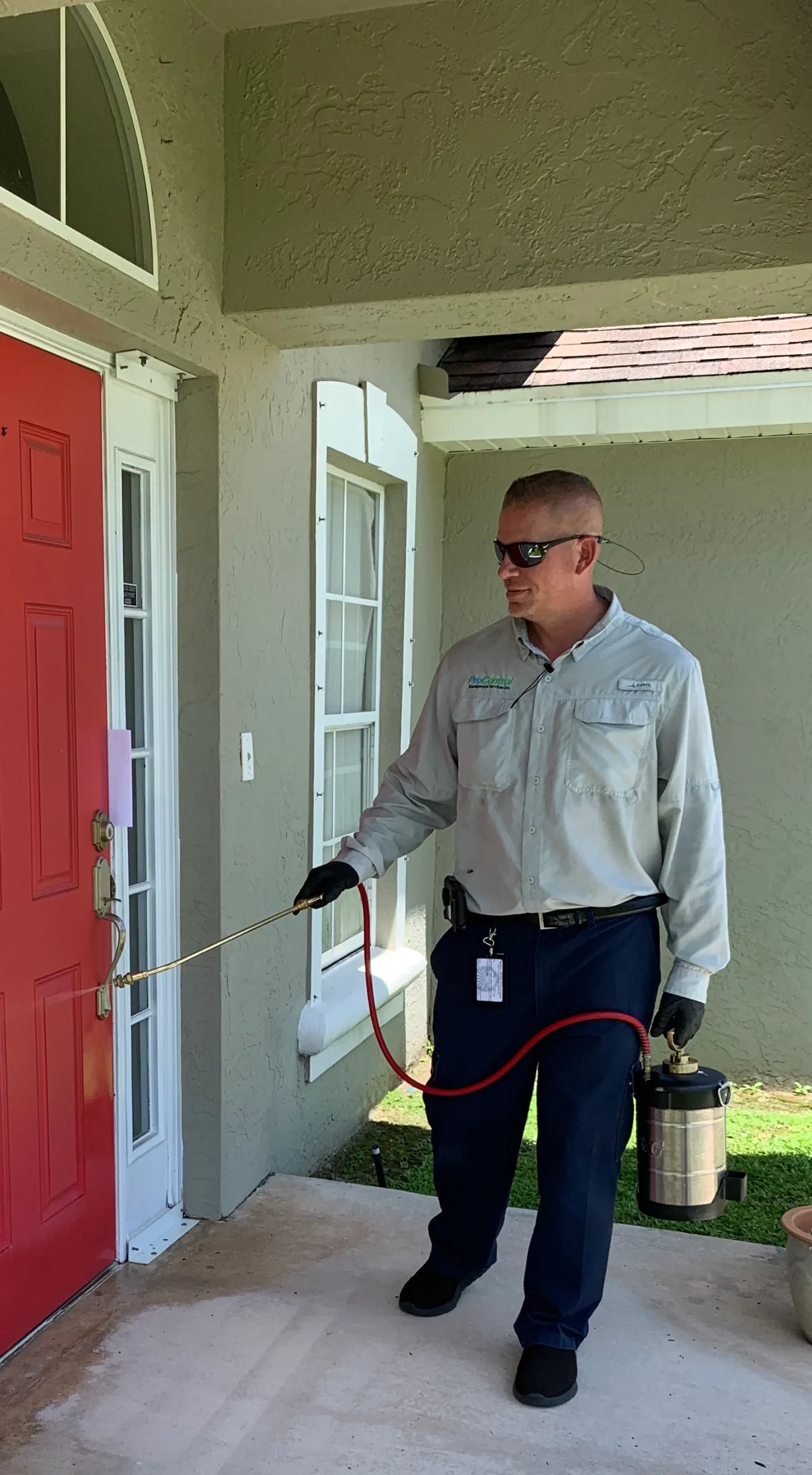
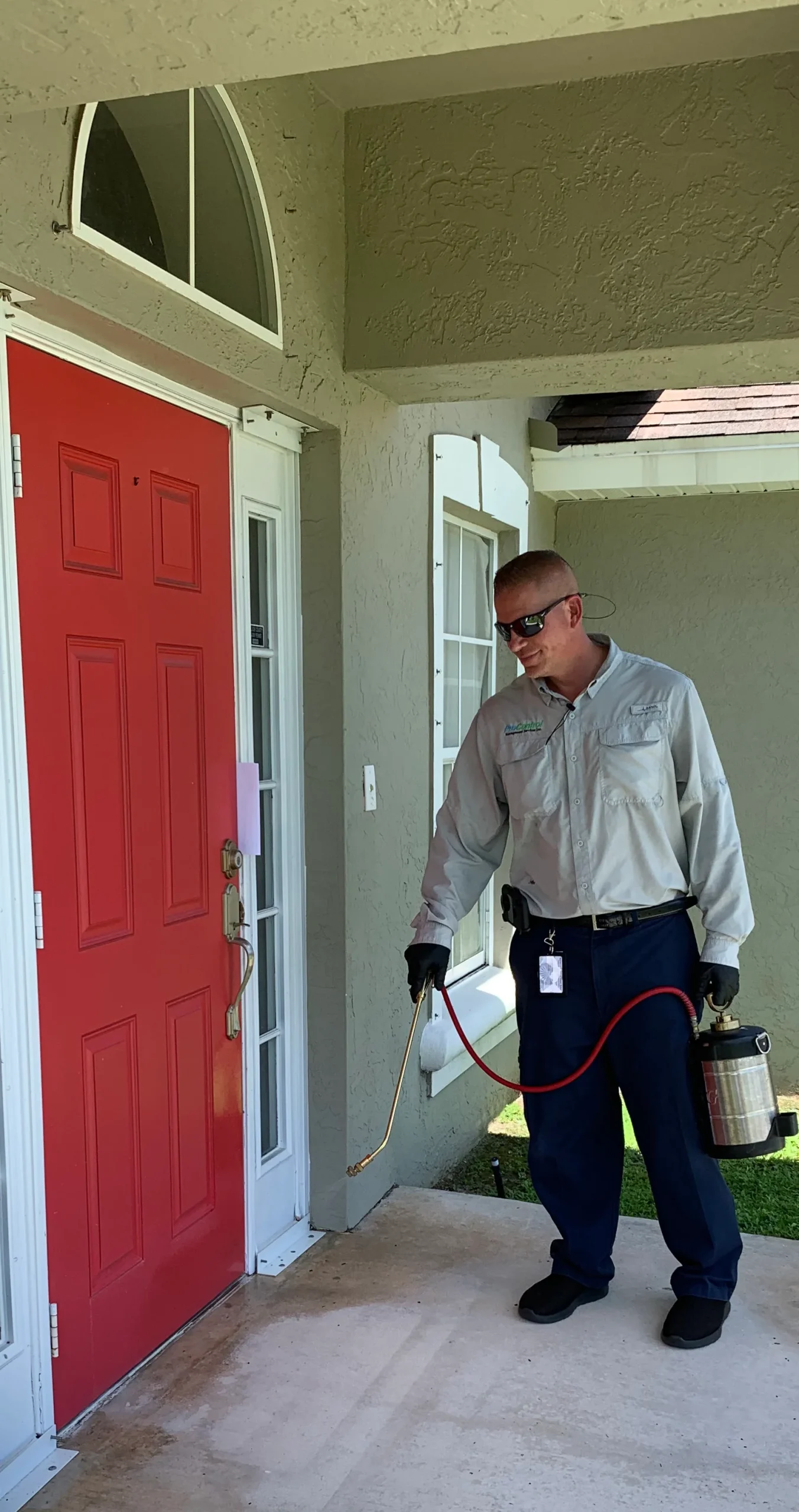
We target mosquitoes at two stages: the larvae before they hatch and the adults already active on your property. Our technicians apply barrier treatments to the shaded, moist areas where mosquitoes rest during the day — under dense shrubs, along fence lines, beneath deck overhangs — places a consumer spray never reaches. That two-pronged approach is what produces results that last weeks instead of hours.
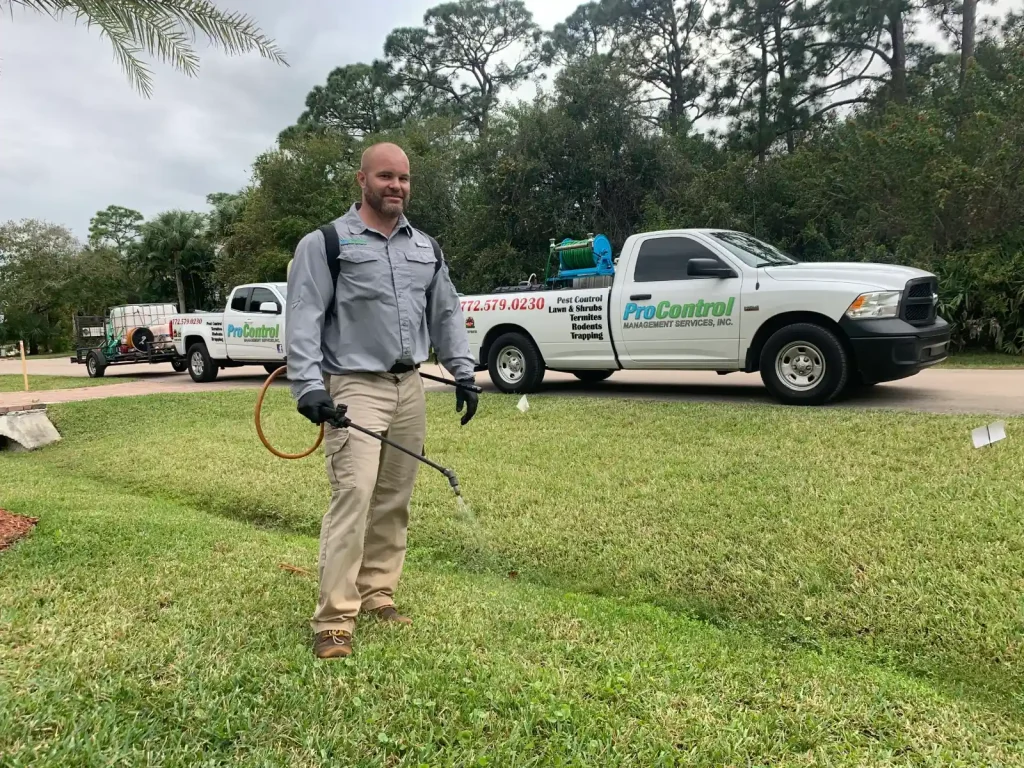
This is one of the most common questions we hear, and the honest answer is: it depends on the product, the weather, and how consistently you treat. A professional barrier application typically controls adult mosquitoes for seven to twenty-one days. A full treatment cycle — accounting for the breeding cycle and residual product effectiveness — generally holds for thirty to forty days before the next application is needed.
Compare that to a store-bought yard spray. Most consumer products repel mosquitoes for a few hours, maybe a few days if conditions are ideal. They’re not designed to reduce populations — they’re designed to push mosquitoes away temporarily. Our professional treatment actually brings numbers down, which is why the results feel different.
For St. Lucie County specifically, the math on timing matters. Florida’s rainy season runs June through September, and every afternoon thunderstorm that rolls in off the coast refills standing water around your property. That means new breeding is happening constantly. A single treatment at the start of summer won’t hold through September. Most homeowners who want real protection through the season end up on a recurring schedule — roughly every four to six weeks — which keeps the barrier active and prevents populations from rebounding between visits.
The goal isn’t to spray once and hope for the best. It’s to stay ahead of the breeding cycle so the problem doesn’t build back up to where it was. Four consistent applications through the season can reduce mosquito populations on your property by as much as ninety percent. That’s the kind of result that actually lets you use your backyard again.
Here’s something that surprises a lot of homeowners: mosquitoes can breed in as little as a bottle cap’s worth of standing water. You don’t need a pond or a swamp. You need a clogged gutter, a plant saucer that hasn’t been emptied, a low spot in the lawn that holds water after rain, or a tarp with a small depression in it. Any of those will do.
Port St. Lucie’s layout makes this harder to manage than most people expect. The city’s canal system runs through dozens of neighborhoods, and subdivision retention ponds are a fixture across St. Lucie County. Those water features aren’t going anywhere — and they create a continuous source of mosquito pressure that no amount of standing water elimination around your own property will fully offset. You can do everything right in your yard and still have mosquitoes coming in from the canal two lots over.
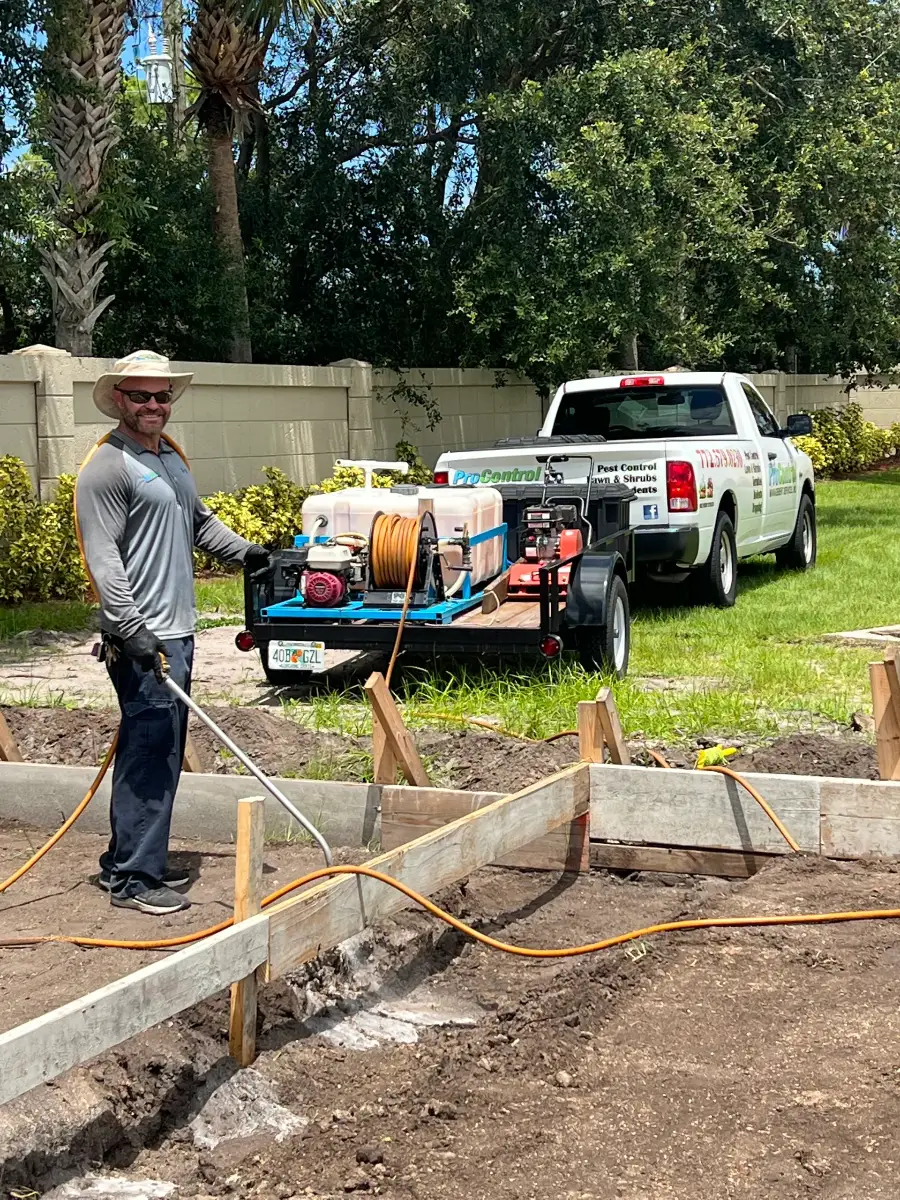
That’s why we include breeding site treatment as part of our service, not just adult mosquito control. Larvicides applied to standing water sources — including ornamental ponds, low-lying areas, and gutters — prevent the next generation from hatching before they ever become a problem. It’s the part of the process most homeowners don’t think about, but it’s what makes the difference between temporary relief and sustained results.
St. Lucie County monitors more than thirty-seven mosquito species across twenty-six county traps. Different species breed in different conditions, bite at different times of day, and carry different risks. Aedes mosquitoes — the ones associated with Dengue, Zika, and chikungunya — are aggressive daytime biters, which means your exposure window isn’t just dawn and dusk. Knowing which species are active in your area matters, and it’s part of what we bring to the job that a generic spray program simply can’t replicate.
Our professional treatment does the heavy lifting, but there are things you can do between visits that genuinely help. The most effective ones aren’t complicated — they’re mostly about eliminating the conditions mosquitoes need to survive and reproduce.
Walk your property after every rain event and look for anything holding water: containers, toys, birdbaths, low spots in mulch beds, anything under a deck or overhang. Empty or treat what you can. Keep gutters clear, because a clogged gutter is one of the most productive mosquito breeding sites on a typical residential property and one of the most overlooked.
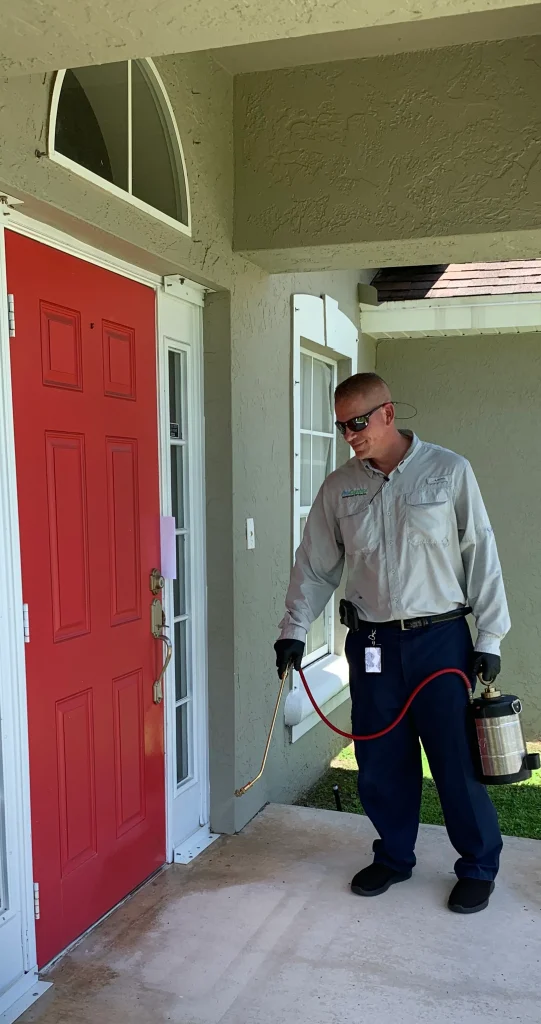
Parents ask us about this constantly, especially once school lets out and kids are spending long hours outside. The concern is legitimate. In 2023, Florida recorded more than 172 locally acquired Dengue fever cases — and St. Lucie County sits squarely in the region where that kind of disease activity happens. West Nile virus is also endemic to Florida, and Eastern equine encephalitis, while rare, is serious enough that it warrants attention.
Protecting your kids doesn’t require keeping them inside all summer. It requires layering a few strategies so that no single point of failure leaves them exposed. Our professionally treated yards give you the foundation — reduced mosquito populations mean fewer opportunities for bites in the first place. On top of that, EPA-registered repellents applied to skin and clothing add another layer of protection for time spent outside the treated zone, like parks or neighbors’ yards.
Timing matters too. Mosquito activity peaks in the early morning and again around dusk. If your kids are playing outside during those windows, a treated yard makes a meaningful difference. During midday heat, most mosquito species are resting in shaded spots — which is exactly where our barrier treatment is applied, so those resting mosquitoes are being controlled even when they’re not actively flying.
We want to be straightforward about this: our treatments use eco-friendly, EPA-registered products. We hear from a lot of parents who are as worried about what we’re spraying as they are about the mosquitoes themselves, and that’s a fair concern. We select our products specifically because they’re effective without posing unnecessary risk to children, pets, or the broader environment. If you have questions about specific products or application methods before we treat, just ask — we’d rather answer them upfront than have you second-guessing afterward.
Most mosquito control calls are planned — a homeowner decides they’ve had enough and schedules an appointment. But some situations are more urgent than that, and it’s worth knowing when to treat it that way.
If you’re hosting a backyard event — a graduation party, a birthday, a family gathering — and you’re a week out with no treatment in place, that’s a situation where timing matters. A barrier application needs a day or two to fully take effect, so waiting until the morning of the party isn’t the answer. Reaching out a week ahead gives you a realistic window to get treated and see results before your guests arrive.
Disease alerts are another trigger. When local or state health authorities report elevated mosquito-borne disease activity in the area — Dengue clusters, West Nile detections — the calculus changes for a lot of homeowners. What felt like a nuisance problem starts feeling like a health risk, and the urgency to act goes up accordingly. That’s a reasonable response, not an overreaction.
We offer 24/7 emergency mosquito control services because some situations genuinely can’t wait for a Monday morning appointment. We’ve been based in Port St. Lucie since 2006, so we know the area, we know the seasonal patterns, and we can move fast when the situation calls for it.
One thing worth clarifying for St. Lucie County homeowners: the county’s Mosquito Control District covers 301 square miles of public spaces and handles large-scale community spraying. What it doesn’t do is provide comprehensive treatment of your private yard, gutters, landscaping, or breeding sites on your property. Our professional residential service fills that gap. The two are complementary — the district handles the public side, and we handle yours.
Mosquito season in St. Lucie County isn’t a brief inconvenience — it runs from spring through fall, and in a year with active disease reports and a wet rainy season, it can feel relentless. The homeowners who get the best results are the ones who stop trying to manage it reactively and get ahead of it with a consistent treatment plan.
The short version: professional mosquito treatment works better than DIY, lasts longer, and addresses the breeding cycle — not just the mosquitoes you can see right now. A recurring service through the season keeps populations down and your yard usable. And if you’ve already tried another company and weren’t happy with the results, that’s actually one of the more common reasons people call us.
If you want to know what your property needs specifically, we offer free estimates — no pressure, no obligation, just an honest look at what’s going on and what it would take to fix it. Give us a call and we’ll take it from there.
Article details:
Share:
Continue learning: