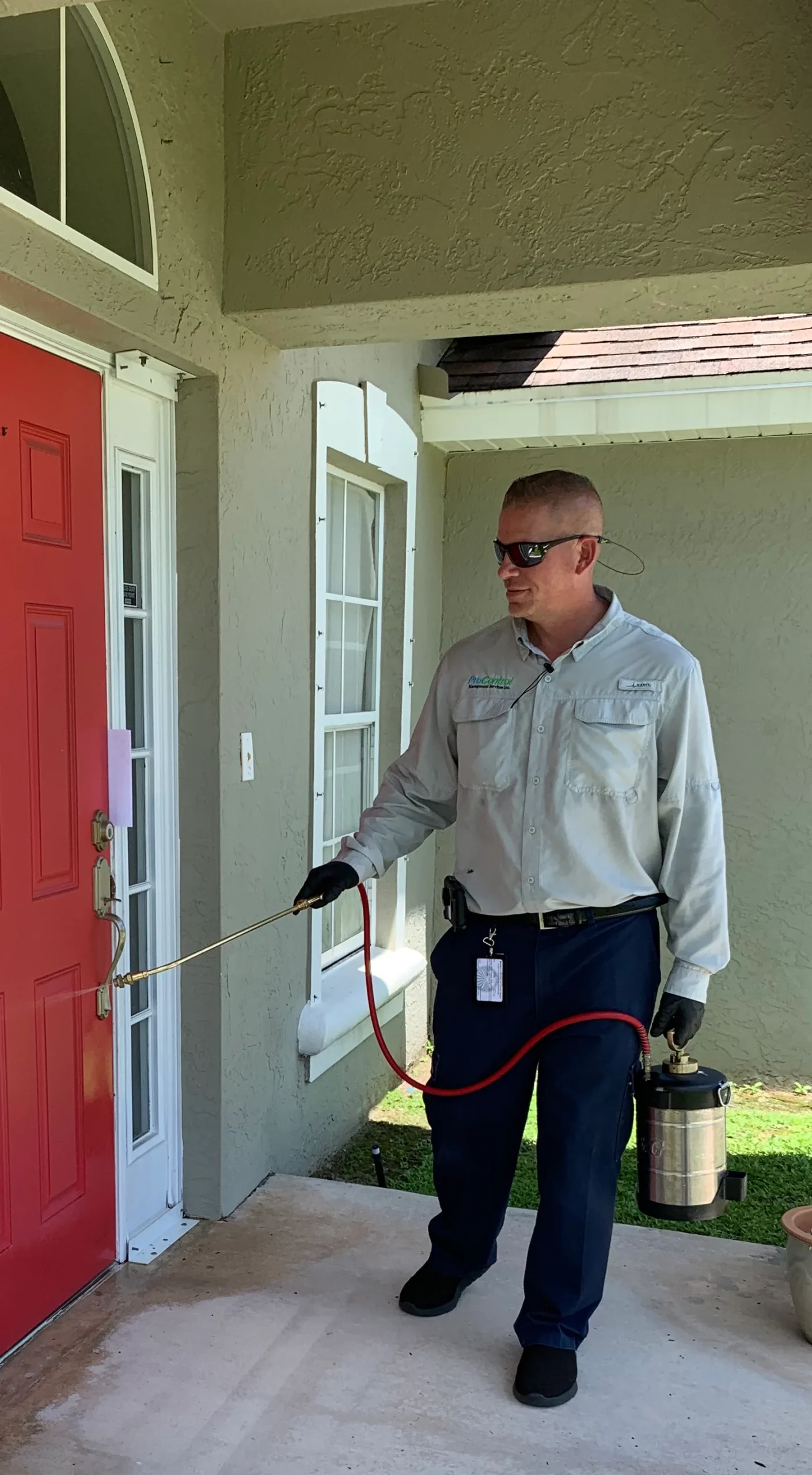
Tried everything at the hardware store and still seeing pests? Here's what's actually going on — and when it's time to stop guessing.
Share:
Summary:
You’ve sprayed the baseboards. You’ve set the traps. You bought the stuff with the scary-looking label from the hardware store, followed the directions, and waited. And then, a few days later, they were back.
If that sounds familiar, you’re not doing anything wrong — you’re just dealing with a pest problem that was never going to respond to an over-the-counter fix. That’s more common than most people realize, especially here on the Treasure Coast. This page will help you understand why DIY pest control works in some situations and completely falls apart in others, and what to look for when it’s time to call someone who can actually solve it.
Walk down the pest control aisle at any big-box store in Port St. Lucie and you’ll find sprays, baits, foggers, and traps promising to eliminate everything from ants to roaches to rodents. Some of them work — for a while, on the surface. What they almost never do is eliminate the source.
Store-bought products are designed to kill what they contact. They’re not designed to reach a colony inside a wall void, destroy a termite gallery running through your home’s framing, or stop rodents from re-entering through a gap in your roofline. You’re treating symptoms, not the problem. And in St. Lucie County’s warm, humid climate — where pest populations don’t slow down in winter the way they do up north — that gap between symptom and source matters enormously.

Here’s something most product labels won’t tell you: by the time you’re standing in that aisle, the infestation in your home has almost certainly been developing for weeks, maybe months. What you’re seeing — the roach on the kitchen counter, the ant trail near the sink, the mouse dropping in the pantry — is the visible fraction of a much larger population.
Cockroaches are a good example. They’re nocturnal by nature. If you’re seeing them during the day, that’s typically a sign the population has grown large enough that the colony is pushing individuals out into the open. A can of spray kills the ones you see. The hundreds you don’t see continue reproducing in wall voids, behind appliances, and under cabinets.
Ants present a similar problem. Most ant species in St. Lucie County live in colonies with multiple queens. Spraying the trail — or even the visible nest — rarely reaches the primary colony. In many cases, it causes the colony to split and relocate, spreading the infestation further rather than containing it.
There’s also the misidentification problem, which is more common than most people expect. Termites and carpenter ants look remarkably similar to the untrained eye, especially the winged swarmers that appear in spring. Treating carpenter ants with a termite product, or vice versa, does nothing except waste time and money while the actual pest continues doing damage. Getting the identification right before doing anything else is one of the most important steps in any pest control situation — and it’s something a trained inspector does in minutes that most homeowners struggle with entirely.
One more thing worth knowing: the assumption that store-bought products are safer than what professionals use isn’t always accurate. Some over-the-counter pesticides carry higher toxicity ratings than professional-grade treatments, particularly the eco-friendly formulations that licensed operators use. The difference is that we’re trained in precise application — using the right amount, in the right locations, with the right equipment — which reduces exposure and improves results at the same time.
Termites deserve their own conversation, because no pest in St. Lucie County causes more financial damage and no pest is more poorly served by DIY attempts. Termites cost U.S. homeowners an estimated $5 billion in damage annually — and standard homeowners insurance doesn’t cover a dollar of it, because the damage is considered preventable.
The Treasure Coast sits within the primary range of the Formosan subterranean termite, which is widely considered the most destructive termite species in North America. A mature Formosan colony can contain several million workers. They don’t just eat wood — they eat it fast, and they do it hidden inside the structural elements of your home. You won’t see them until the damage is already significant, often triggered by a spring swarm when winged reproductives emerge near windows and light fixtures.
That swarm is not the beginning of the problem. It’s a signal that a colony has been established long enough — typically three to five years — to produce reproductives. By the time you see the swarm, the damage is already done to some degree.
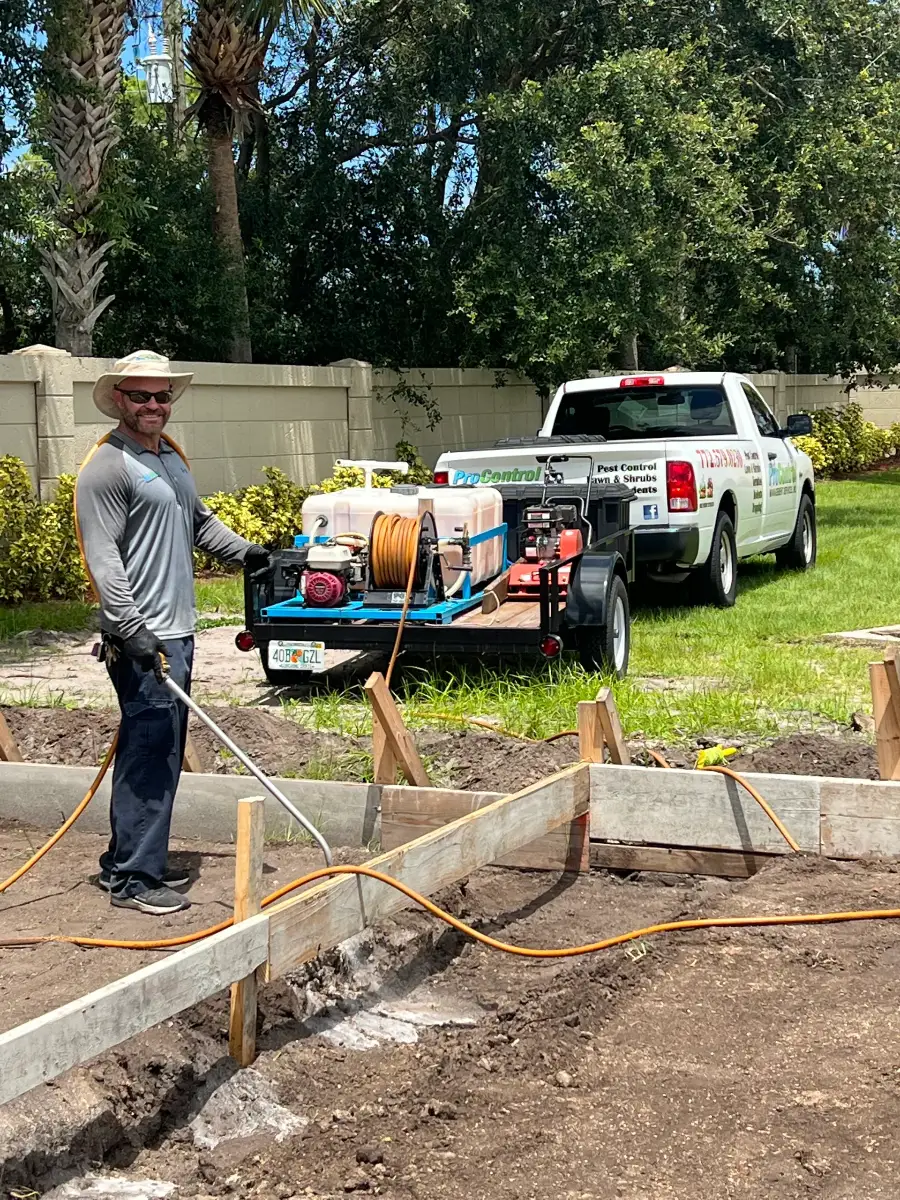
No store-bought product reaches an established subterranean termite colony. Liquid termiticides require specialized injection equipment and precise application around the entire foundation perimeter. Termite bait systems require professional installation and ongoing monitoring to be effective. Drywood termite fumigation — the tent treatment you’ve probably seen on homes around Port St. Lucie — requires a licensed fumigator and cannot be replicated with anything available to consumers.
Port St. Lucie’s housing stock adds another layer of urgency here. Much of the city was built during the 1990s and 2000s. Original soil termite treatments applied during construction typically last 10 to 15 years. If your home was built during that period and has never had a professional termite inspection since, there’s a real possibility that the protection you started with has long since worn off.
Most people wait longer than they should. The instinct is to try one more product, give it one more week, see if things improve. Sometimes that’s reasonable. Often, it just gives the infestation more time to grow.
There are situations where waiting has a real cost — structurally, financially, and in terms of your family’s health. Knowing those situations clearly is the difference between a manageable problem and a serious one.
Termites and rodents are the two categories where delay consistently leads to worse outcomes, and they’re the two categories we specialize in specifically because of that.
With termites, every month of an untreated infestation means more structural damage. Wood that’s been compromised by termites doesn’t recover — it has to be replaced. The longer the colony feeds, the more extensive and expensive that repair becomes. In St. Lucie County’s humid, warm climate, termite colonies don’t slow down seasonally the way they might in cooler parts of the country. They’re active year-round, which means the damage compounds year-round.
Rodents create a different but equally serious set of problems. A single mouse in the house is almost never a single mouse — it’s a family, and rodents reproduce quickly. Beyond the obvious contamination issues, rodents chew. They chew through wiring, which is a documented fire risk. They chew through insulation, drywall, and HVAC ducts. They can carry salmonella and other pathogens that contaminate food surfaces even without direct contact. And critically, rodent problems don’t resolve by eliminating the current population if the entry points remain open. New animals will find the same gaps within weeks.
Florida’s rainy season — which runs roughly June through September — is consistently the period when ant and cockroach calls spike dramatically. The wet weather drives insects indoors looking for dry ground, and populations that seemed manageable outdoors suddenly become a serious indoor problem. Hurricane season adds another layer: storm damage creates new gaps in soffits, rooflines, and foundations that rodents and wildlife find almost immediately. After a significant storm, a pest inspection isn’t a bad idea even if you haven’t seen obvious signs of activity.
If you’ve treated the same pest problem two or three times with store-bought products and it keeps returning, that’s a clear signal the source hasn’t been addressed. At that point, more of the same product won’t change the outcome.
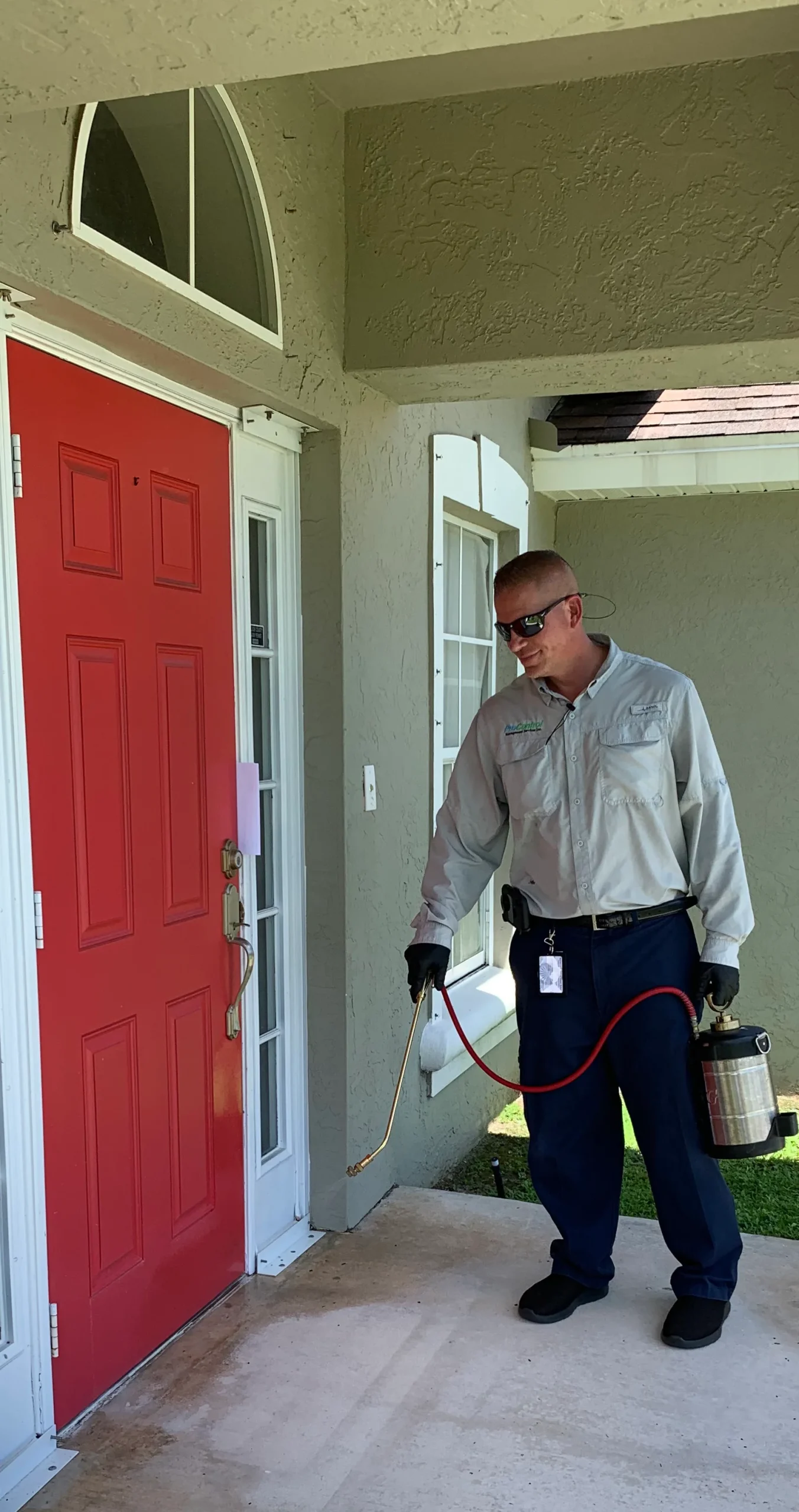
A professional inspection isn’t just someone walking through your home with a flashlight. It’s a systematic evaluation of the entire structure — including the areas you can’t easily access or wouldn’t think to check.
That means the attic, where rodents often establish themselves long before a homeowner hears anything. It means the crawl spaces, foundation perimeter, and wall voids where termites build galleries over years without any visible surface signs. It means looking at the exterior of the structure for mud tubes, entry points, moisture damage, and conditions that attract pests in the first place. A good inspection finds not just what’s there, but why it’s there and what’s keeping it there.
What comes out of that inspection is a specific treatment plan — not a generic spray of whatever product is in the truck. Different termite species require different treatment protocols. Subterranean termites are addressed differently from drywood termites. Rodent control that doesn’t include exclusion — physically sealing the entry points — will fail because new animals will simply move in after the current population is removed. The specificity of professional treatment is exactly what makes it more effective than anything available at retail.
We’ve been doing this in St. Lucie County since 2006, and a significant part of our work comes from homeowners and businesses who tried to handle a problem themselves, or hired someone else who didn’t solve it. That’s not a criticism of anyone — pest control in South Florida is genuinely difficult, and the Treasure Coast’s climate and species profile make it more complex than most parts of the country. It’s just the reality of what we see regularly. When the standard approaches haven’t worked, the answer is usually a more thorough inspection and a more targeted treatment — not more of the same product.
We offer free estimates with no obligation, use eco-friendly methods that are safe for families and pets, and back everything we do with a satisfaction guarantee. If you’ve been dealing with a pest problem that keeps coming back, that’s exactly the situation we’re set up to handle.
DIY pest control isn’t always the wrong choice. For minor, isolated problems — a small ant trail, a single wasp nest, an occasional silverfish — a targeted store-bought product can be enough. But for termites, rodents, recurring infestations, or anything that’s already survived two or three treatment attempts, the math changes. More product doesn’t fix a problem that was never about the product to begin with.
The Treasure Coast’s climate is genuinely demanding. Year-round warmth, a long rainy season, hurricane exposure, and proximity to natural waterways like the St. Lucie River and Indian River Lagoon create pest pressure that doesn’t let up. That’s not a reason to panic — it’s a reason to have the right plan in place.
If you’re at the point where DIY hasn’t worked and you want someone to actually find the source and fix it, reach out to us at ProControl Management Services. We’ll take a look, tell you exactly what you’re dealing with, and give you a clear path forward — no guesswork, no pressure.
Article details:
Share:
Continue learning: