A hurricane doesn't just damage your home — it invites pests in. Here's what St. Lucie County homeowners need to know about post-storm pest control.
Share:
Summary:
The storm passes. You walk the property, check the roof, clear the yard. It feels like the worst is over. But for a lot of St. Lucie County homeowners, the pest problems that follow a hurricane are what end up costing the most — not because they’re dramatic, but because they’re quiet. A cracked soffit here, a gap in the fascia there, a few inches of standing water along the fence line. That’s all it takes. Termites find wet wood. Rodents find new openings. Mosquitoes find standing water and start breeding within days. This page covers what to watch for, when to act, and how to make sure your home is actually protected — not just treated.
Most pest problems after a hurricane don’t show up the day after the storm. They develop over days and weeks as conditions settle in — moisture soaks into wood, debris sits in corners, and displaced pests find their way inside through damage you may not have noticed yet.
The urgency depends on the pest. Mosquitoes are the fastest — standing water can support breeding activity within 72 hours in Florida’s heat, and a full generation can develop in under two weeks. Rodents move quickly too, especially when surrounding areas have flooded and dry shelter becomes scarce. Termites work more slowly but are the most consequential — once they find moisture-damaged wood and establish a colony, the damage compounds quietly over months before you see any visible sign.
The practical takeaway is this: a professional inspection in the first week after a storm is not an overreaction. It’s the window where you can get ahead of the problem before it becomes structural.
Florida already has a moisture problem. Port St. Lucie averages over 53 inches of rain annually, and the proximity to the Indian River Lagoon and St. Lucie River keeps humidity elevated year-round. A hurricane doesn’t just add water — it saturates everything, including the wood framing, insulation, and subflooring that pests depend on for shelter and food.
Termites are the clearest example of why moisture control matters after a storm. Subterranean termites — including the Formosan species, which is active throughout St. Lucie County — prefer wood that’s already been softened by water. Storm flooding and roof leaks do exactly that. The wood doesn’t have to be visibly rotting for termites to find it attractive. Even elevated moisture content, measurable with a professional meter but invisible to the eye, can be enough to draw them in.
Cockroaches are another moisture-driven pest that spikes after hurricanes. American cockroaches — what most Treasure Coast residents call palmetto bugs — thrive in damp, dark spaces. Post-storm conditions inside walls, under appliances, and in garages create exactly the environment they’re looking for. They’re not coming in because your house is dirty. They’re coming in because the conditions are right.
The practical approach to moisture control after a storm involves more than running a dehumidifier. It means identifying where water actually entered the structure, checking areas that don’t dry out on their own — attic spaces, wall cavities, under-sink cabinets — and addressing any standing water on the property before it becomes a breeding site. Gutters that are clogged or damaged after a storm are a common culprit that homeowners miss. A gutter full of debris and rainwater sitting against a fascia board is both a moisture problem and a potential termite entry point.
We use moisture meters as part of our post-hurricane inspections because visual checks alone aren’t enough. Water travels. It shows up in places that don’t look wet from the outside, and by the time visible damage appears, pests may already be established.
One of the most important things to understand about post-hurricane pest control is that the pests aren’t the root problem — the entry points are. Treat the pests without addressing what let them in, and they’ll be back within weeks. This is the most common reason homeowners end up calling us after another company has already been out.
Storm damage creates pest entry points in ways that aren’t always obvious. A missing or cracked soffit panel is one of the most common — it’s a direct opening into the attic space, and roof rats and squirrels will find it within days. Damaged fascia boards along the roofline can separate from the structure and leave gaps large enough for rodents and insects to pass through freely. Roof penetrations — around vents, pipes, and HVAC lines — are another area where storm wind can compromise the seal, leaving an opening that’s invisible from the ground but obvious to a rodent looking for shelter.
Foundation-level damage matters too. Heavy rain and flooding can shift soil around the base of a home, exposing gaps in the foundation or creating new ones where settling occurs. Subterranean termites travel through soil, so any new ground-level opening is a potential access point. Window and door frames that have shifted or swollen from water exposure may no longer seal properly, leaving thin gaps that insects use as entry.
The challenge with all of these is that they’re often not visible from a casual walkthrough. You might see that a storm pulled at the soffit but assume it’s cosmetic. You might notice the door frame is stiff but not connect it to a pest risk. A proper structural inspection — one that covers the full exterior perimeter, the roofline, the attic, and the foundation — is what catches these before they become infestations.
We’ve been doing this work in Port St. Lucie since 2006. We were here for the 2004 season when Frances and Jeanne hit back-to-back within weeks of each other, and we’ve seen what Treasure Coast storms do to homes that were built to code but weren’t designed with post-storm pest pressure in mind. The entry points are predictable once you know what to look for. Finding them is our job.
Getting through the immediate post-storm period is one thing. Keeping your home protected for the weeks and months that follow is another. Pest pressure after a major hurricane doesn’t peak and then disappear — it tends to build as conditions develop and displaced populations find new territory.
Long-term prevention after a storm means addressing the conditions that made your home vulnerable in the first place. That includes moisture, structural gaps, and the landscape around your property. It also means not waiting until you see pests to act, because by that point the infestation is already established.
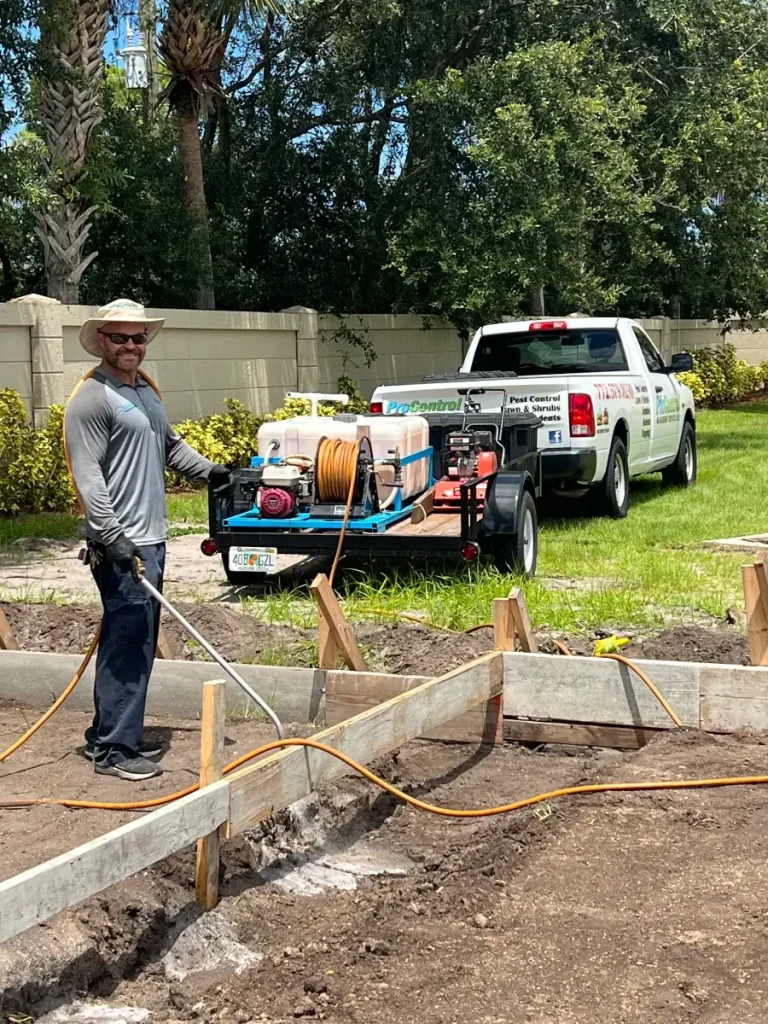
After a hurricane, the demand for every kind of contractor in St. Lucie County spikes at once. Roofers, electricians, plumbers — and pest control companies. This is also when unlicensed operators show up offering cheap treatments door to door. It’s worth knowing that Florida pest control is regulated under Chapter 482 of the Florida Statutes, and emergency conditions don’t create exceptions to licensing requirements. An unlicensed treatment isn’t just ineffective — it’s illegal, and it leaves you without any recourse if the problem continues.
Emergency pest response from a licensed company looks different from a standard service call. It starts with a full structural inspection rather than jumping straight to treatment, because treating without knowing the entry points is the fastest way to end up with the same problem two weeks later. The inspection covers the exterior perimeter, roofline, attic, crawl spaces where applicable, and the interior — with particular attention to areas that showed moisture intrusion or physical damage during the storm.
Treatment is targeted based on what’s actually found, not a generic spray-and-go approach. For rodent intrusion, that means identifying the specific entry point, sealing it, and then addressing the population inside — in that order. For termites, it means assessing moisture levels in affected wood and applying treatment that addresses both the existing activity and the conditions that attracted them. For mosquitoes, it means treating active breeding sites around the property while standing water is being eliminated.
We offer 24/7 emergency services because post-storm pest problems don’t wait for business hours, and because the first week after a hurricane is genuinely the most important window for getting ahead of what’s coming. We also offer free estimates for every client — no charge to come out and assess the situation, no obligation attached. For homeowners already managing insurance claims and repair costs, that matters.
One thing that’s different about St. Lucie County compared to most of the country is that there’s no winter reset. In northern states, cold temperatures kill off a significant portion of the pest population each year. Here, pests that establish themselves after a hurricane in September are still active in January. That makes the post-storm period more consequential than it would be in a colder climate — what you don’t address in the weeks after a storm can become a year-round problem.
Long-term prevention starts with the structural repairs that close the entry points the storm created. Replacing damaged soffits, resealing roof penetrations, repairing or replacing fascia boards, and addressing any foundation-level gaps are all part of this. These are often covered under a homeowner’s insurance claim for storm damage, even if the pest control treatment itself is not. A documented professional inspection that identifies storm-created entry points can support that claim by establishing the connection between the storm damage and the structural vulnerability.
Beyond the repairs, ongoing pest management matters more after a major storm than it did before one. The surrounding environment has been disrupted — flooded fields, displaced wildlife, uprooted vegetation — and that displacement pressure on your home’s perimeter doesn’t resolve overnight. Regular exterior treatments, moisture monitoring, and periodic inspections keep you ahead of what’s developing rather than reacting to what’s already inside.
We also offer T.A.P. insulation — a pest-control-infused attic insulation that kills insects on contact and adds energy efficiency — which is worth considering if your attic insulation was compromised by storm moisture or rodent activity. It’s one of those solutions that addresses multiple problems at once, which tends to matter a lot when you’re in recovery mode and trying not to deal with the same issues twice.
The broader point is that post-hurricane pest control isn’t a one-visit fix. It’s a recovery process, and the homeowners who come out of it in the best shape are the ones who treat it that way from the start.
If a storm has just come through and you’re not sure what you’re dealing with, the honest answer is: get a professional inspection before you decide it’s fine. The problems that cost the most — termite colonies in moisture-damaged wood, rodents nesting in a compromised attic — are the ones you don’t see until they’ve been there a while.
You don’t have to be in the middle of an active infestation to call. A post-storm inspection is about finding what the storm created before it becomes something worse. That’s a much easier and less expensive conversation than the one that happens six months later.
ProControl Management Services has been doing this work in St. Lucie County since 2006. We’re locally owned, licensed, insured, and available for emergency response when you need it. Reach out for a free estimate — no pressure, just a straight answer about what your property actually needs.
—
**Frequently Asked Questions**
**What pests are most common after a hurricane in St. Lucie County?**
The ones we see most often after Treasure Coast storms are mosquitoes, American cockroaches, subterranean termites, roof rats, and fire ants. Mosquitoes are the fastest to appear — standing water around your property can support breeding within 72 hours in Florida’s heat. Termites and rodents tend to show up a little later, once they’ve found the moisture-damaged wood or structural gaps that the storm created. Fire ants are worth watching for specifically in St. Lucie County because flooding causes their colonies to form floating rafts that move toward dry ground — including porches, garages, and home foundations.
**How soon after a storm should I have my home inspected for pests?**
Within the first week if possible, especially if you had any roof damage, soffit damage, or flooding around the foundation. That’s the window where we can identify entry points before they’ve been used long enough to result in an established infestation. For termites specifically, the moisture window matters — wet wood is most attractive to termites in the period right after a storm, before it dries out or is repaired.
**Does homeowner’s insurance cover pest control after a hurricane?**
Pest control treatments themselves are generally not covered by standard homeowner’s insurance policies. However, storm damage that creates pest entry points — a damaged soffit, a compromised roofline, structural gaps from wind or flooding — may be covered under the property damage portion of your claim. A professional inspection that documents the connection between the storm damage and the structural vulnerability can support that claim. It’s worth having that documentation even if you’re not sure whether you’ll file.
**What if I already had a pest company out and the problem came back?**
This happens more often than most people realize after a major storm. The issue is usually that the treatment addressed the visible pests but didn’t identify the entry point or the underlying moisture condition that’s driving them in. We’re often called in specifically for situations like this — when a previous treatment didn’t hold and you need someone to find what was missed the first time. A thorough structural inspection is where that process starts.
Article details:
Share:
Continue learning: