Wondering if integrated pest management is actually worth the investment? Here's what it costs, how it works, and what most homeowners get wrong about it.
Share:
Summary:
You’ve probably tried a few things already. Maybe a spray from the hardware store, maybe a fogger, maybe just hoping it would go away on its own. It didn’t. And now you’re wondering whether calling a professional is actually worth it — or just a more expensive version of the same temporary fix.
That’s a fair question, and it deserves a straight answer. Integrated pest management isn’t a buzzword or an upsell. It’s a specific way of approaching pest problems that focuses on why they’re happening, not just what’s showing up. Here’s what it actually involves, what it costs, and why it tends to work when other approaches don’t.
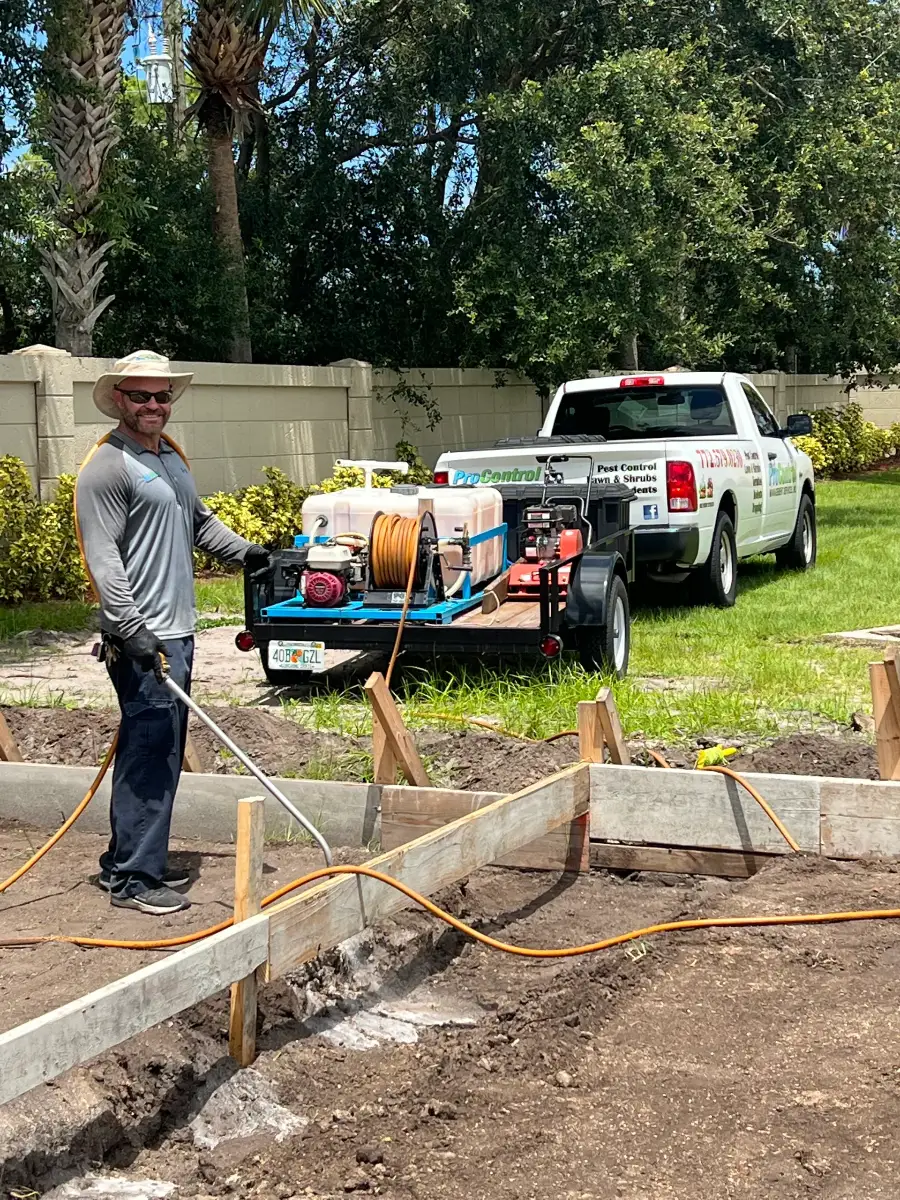
IPM isn’t a single product or a one-time treatment. It’s a process — inspect first, identify the specific pest, figure out how they’re getting in and why, then treat with the least aggressive method that will actually work. After that, we monitor, adjust if needed, and put prevention measures in place so the problem doesn’t come back six weeks later.
The CDC puts it plainly: don’t attract pests, keep them out, and if you have them, get rid of them using the safest effective method. That’s it. The difference between IPM and a standard spray-and-leave visit is that IPM treats the root cause. A technician who skips the inspection and goes straight to the sprayer is solving the symptom, not the problem.
Here’s something the pest control industry doesn’t always say out loud: about 71% of homeowners who try to handle infestations themselves misidentify the pest entirely. That’s not a knock on anyone — pest identification is genuinely difficult, and getting it wrong means you’re applying the wrong treatment to the wrong problem. A ghost ant colony and a carpenter ant colony require completely different approaches. Treating one like the other doesn’t just fail — it can make things worse.
Beyond misidentification, consumer-grade products are formulated differently than what licensed professionals use. The active ingredient concentrations are lower, the residual period is shorter — typically three days compared to up to 90 days for professional-grade residual treatments — and they don’t include the specialized formulations that make professional products more effective at lower application volumes.
The average homeowner who goes the DIY route spends somewhere between $200 and $400 on products over several months before calling a professional. That’s not counting the time spent, the repeated applications, or — in the case of termites — the structural damage that accumulates quietly while the problem goes unresolved. Termite repairs average $3,000, and homeowners insurance doesn’t cover it.
The point isn’t that DIY never works. Sometimes it does, for minor issues caught early. But for anything that’s been going on for more than a few weeks, or anything involving termites, rodents, or a pest you can’t confidently identify, the math almost always favors calling someone who knows what they’re looking at.
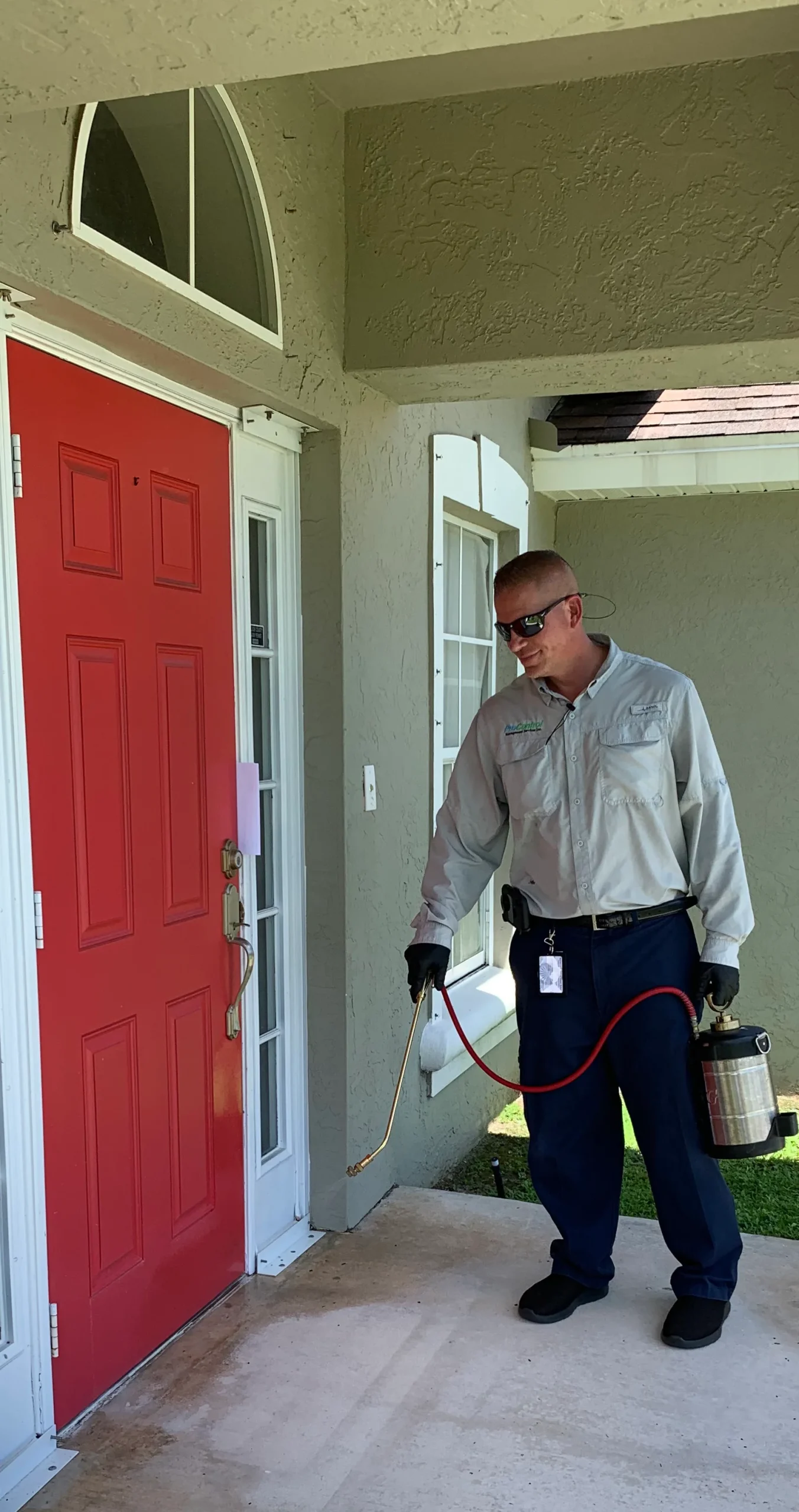
A proper IPM visit starts before any product gets opened. Our technician walks the property — interior and exterior — looking for signs of activity, entry points, conducive conditions like moisture or harborage, and anything that could explain why pests are showing up where they are. That inspection shapes everything that follows.
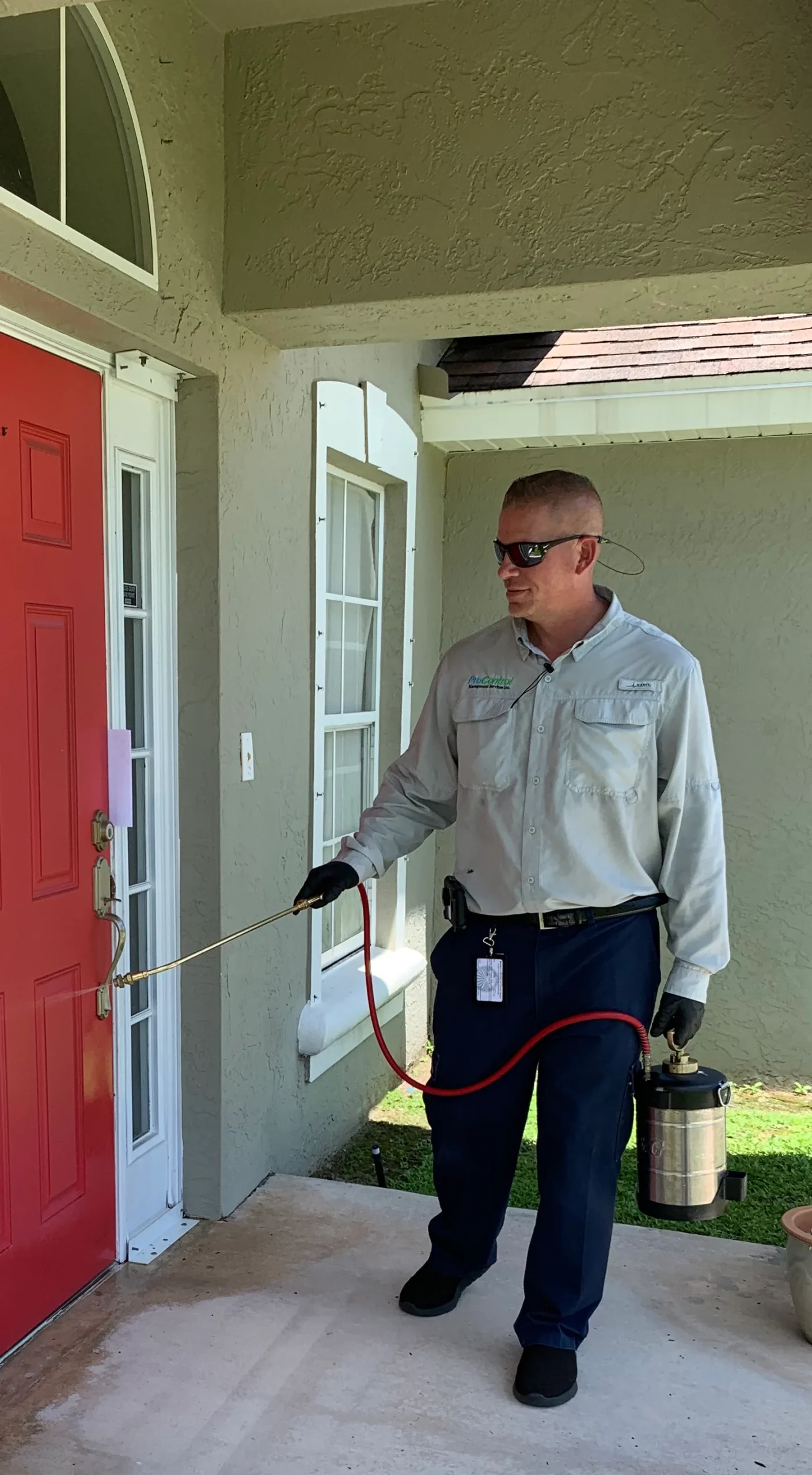
Once the pest is correctly identified and the scope of the problem is understood, we build a treatment plan around that specific situation. That might mean sealing entry points, applying targeted treatments in the areas where pests are actually active rather than broadcasting a product across the entire home, or using bait stations and monitoring tools that allow you to track whether the problem is improving. The goal is to use the most targeted, least-toxic method that will actually solve the problem — not the most aggressive one.
After treatment, monitoring is what separates IPM from a one-and-done visit. Follow-up inspections confirm whether the treatment worked, catch any new activity early, and allow the plan to be adjusted if needed. That feedback loop is the part most pest control visits skip entirely — and it’s the part that makes the difference between a problem that’s solved and one that comes back every season. For homeowners in St. Lucie County, where pest pressure doesn’t let up in winter the way it does in northern states, that ongoing monitoring component isn’t optional — it’s the whole point.
Cost is usually the first objection, so let’s put actual numbers on it. A tri-annual professional pest control plan typically runs between $300 and $800 per year — roughly $25 to $65 per month. That covers inspections, treatments, and follow-up monitoring across the year. For a home worth $300,000 or more, that’s a modest line item for protecting a significant asset.
The comparison that matters isn’t IPM versus nothing. It’s IPM versus the cost of what happens when pest problems go unaddressed. Wood-destroying insects alone cost Americans $11 billion per year in prevention and repairs. A single termite infestation that goes undetected for a year can result in thousands of dollars in structural damage — damage that no insurance policy will cover.
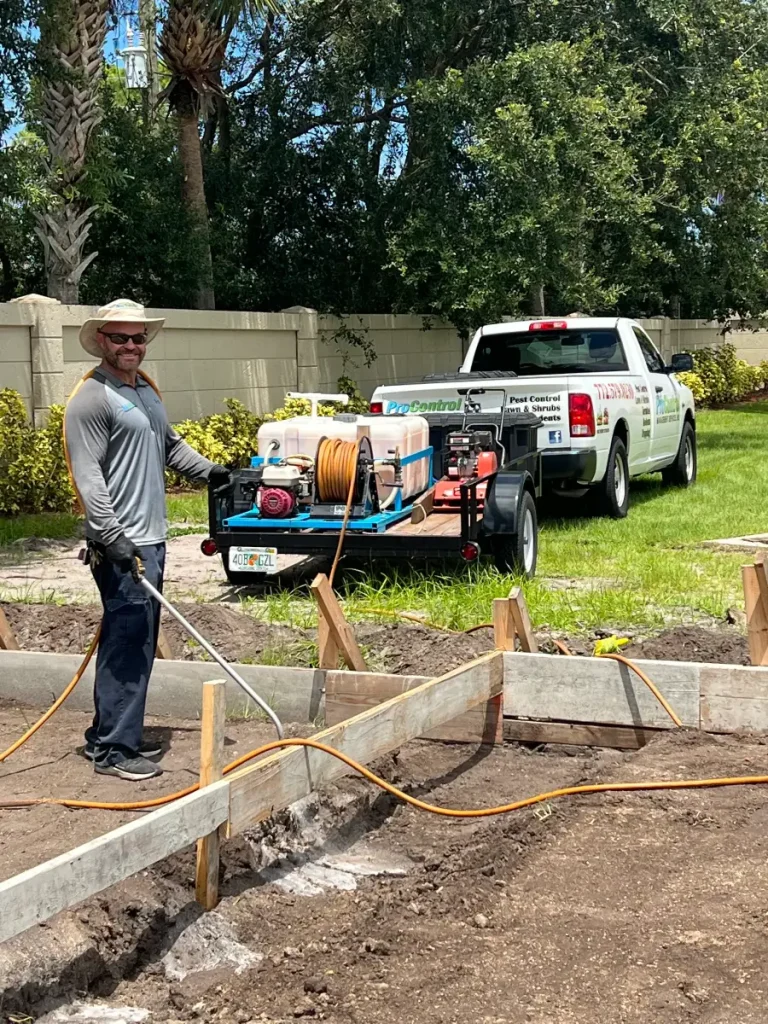
St. Lucie County isn’t a place where pest control is a seasonal concern. The subtropical climate — year-round warmth, high humidity, a rainy season that runs from June through September — creates conditions where termites, ants, mosquitoes, cockroaches, and rodents are all active simultaneously for most of the year. There’s no real off-season here the way there is in northern states.
Subterranean termites swarm in the spring, typically between February and May. Homeowners in Port St. Lucie who notice what look like flying ants during that window are, more often than not, looking at termites. Mosquito pressure peaks during the rainy season, and the area’s extensive canal system — the Indian River Lagoon, the St. Lucie River, the drainage ditches running through communities like St. Lucie West and Tradition — provides abundant standing water for breeding. Rodent activity has increased noticeably in St. Lucie West and Stuart in recent years, driven by ongoing development and the disruption of natural habitats near residential areas.
For homeowners who are newer to the area — and Port St. Lucie has been one of Florida’s fastest-growing cities for years, drawing transplants from South Florida and the northeast — this pest landscape can be genuinely surprising. What looks like a minor ant problem in March can be a well-established ghost ant super-colony by June if it’s not addressed correctly. What sounds like squirrels in the attic might be roof rats, which breed quickly and chew through wiring. The stakes are real, and the pace at which problems escalate in this climate is faster than most people expect.
That’s the honest case for professional IPM in this market. It’s not about whether you can handle it yourself. It’s about whether the approach you’re using is actually matched to the problem — and whether you’re catching things early enough to avoid the expensive version of the outcome.
One question we hear often is whether eco-friendly pest control actually works as well as conventional methods. The short answer is yes — when it’s applied correctly. Eco-friendly IPM isn’t a compromise on effectiveness. It’s a more targeted approach that uses lower-toxicity products in the right places, rather than broadcasting stronger chemicals broadly. The products available to us as licensed professionals are formulated differently than what’s on store shelves, regardless of whether the approach is conventional or eco-friendly. For families with kids and pets — which describes a large portion of the households we work with across St. Lucie County — knowing that treatments are pet- and child-safe matters, and it shouldn’t require trading effectiveness for peace of mind.
Another common question is about contracts. A lot of people have had bad experiences with pest control companies that locked them into 12-month agreements with cancellation penalties. That hesitation is understandable. What we’d say is this: ask the question upfront. Ask what happens if the treatment doesn’t work, whether there’s a callback policy, and whether there are hidden fees. A company that uses IPM principles and stands behind its work should be able to answer those questions clearly. We offer a satisfaction guarantee on everything we do and free estimates for every client — residential, commercial pest control, or otherwise — because we think you should know what you’re getting into before you commit to anything.
We also get asked whether one treatment is enough. In most cases, no — especially in Florida. The subtropical climate means pest pressure is continuous. A single treatment addresses what’s there now. Ongoing monitoring and periodic treatments are what prevent the next infestation. Think of it the way you’d think about maintaining a vehicle or scheduling a dental cleaning. The maintenance cost is real, but it’s significantly lower than the repair cost.
The right pest control company for your home or business is one that inspects before it treats, explains what it finds, uses methods matched to your specific situation, and follows up to make sure the problem is actually resolved. That’s the baseline. Beyond that, look for a company that’s licensed by the Florida Department of Agriculture and Consumer Services, carries insurance, and has a track record in your specific area — not just in Florida generally.
We’ve been serving Port St. Lucie and St. Lucie County since 2006. We know what’s active in St. Lucie West right now, what the termite swarm season looks like in this part of the Treasure Coast, and what’s driving the rodent pressure that’s been increasing in communities along the St. Lucie River corridor. That local knowledge matters when you’re trying to solve a problem, not just treat a symptom.
If you’re still on the fence, start with a free estimate. There’s no cost, no commitment, and no pressure — just a clear picture of what you’re dealing with and what it would take to fix it. We’re ready to take a look and help you make the right call for your home.
Article details:
Share:
Continue learning: