Not every company spraying your home is actually qualified to do it. Here's how to check — and what's at stake if you don't.
Share:
Summary:
You’ve got a pest problem. You search, you get a few names, maybe someone knocks on your door with a deal. And somewhere in the back of your mind, you wonder — is this person actually licensed to do this?
That question matters more than most people realize. In Florida, pest control is a regulated industry with real legal requirements, and the gap between a licensed professional and an unlicensed one isn’t just paperwork. It’s the difference between a treatment that works and one that doesn’t — and between having legal recourse if something goes wrong and having none at all.
Here’s what you need to know before you hire anyone.
Florida’s pest control industry is governed by Chapter 482 of the Florida Statutes, and the Florida Department of Agriculture and Consumer Services — FDACS — is the agency that enforces it. Every legitimate pest control company operating in this state is required to hold a business license issued by FDACS, and the individual performing work at your property must carry a registered technician ID card specific to their pest control category.
There’s also a third layer most consumers don’t know about: the Certified Operator. This is the licensed professional who is legally responsible for every pesticide application we perform. They’ve passed state examinations, hold certifications in specific pest control categories, and are required to complete continuing education every year to keep those credentials active. A company license doesn’t automatically mean every technician working under it is individually credentialed — that’s a distinction worth understanding.
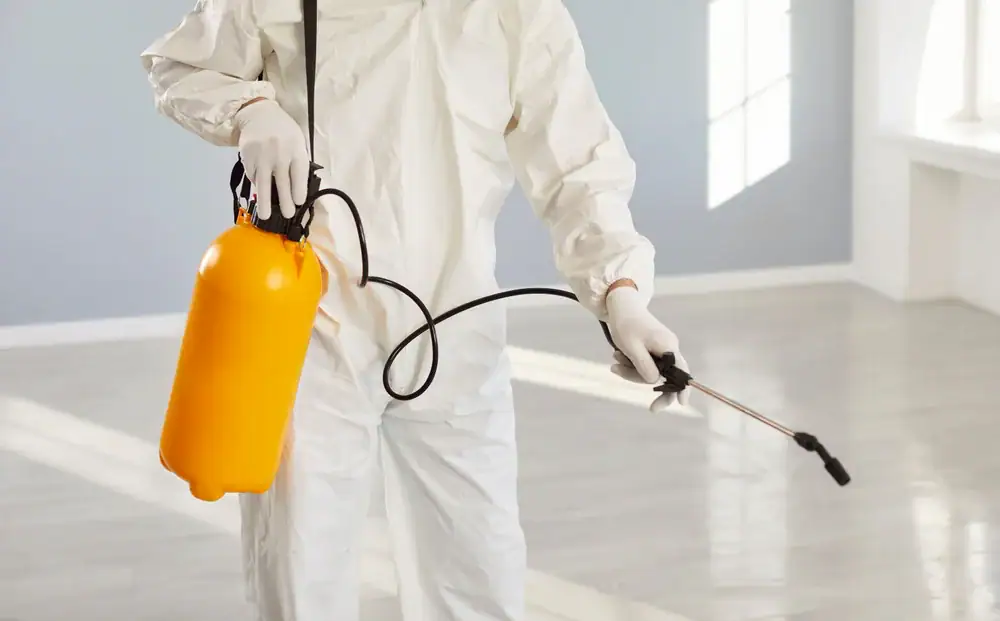
The word “exterminator” gets used loosely. Anyone can show up with equipment and a professional-looking truck. What separates a licensed exterminator from someone operating without credentials isn’t appearance — it’s what’s on file with the state.
A licensed pest control technician in Florida has passed category-specific examinations covering pest identification, pesticide chemistry, proper application rates, and safety protocols. They’re required to carry an FDACS-issued ID card that identifies exactly which categories they’re certified to work in. If someone is at your door to treat for termites, they need credentials specifically in wood-destroying organisms — a general household pest certification doesn’t cover it.
This matters because different pests require different treatments, different products, and different levels of training. Subterranean termites, which are endemic to St. Lucie County’s sandy, moisture-retentive soils, require a specific class of termiticide applied at precise rates. The Formosan subterranean termite — particularly aggressive and well-established in South Florida — isn’t something you address with a general-purpose spray. An unlicensed operator may not know the difference, and even if they do, they likely don’t have access to the restricted-use pesticides that licensed professionals are legally permitted to apply.
There’s also the insurance dimension. Florida requires licensed pest control companies to carry a minimum of $250,000 per person and $500,000 per occurrence in bodily injury coverage, plus significant property damage coverage. If an unlicensed operator damages your home or causes a chemical exposure incident, you may have no practical recourse. They often have no insurance, no traceable business entity, and no accountability. The low quote starts to look very different in that context.
When you ask to see a technician’s FDACS ID card before work begins, you’re not being difficult. You’re exercising a right Florida law specifically supports — and any legitimate company will hand it over without hesitation.
We maintain a public database at aessearch.fdacs.gov where you can look up any licensed pest control business or individual in Florida. You can search by company name, individual name, or license number. It takes about thirty seconds and tells you whether the license is active, what categories it covers, and whether there have been any disciplinary actions.
That last part is worth noting. FDACS publishes quarterly disciplinary action reports listing every company or individual that received a warning, fine, suspension, or revocation during that period. If a company has a history of violations — operating without posting credentials, using a P.O. box to obscure their physical location, performing work without a Certified Operator on file — it shows up there.
For St. Lucie County homeowners specifically, this tool is more relevant than it might seem in a market experiencing rapid growth. Port St. Lucie has been one of the fastest-growing cities in the country for several consecutive years. That kind of growth attracts out-of-state contractors and operators who follow construction booms, and not all of them arrive with Florida credentials. If you’ve relocated here from another state, you may not know that Florida’s licensing requirements are stricter than what you were used to — and that “we do this back home” isn’t a substitute for a Florida FDACS license.
Our license number is JE79547, issued by FDACS. You can look it up right now at aessearch.fdacs.gov. We’ve held it continuously since 2006, and we list it because we want you to check — that’s the whole point.
Knowing what a legitimate pest control company looks like is useful. Knowing what an illegitimate one looks like is more useful.
The warning signs aren’t always obvious, but they follow consistent patterns. A company that quotes you over the phone based solely on your square footage — without scheduling an on-site inspection — is skipping a step that licensed professionals don’t skip. Proper pest identification requires seeing the property. If they’re quoting without looking, they may not know what they’re treating.
Pressure tactics are another signal. Phrases like “we can only do this price today” or “you have a severe infestation and need emergency treatment right now” — especially from a door-to-door solicitor — are worth slowing down on. Urgency is sometimes real, but it’s also a classic tool for bypassing the due diligence that protects you.
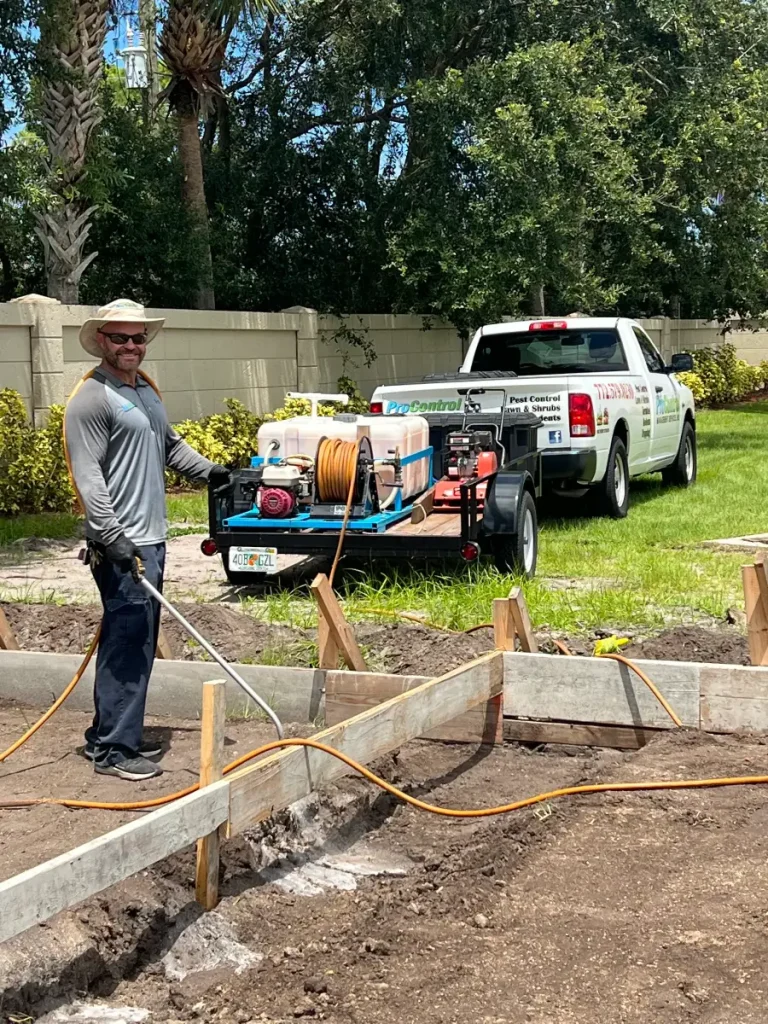
Under Florida Statute §482.165, performing pest control for hire without proper licensure is illegal. For the operator, that means misdemeanor charges, fines up to $1,000, and potential jail time. Repeat or hazardous violations can escalate to felony charges — up to five years in prison and fines exceeding $10,000.
But here’s what matters for you as the homeowner: the consequences of hiring an unlicensed operator fall on you too, just differently.
If an unlicensed company applies pesticides improperly and your family or pets are exposed, you have limited legal recourse against someone with no insurance and no registered business entity. If they damage your property — say, improper termiticide application that voids a structural warranty — you’re left holding the cost. And if you’re in the process of selling your home, a termite inspection or wood-destroying organism report is only valid when conducted by a licensed professional. An inspection from an unlicensed operator is worthless in a real estate transaction, full stop.
This is especially relevant in Fort Pierce and the older neighborhoods of Port St. Lucie, where WDO inspections are a routine part of home sales. A real estate transaction moving through the closing process is not the time to discover that the inspection you paid for doesn’t hold up because the company wasn’t properly licensed.
We’re called in fairly regularly after homeowners have already paid someone else — often someone cheaper, sometimes someone who came to the door — and the problem is still there. The second treatment costs more than the first one would have if it had been done right. That’s the real math on unlicensed pest control.
Before anyone applies anything in or around your home, you have every right to ask for documentation. A company that hesitates or deflects on any of these is telling you something.
Ask for their FDACS license number and look it up yourself at aessearch.fdacs.gov. Ask the technician to show you their individual ID card — not just the company’s paperwork, but the card that certifies them specifically for the type of pest control they’re about to perform. Ask what products will be used, their EPA registration numbers, and the application rates. Florida law requires pest control companies to provide written notice of pesticide applications including this information — it’s not a favor, it’s your legal right.
Ask for a written treatment plan before work begins, and ask what the company’s re-treatment policy is if the problem persists. A satisfaction guarantee backed by a licensed, insured company means something. The same promise from an unlicensed operator means nothing, because there’s no accountability structure behind it.
In St. Lucie County, the combination of year-round humidity, sandy soil, proximity to the Indian River Lagoon, and rapid residential development creates persistent pressure from subterranean termites, mosquitoes, and rodents. These questions aren’t overcautious — they’re just smart. The pest pressures here are real and year-round. The spring termite swarm season — typically March through May — is when we see the highest volume of homeowners realizing they need professional help, and unfortunately also when unlicensed operators tend to be most active, following the demand.
Ask the questions. Check the license. Get it in writing. Those three steps will protect you from the majority of bad outcomes before they happen.
Florida’s licensing requirements for pest control exist because the work is consequential. Pesticides applied incorrectly can harm people, pets, and property. Termite treatments done wrong can void warranties and complicate real estate transactions. And unlicensed operators, by definition, have no accountability when things go sideways.
The verification process is simple: look up any company at aessearch.fdacs.gov, ask to see the technician’s individual FDACS ID card, get a written treatment plan, and confirm the company carries proper insurance. These steps take minutes and can save you significant money and stress.
If you’re in Port St. Lucie, Fort Pierce, Tradition, or anywhere else in St. Lucie County and want to work with a company that’s been licensed, insured, and operating in this specific community since 2006, we’re here to help. Free estimates, no pressure, and a satisfaction guarantee on every job.
Article details:
Share:
Continue learning: